Wondered why a heated pressure washer is your ultimate business accelerator? The answer is right here!
As a seasoned technical expert and ROI analyst for pressure washing equipment, I have witnessed firsthand the challenges that plague even the most diligent pressure washing professionals. You understand that “clean” isn’t just about appearances; it’s about reputation, efficiency, and ultimately, profitability. Yet, how often have you faced the frustration of tenacious oil slicks? Embedded grease that refuses to budge? Or stubborn biological contaminants that simply laugh in the face of cold water and brute force?
This common struggle, marked by endless scrubbing, excessive chemical use, and unsatisfactory results, is a direct drain on your precious time and hard-earned revenue. This guide provides a deep dive into a strategic asset, exploring the technical and financial edge of a heated pressure washer. My goal is to arm you with a comprehensive understanding of its advantages and applications, positioning it not merely as a purchase but as an essential, high-ROI investment. A heated pressure washer is an indispensable tool for tackling the toughest professional cleaning challenges more efficiently, offering a clear competitive edge and superior return on investment.
The Cold Water Conundrum
For many standard cleaning scenarios, cold water pressure washing performs admirably. It effectively removes loose dirt, dust, and superficial grime. However, when your jobs transcend basic rinsing, the inherent limitations of cold water become apparent, directly impacting your operational efficiency and client satisfaction.
The fundamental challenge arises when confronting substances like oil, grease, sap, deeply embedded grime, or biological contaminants. These materials often have strong adhesive properties or high viscosity, resisting the mechanical force of cold water alone. Imagine trying to thoroughly degrease heavy construction equipment caked in hydraulic fluid or remove stubborn food-grade grease from a commercial kitchen floor, using only cold water. The result is often a smeared mess, requiring multiple passes, significant manual scrubbing, and a disproportionate amount of harsh chemical detergents. This isn’t just inconvenient; it’s inefficient and costly.
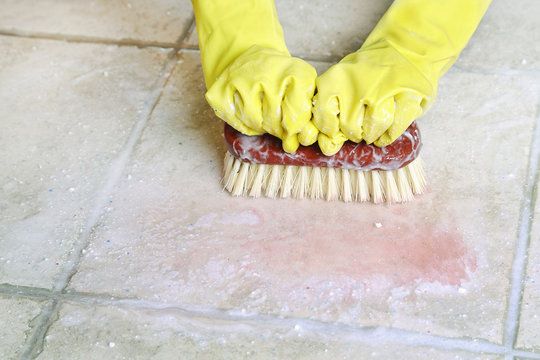
This leads directly to the “tough job” dilemma that frustrates professional cleaners. Protracted job times, increased chemical consumption, and unsatisfactory results can lead to costly re-work and damage your hard-earned reputation for reliability. In a competitive market, delivering consistently superior results on the first pass is not a luxury. It is a necessity for securing repeat business and client referrals. Cold water often falls short of this critical standard when faced with truly challenging cleaning scenarios.
The Technical & Financial Edge of Hot Pressure Washing Technology
To truly appreciate the value proposition of hot pressure washing technology, one must understand the fundamental scientific principles at play. It is not simply about adding warmth. It involves utilizing thermal energy to alter the dynamics of the cleaning process fundamentally.
Understanding Thermal Energy in Cleaning
From an engineering perspective, the introduction of heat into the pressure washing stream transforms the water into a far more aggressive and effective cleaning agent.
Heat drastically reduces the surface tension of water at the molecular level. Cold water molecules are tightly bound. Hot water molecules vibrate more rapidly, reducing their cohesive forces. This allows hot water to penetrate and emulsify stubborn contaminants like oil, grease, and grime far more effectively. In industrial applications, this means hot water infiltrates the bond between the contaminant and the surface. This lifts and liquefies it for easier removal. This physical change is the bedrock of hot pressure washing technology’s superiority on tough, adherent residues.
Heat-Enhanced Chemistry and Hygiene Benefits
The synergistic effect of heat on cleaning detergents is profound. For most chemical reactions, an increase in temperature accelerates the reaction rate. In cleaning, this means detergents become far more potent and effective when applied with hot water. This allows for reduced dwell times for the chemicals, translating directly into faster cleaning processes. Furthermore, the enhanced effectiveness often means you can use milder, less expensive detergents, or even reduce chemical consumption significantly, leading to direct cost savings.
High temperatures possess the inherent ability to kill bacteria, viruses, and mold. When water temperatures exceed 180°F (82°C), a significant level of sanitization can be achieved, and at temperatures approaching steam, disinfection becomes possible. This capability is paramount in environments requiring strict hygiene standards, such as food processing plants, restaurants, agricultural settings, and healthcare facilities. Achieving this level of microbial reduction with cold water alone would require substantially more powerful and potentially harmful chemical sanitizers, which then necessitate extensive rinsing.
Practical Advantages and Considerations in the Field
Another often-overlooked benefit of hot water cleaning is its contribution to quicker evaporation. Surfaces cleaned with hot water dry significantly faster than those cleaned with cold water. This reduces post-cleaning wait times, allowing for quicker re-entry or application of subsequent coatings like paint or sealants. For the practical professional, faster drying means less idle time on a job site and the ability to move more quickly to the next task or client.
While generally safe and highly effective, it is essential to acknowledge that not all surfaces are equally compatible with extreme heat. Certain delicate plastics, some painted surfaces, or very old, brittle materials might react adversely to very high temperatures. A professional operator understands the importance of pre-testing a small, inconspicuous area and adjusting temperature and pressure settings accordingly to prevent damage. This level of insight is part of the skillset an experienced professional brings to any role.
Comparing Hot Water and Cold Water Pressure Washing
Let’s conduct a direct technical comparison, illustrating the tangible benefits of hot water.
Cleaning Effectiveness
- Cold Water: Relies primarily on kinetic energy (PSI and GPM) to blast away loose dirt. It struggles significantly with oils, greases, waxes, sap, and hardened grime. It merely moves these contaminants around or requires heavy chemical pre-treatment and extensive scrubbing.
- Hot Water: Combines kinetic energy with thermal energy.Heat breaks down the molecular bonds of tough contaminants, making them soluble and easy to rinse away. A single pass with hot water can often do the job that would take multiple passes with cold water and heavy chemical use.
Time and Resource Savings
- Cold Water: For tough jobs, leads to extended cleaning times, increased labor hours, higher chemical consumption, and potential for re-work. Cleaning a concrete loading dock heavily stained with spilled diesel and tire marks using cold water could take an experienced team 4 hours, requiring multiple applications of degreaser and significant re-passes.
- Hot Water: Significantly reduces cleaning time due to enhanced efficacy. Less chemical is needed, and often, only one pass is sufficient. An industrial heated pressure washer could complete the same job in 1.5 to 2 hours, using minimal chemical, due to its ability to melt and emulsify the diesel and soften the tire marks. This represents a 50-60% time savings on a single difficult job, directly translating into more billable hours per day.
Anatomy of an Industrial Heated Pressure Washer System
Understanding the anatomy of an industrial heated pressure washer is crucial for appreciating its robust capabilities and making an informed investment. These are complex machines, engineered for demanding, continuous duty cycles.
Pump Systems: The Powerhouse
At the core of any pressure washer, hot or cold, is the high-pressure pump. For an industrial heated pressure washer, durability and consistent performance are paramount. Professional-grade pumps typically feature ceramic plungers for superior wear resistance against abrasives and often brass manifolds for corrosion resistance and thermal stability. The choice between direct drive (compact, lower cost, but higher RPM leading to faster wear) and belt drive (lower RPM, longer lifespan, quieter operation, easier repair) often depends on the expected duty cycle. High-quality pumps are essential for maintaining the consistent flow (GPM) and pressure (PSI) necessary for effective and efficient cleaning, ensuring the machine performs reliably over thousands of hours of operation.
The Burner System: Generating Heat
The burner system is what differentiates a standard pressure washer from a true hot pressure washing technology powerhouse. It is where the magic of thermal energy is generated.
Industrial units typically utilize various fuel sources for heating. Diesel is the most common and widely available fuel for portable and trailer-mounted units. It offers a good balance of energy density and cost, though it requires proper ventilation. Kerosene is similar to diesel in application, often burns cleaner, but can be more expensive and less readily available. Propane (LPG) is excellent for indoor applications or where diesel fumes are unacceptable, as it burns very cleanly, but requires a propane tank. Electric heating elements are used in electric heated pressure washers, ideal for indoor environments where combustion fumes are prohibited or impractical. While clean and quiet, they require significant electrical power and typically have lower heat rise capabilities compared to combustion burners. Each fuel type has its own efficiency profile and fuel consumption rate, directly impacting operating costs and logistical considerations for a professional operation.
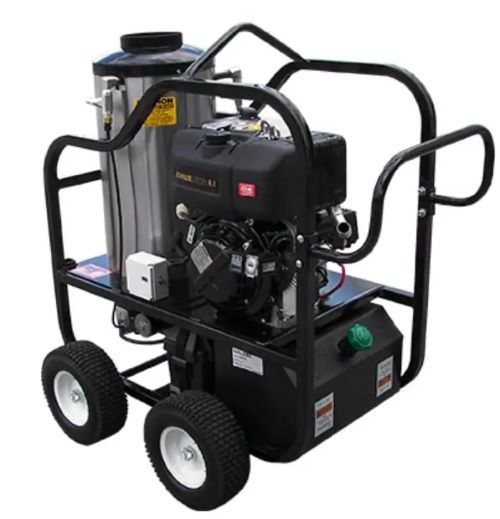
The burner system is an intricate assembly designed for reliable, efficient heat generation. Key components include a blower, which forces air into the combustion chamber to mix with fuel for efficient burning; an igniter, which creates the spark or flame to initiate combustion; and a fuel pump, which delivers fuel from the tank to the burner nozzle at a consistent rate. The heating coil is the core component, where cold pressurized water passes through tightly wound coils surrounded by the burner’s flame, rapidly absorbing heat. The design ensures maximum surface area exposure to the flame for optimal heat transfer. A robust burner design with high-quality components is crucial for longevity and consistent heat output, minimizing burner-related downtime and maintenance.
Heating Coil Design and Efficiency
The heating coil is arguably the most critical component for heat transfer and is subjected to immense thermal stress. Its design, material, length, and shape directly impact heat transfer efficiency and the machine’s overall longevity. Coils are typically made from steel pipe (often schedule 80 for durability) formed into a helical or spiral shape. The greater the surface area and the more efficiently the hot gases from the burner are directed around the coil, the better the heat transfer. Poor coil design or material can lead to premature failure due to thermal expansion and contraction, or corrosive effects from impurities in the water. Maintaining coil efficiency, often through descaling, is vital for long-term performance.
Integrated Safety Features
For an industrial heated pressure washer, safety is non-negotiable. Modern units are equipped with a suite of essential safety features and controls that protect both the operator and the equipment. These include temperature sensors and high-limit shut-offs to prevent overheating, and pressure relief valves to protect the pump and system from excessive pressure buildup. Flow switches ensure water is flowing through the coil before the burner ignites, preventing damage to the coil from dry firing. Flame sensors detect the presence of a flame and shut off fuel if a flame is not established or goes out unexpectedly. Low water and low fuel shut-offs protect components from running dry. These integrated systems ensure safe and professional operation, minimizing the risk of accidents or costly equipment damage.
Indispensable Applications of the Industrial Heated Pressure Washer
The versatility and superior cleaning power of an industrial heated pressure washer extend far beyond what standard cold water units can achieve. It is not just about cleaning better; it is about enabling entirely new service offerings and tackling jobs that were previously impossible or prohibitively time-consuming.
Heavy-Duty Commercial and Industrial Cleaning
In demanding environments where grease, oil, and caked-on grime are the norm, hot pressure washing technology proves its indispensable value.
Automotive and fleet maintenance is one of the most prominent applications. Degreasing engines, undercarriages, and components of trucks, buses, construction vehicles, and heavy machinery becomes significantly faster and more effective. Hot water effortlessly cuts through road grime, exhaust buildup, hydraulic fluid spills, and caked-on mud.
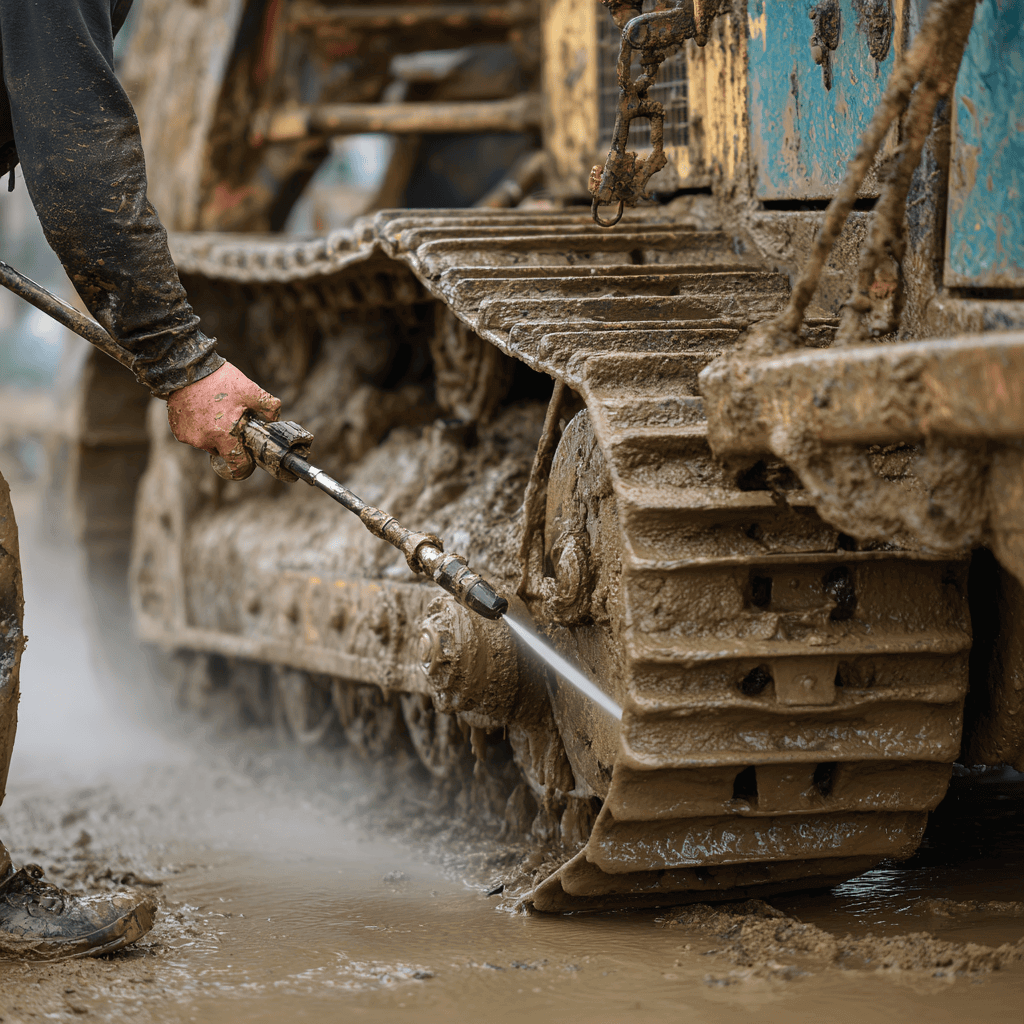
On construction sites, the industrial heated pressure washer is a workhorse. From cleaning equipment like excavators, loaders, and bulldozers after a muddy or oily job, to preparing concrete forms for reuse, or stripping paint and coatings, it effectively removes dried concrete splatter, stubborn caked-on dirt, and prepares surfaces for new applications like painting or sealing.
Critical in Hygiene-Sensitive Industries
Hygiene is paramount in agriculture. Hot pressure washers are ideal for sanitizing barns, milking parlors, animal enclosures, and farm equipment. They efficiently remove caked-on organic matter, manure, and feed residues, significantly reducing bacterial loads and improving overall animal health and safety.
Meeting stringent health and safety regulations is a daily challenge in food service. Hot water cleaning is crucial for effectively removing grease, food residues, and sanitizing surfaces in commercial kitchens, food processing plants, and meat packing facilities. The combination of heat and pressure effectively melts and flushes away fats, oils, and proteins, while also killing bacteria, viruses, and mold.
Versatile Solutions for Urban and Public Cleaning
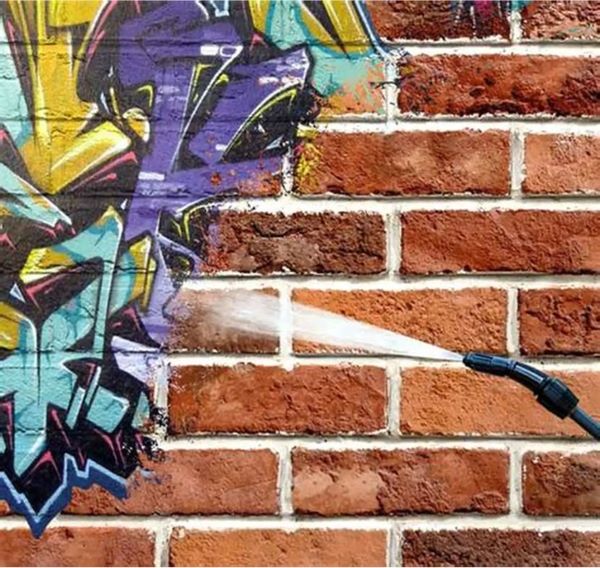
Public spaces often present diverse cleaning challenges. Heated pressure washers excel at the efficient removal of graffiti, chewing gum from sidewalks, street grime, and even de-icing stubborn areas in cold climates. Their ability to quickly break down and remove these persistent contaminants makes municipal cleaning operations far more effective and less labor-intensive.
Cleaning dumpsters, compactors, and refuse vehicles is a dirty job, but critical for hygiene and odor control. Hot pressure washing easily dissolves hardened waste, cuts through accumulated grime, and helps sanitize these often-contaminated surfaces, drastically improving sanitation and reducing offensive odors.
Specialized Cleaning Challenges
Beyond the heavy-duty industrial applications, hot water excels in specific niche challenges, opening up new revenue streams for your business.
Chewing gum stuck to sidewalks, or candle wax spilled on pavements, are notorious for being incredibly difficult to remove with cold water. The transformative effect of heat on these sticky, adhesive residues is remarkable. Hot water melts and softens the gum or wax, allowing the pressure to easily dislodge it without aggressive scraping or harsh solvents, saving significant time and labor.
While cold water can rinse off superficial mold or mildew, it often leaves spores behind, leading to rapid regrowth. The high temperatures of a heated pressure washer penetrate deeper, killing spores and mycelial growth, providing a much deeper clean and significantly longer-lasting results. This is particularly valuable for residential and commercial properties prone to organic growth on siding, roofs, and concrete.
For certain types of paint and graffiti, particularly older, weathered layers, heat can be incredibly effective in aiding removal. The heat softens the paint, weakening its bond with the surface, making it easier for the high-pressure stream to strip it away. However, specific techniques and safety precautions are paramount. It is crucial to understand the substrate and paint type to avoid damage, and proper personal protective equipment is always required due to potential lead paint or hazardous fumes.
In scenarios involving hazardous material cleanup, biohazard remediation (e.g., animal waste, post-mortem cleanup), or severe odor elimination, the sanitizing and breaking-down power of a hot pressure washer is invaluable. The heat assists in breaking down organic matter and neutralizing odors, contributing significantly to a thorough and safe cleanup process.
Expanding Services and Attracting Premium Clients
Ultimately, having a heated pressure washer allows you to do more than just clean; it enables you to offer specialized services. You gain the ability to take on complex, higher-paying jobs that cold water units simply cannot handle efficiently or effectively. This translates into delivering “like-new” results that consistently impress clients, securing repeat business, and generating valuable referrals. For the pragmatic professional, this positions your business as a specialized solution provider, differentiating you from competitors and commanding premium rates for superior service.
Quantifying the Heated Pressure Washer Cost Benefit
Investing in a high-quality industrial heated pressure washer isn’t merely an expense; it’s a strategic capital expenditure that yields a tangible return on investment. The heated pressure washer cost benefit extends far beyond the initial purchase price, impacting your bottom line through direct financial advantages and indirect business growth.
Direct Financial Advantages
The immediate financial benefits of employing hot pressure washing technology are evident in your daily operations.
Significant time savings per job is perhaps the most impactful direct advantage. The enhanced cleaning efficiency of hot water drastically reduces the time required to complete tough jobs. When you can cut a 4-hour job down to 1.5 or 2 hours, that translates directly into the ability to complete more jobs per day or week. More completed jobs mean more billable hours, maximizing your labor efficiency and increasing overall revenue potential without increasing your workforce.
The power of hot water often minimizes or, in some cases, entirely eliminates the need for expensive, harsh chemical detergents, particularly for degreasing. Heat does much of the work that chemicals would otherwise perform. This leads to substantial savings on your consumables budget over time, contributing directly to higher profit margins per job. Moreover, using fewer chemicals is often environmentally friendlier and requires less rigorous rinsing, saving water.
Achieving superior cleanliness on the first pass is crucial for maintaining client satisfaction and your reputation. When cold water leaves behind stubborn residues, it often leads to costly follow-up visits or re-work. These are essentially unpaid hours that erode your profitability and tie up valuable resources. A heated pressure washer dramatically reduces the likelihood of such scenarios. This ensures job quality and minimizes these detrimental, unscheduled expenditures.
While seemingly counterintuitive, using hot water can actually be gentler on certain surfaces. Because the heat assists in breaking down grime, less aggressive chemicals may be needed, and less abrasive scrubbing or higher PSI is often required to achieve the desired clean. This can extend the lifespan of the cleaned surfaces, reducing wear and tear on your clients’ assets, which is a subtle but valuable professional differentiator.
Indirect Business Benefits: Reputation and Growth
Beyond the direct cost savings and efficiency gains, the strategic advantages of hot pressure washing technology contribute to the long-term health and growth of your business.
Consistently delivering superior, “like-new” results on challenging projects builds immense trust and fosters a reputation for excellence. Satisfied clients are your most powerful marketing tool, leading to invaluable word-of-mouth referrals. This organic growth channel is far more cost-effective than traditional advertising and builds a loyal client base.
Clients are willing to pay a premium for efficiency, expertise, and undeniably superior outcomes. When you can consistently tackle jobs that competitors shy away from, or deliver results others can’t match, you differentiate your service. This allows you to justify and command higher rates, increasing your average revenue per job and overall profitability.
By significantly reducing the time required per job, a heated pressure washer inherently increases your overall job capacity. You can take on more projects in a given timeframe, whether daily, weekly, or monthly. This increased throughput directly expands your business potential, allowing for greater scalability and revenue generation.
While you might not immediately reduce your team size, the efficiency gains mean that your existing team can accomplish more in fewer hours. This optimizes labor utilization. Over time, as your business grows and you take on more work, this increased efficiency allows you to defer hiring additional staff, or to reallocate existing labor to other growth-oriented tasks, thereby effectively reducing your labor cost per job.
Calculating Your Return on Investment
Understanding the heated pressure washer cost benefit requires a pragmatic approach to ROI. It is not just about what you spend, but what you gain and what you avoid losing.
To truly assess the return, consider a simple framework for calculating your payback period and long-term profitability:
Initial Investment:
- This includes the purchase price of the industrial heated pressure washer, any necessary accessories, and initial training.
Projected Savings:
- Chemical Cost Savings: Estimate your current monthly chemical spend on tough jobs. If a heated unit reduces this by, say, 50%, calculate the monthly saving.
- Labor Time Savings: Based on enhanced cleaning efficiency, estimate how many hours you save per week on “tough jobs.” Multiply this by your effective hourly labor cost.
- Reduced Rework Costs: Estimate the frequency and cost (time, fuel, reputation) of callbacks due to insufficient cleaning with cold water.
New Revenue Generation:
- Increased Job Capacity: If you save two hours per tough job and complete three such jobs per week, that’s six hours freed up. If you can complete one additional billable job in that time, calculate the revenue from that new job.
- Premium Rate Opportunities: If you can now charge 10-20% more for certain specialized jobs (e.g., gum removal, heavy equipment degreasing) due to superior results, calculate this uplift.
Payback Period Calculation:
- Total Annual Savings & New Revenue = (Chemical Savings) + (Labor Time Savings) + (Reduced Rework Cost) + (New Job Revenue) + (Premium Rate Uplift).
- Payback Period (Years) = Initial Investment / Total Annual Savings & New Revenue.
For a pragmatic professional, a payback period of 12-24 months is often considered an excellent investment for equipment that will last 5-10+ years with proper maintenance.
The Hidden Costs of Not Using Heat
It is equally important to consider what you lose by not investing in a heated pressure washer. This “opportunity cost” includes lost revenue from missing out on higher-paying, specialized jobs that require hot water. It also involves reduced competitiveness by falling behind rivals who do offer superior hot water cleaning, and reputational damage from continued struggle with tough jobs. Finally, it entails increased operating costs due to persistently high chemical usage and inefficient labor hours.
Case Study: Commercial Kitchen Cleaning Efficiency
Consider a commercial kitchen deep clean where a professional cleaning company routinely charges $800. With cold water, it takes eight hours, requires $50 in heavy degreasers, and often needs a follow-up spot clean. With an industrial heated pressure washer, the job takes four hours, uses $10 in mild detergent, and is completed perfectly on the first pass. This represents $40 in chemical savings and four hours of labor savings. If labor is valued at $50 per hour (including overhead), that’s $200 in labor savings. Total savings per job: $240. If they do five such jobs a month, that’s $1,200 monthly, or $14,400 annually. A $10,000 heated unit could pay for itself in less than nine months.
Case Study: Fleet Maintenance Profitability Boost
In another example, a contractor specializing in fleet maintenance finds cold water struggles with caked-on grease on truck engines, taking two hours per engine and using $30 in strong solvent. With a heated pressure washer, they can clean an engine in 45 minutes using $5 in a milder degreaser. This saves one hour and fifteen minutes and $25 per engine. If they clean 10 engines a week, that’s 12.5 hours saved and $250 in chemical savings weekly. Annually, this totals over $12,000 in labor and chemical savings, enabling them to take on an additional 2-3 jobs per week, easily justifying the investment within a year. These heated pressure washer cost benefit scenarios clearly illustrate how the initial outlay transforms into tangible, recurring financial gains.
Strategic Investment: Choosing the Right Industrial Heated Pressure Washer
Selecting the ideal industrial heated pressure washer is a critical decision for any pragmatic professional. It is not about finding the cheapest option, but about identifying the machine that delivers maximum uptime, superior performance, and ultimately, the best long-term return on your investment.
Key Specifications for Your Business
Understanding the core technical specifications is paramount to making an informed choice that aligns with your specific business needs.
PSI and GPM: Balancing Pressure and Flow for Efficient Cleaning
PSI (Pounds Per Square Inch) represents the force with which the water strikes the surface. Higher PSI is excellent for breaking down caked-on dirt, stripping paint, or removing hardened residues. GPM (Gallons Per Minute) indicates the volume of water flowing through the system. Higher GPM is crucial for rinsing effectively, carrying away debris, and covering larger surface areas quickly. For a heated pressure washer, the optimal balance often means a moderate-to-high PSI (e.g., 2,000-4,000 PSI for most commercial applications) paired with a robust GPM (e.g., 3-5 GPM or more). A higher GPM, especially with hot water, dramatically accelerates rinsing and cleaning efficiency, saving significant time on the job. Without adequate GPM, even high PSI can leave behind a messy residue, requiring more passes.
Temperature Output and Recovery Time: Ensuring Consistent Heat Performance
The machine’s ability to consistently provide hot water under load depends on its temperature output and recovery time. Temperature output is the maximum temperature the unit can reach, often up to 200°F (93°C) or steam. For degreasing and sanitization, higher temperatures are superior. Recovery time is how quickly the unit heats water and maintains that consistent high temperature as you’re actively cleaning. A unit with poor recovery time will quickly revert to lukewarm water under continuous use, negating the benefits of hot pressure washing technology. Look for units with efficient burner systems and well-designed heating coils that can sustain their rated temperature output during demanding operation.
Mobility and Power Source: Choosing the Right Setup for Your Job Site
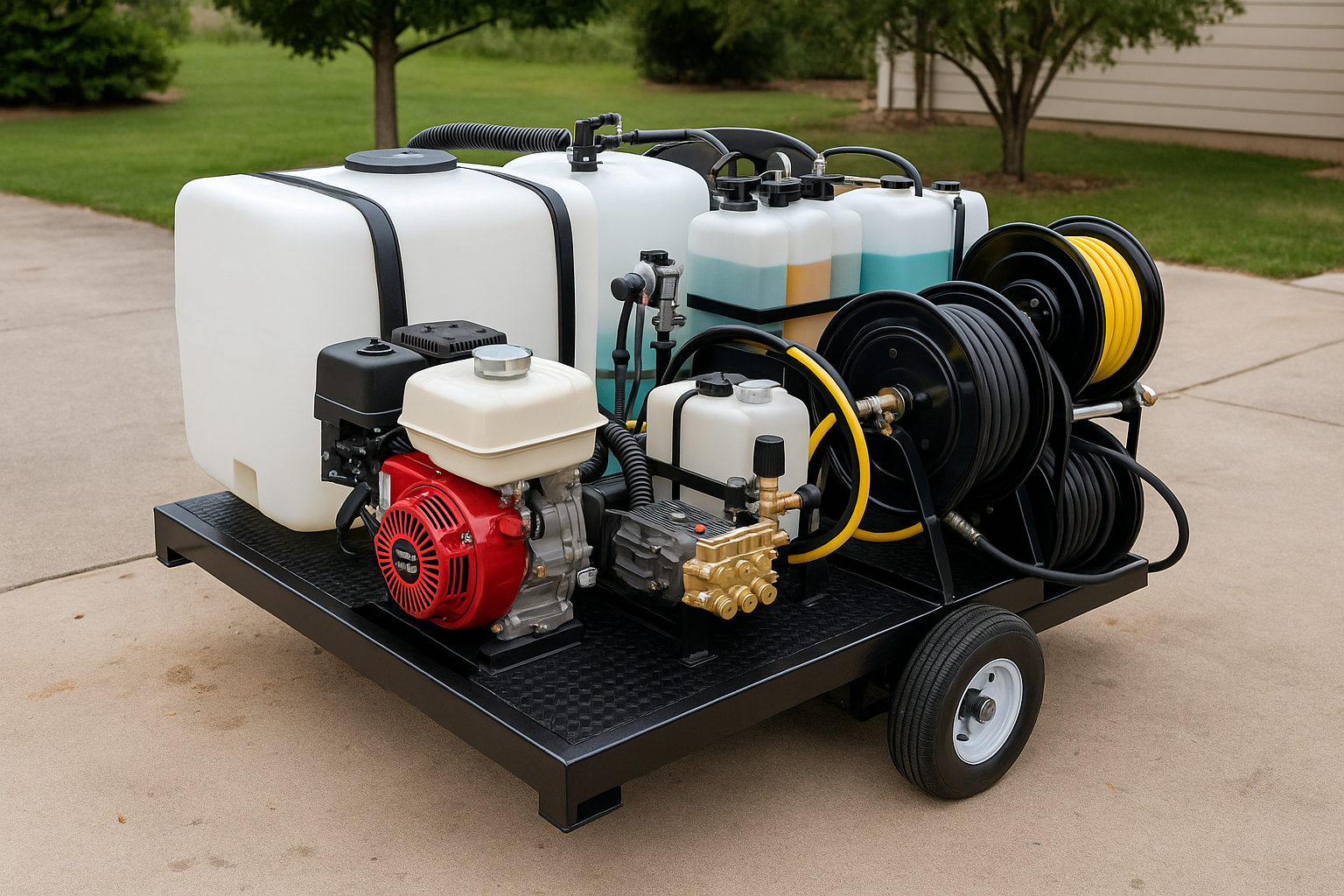
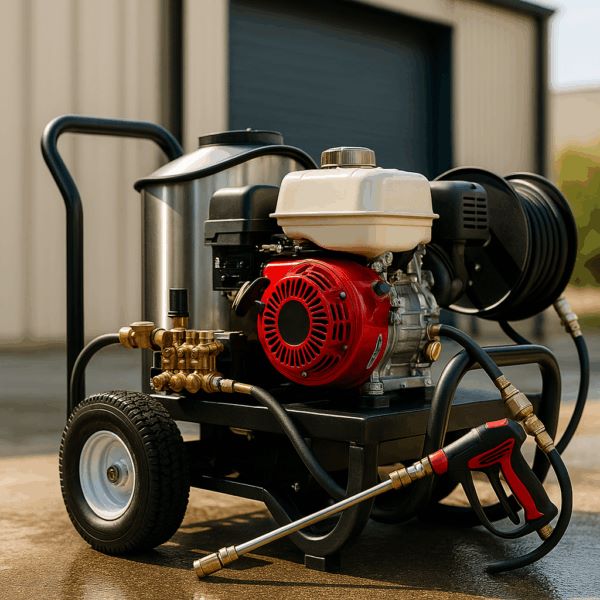
Matching the machine’s mobility to your typical job sites and operational needs is crucial. Portable units are smaller, often electric or gasoline-powered, designed for easier movement around a job site. Stationary units are larger, more powerful units typically installed in a fixed location. Trailer-mounted units are the workhorses of mobile commercial and industrial cleaning. These self-contained systems include the pressure washer, water tank, fuel tank, and sometimes a hose reel, mounted on a towable trailer. Considerations for electric heated versus gas/diesel heated units also tie into mobility. Electric units require access to substantial power outlets (often 208-480V, 3-phase), limiting their mobile use unless powered by a very large generator. Gas/diesel units offer complete mobility, burning their own fuel for both the engine and the burner.
Professional’s Assessment Checklist
When evaluating an industrial heated pressure washer, go beyond the headline PSI/GPM numbers. Here’s a checklist to ensure you’re investing wisely:
- Pump Quality and Material: Look for ceramic plungers, brass manifolds, and reputable pump brands (e.g., General Pump, AR North America, Cat Pumps) for longevity. These components withstand continuous high pressure and temperature without premature wear, as inferior materials will lead to frequent, costly repairs and significant downtime.
- Burner System Reliability: Seek robust burner housings (often stainless steel for corrosion resistance), efficient coil designs, and reliable ignition systems. A consistent, trouble-free burner is paramount for continuous hot water supply.
- Frame Construction and Durability: For industrial use, a welded steel frame (often powder-coated for corrosion resistance) and robust, non-marking wheels or heavy-duty skids are essential. This ensures the unit can withstand the rigors of commercial job sites, transport, and harsh environments.
- Hose and Nozzle Compatibility: Ensure the unit comes with, or is compatible with, high-quality, heat-rated hoses (typically dual-wire braided) that can safely handle the high temperatures and pressure. A versatile selection of professional-grade nozzles (0°, 15°, 25°, 40°, soap/low-pressure) is also crucial for adapting to different cleaning tasks.
- User-Friendly Controls and Diagnostics: Features that simplify operation and troubleshooting are invaluable. Clear pressure gauges, temperature controls, fuel level indicators, and easily accessible maintenance points contribute to efficient operation and reduced operator error. Some advanced units may have digital displays with diagnostic codes, further simplifying troubleshooting.
- Warranty and Manufacturer Support: A strong warranty (especially on the pump and coil) and a reputable manufacturer with accessible technical support and readily available parts are critical indicators of a supplier’s confidence in their product and their commitment to your uptime.
Avoiding Common Pitfalls
The temptation to opt for a lower-priced heated pressure washer can be strong, especially for a pragmatic professional focused on cost control. However, this is a classic scenario where “cheap” costs significantly more in the long run.
The insidious hidden costs of frequent downtime are the ultimate enemy for a pressure washing business. A machine that constantly breaks down means lost revenue from cancelled jobs, frantic calls for emergency repairs, and the erosion of your reputation. Unreliable suppliers often offer low-cost units made with inferior components, leading to expensive repairs and, worse, parts unavailability, leaving your expensive machine as an idle paperweight. Subpar performance from a cheap unit means jobs take longer, consume more chemicals, and deliver inferior results, directly leading to client dissatisfaction and damaging your ability to secure future contracts.
Understanding true value means looking at the total cost of ownership over the machine’s lifespan, not just the upfront price. A higher initial investment in a durable, high-quality industrial heated pressure washer with excellent manufacturer support will inevitably pay dividends through maximum uptime, lower maintenance costs, superior cleaning results, and consistent profitability.
Optimizing Pump and Burner Compatibility
As a technical expert, one of the most common issues with underperforming or prematurely failing hot pressure washing technology units stems from an imbalance between the pump and burner systems.
The importance of a balanced system, where pump flow (GPM) and pressure (PSI) are appropriately matched to the burner’s heating capacity, cannot be overstated. An undersized burner for a high-GPM pump will struggle to maintain consistent hot water, constantly cycling or delivering only lukewarm water. Conversely, an oversized burner for a low-GPM pump is inefficient and can lead to excessive heat buildup and premature coil failure due to thermal stress.
Tips for selecting components that work synergistically to prevent undue stress and wear include:
- Matched GPM to BTU Output: Ensure the burner’s British Thermal Unit (BTU) output is sufficient to raise the temperature of the water at the pump’s maximum GPM to your desired operating temperature. Reputable manufacturers engineer their systems to be balanced.
- Quality Components: Invest in a system where both the pump and burner are from reputable, industrial-grade manufacturers known for their reliability.
- Proper Sizing for Applications: Do not overbuy on PSI if your primary jobs are degreasing. Focus more on GPM and temperature. If you need a broad range of capabilities, ensure the system can deliver consistent performance across that range without overstressing components. A well-matched system runs more efficiently, experiences less wear and tear, and delivers consistent, reliable performance for years, directly contributing to your bottom line and minimizing costly downtime.
Maximizing Your Asset: Maintenance for Long-Term Profitability
A high-performance heated pressure washer is a significant investment. Like any valuable asset, it requires diligent care to ensure maximum uptime, optimal performance, and long-term profitability. Neglecting maintenance is the quickest path to costly repairs and lost revenue.
Proactive Maintenance Schedule
Implementing a rigorous, proactive maintenance schedule is non-negotiable for the pragmatic professional.
Daily Checks:
- Fuel Levels: Ensure adequate diesel, kerosene, or propane for the day’s work. Running a burner dry can cause damage.
- Oil Levels: Check pump oil and engine oil (for gas/diesel models) and top off if necessary.
- Water Supply: Confirm ample, clean water supply and inspect inlet filters for clogs.
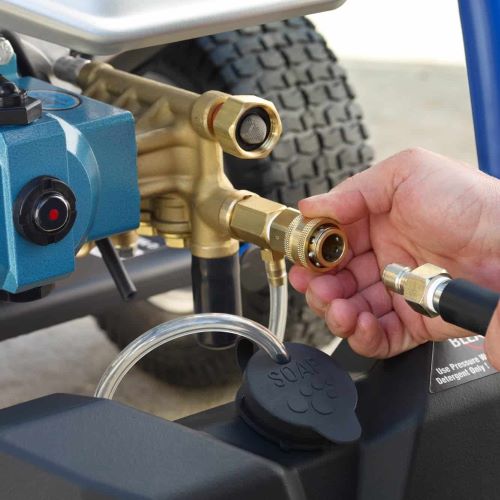
- Hose and Nozzle Inspection: Look for kinks, cuts, or leaks in hoses. Inspect nozzles for wear or blockages which can affect pressure and spray pattern.
Weekly/Monthly Procedures:
- Cleaning Fuel Filters: Crucial for burner performance and longevity. Clogged filters restrict fuel flow, leading to poor burning or burner shutdown.
- Inspecting Belts: For belt-drive pumps, check belt tension and for signs of wear or cracking. Adjust or replace as needed.
- Checking for Leaks: Inspect all hoses, fittings, and connections for any water or fuel leaks. Even small leaks can indicate a larger problem or lead to pressure loss.
- Burner Adjustments: Periodically check the burner flame and smoke output. A properly adjusted burner burns cleanly and efficiently. Refer to your owner’s manual for specific adjustment procedures.
Pump Care:
- Regular Oil Changes: Follow manufacturer recommendations for pump oil changes, typically every 200-500 hours of operation. Using the correct type and viscosity of oil is vital for pump longevity.
- Inlet Filter Cleaning: Regularly clean or replace the water inlet filter to prevent debris from entering and damaging the pump.
- Protecting Against Cavitation: Ensure adequate water supply to the pump. Running a pump dry or with restricted water flow causes cavitation, which rapidly damages internal pump components.
Burner System Maintenance:
- Cleaning Burner Nozzles: Carbon buildup can clog burner nozzles, leading to incomplete combustion or no heat. Clean or replace periodically.
- Electrodes: Inspect electrodes for carbon buildup or damage and clean or adjust them for proper ignition.
- Addressing Carbon Buildup: Periodically inspect the inside of the heating coil for carbon deposits. Excessive carbon buildup acts as an insulator, reducing heating efficiency.
Coil Descaling and Preventative Measures:
Mineral buildup (limescale) from hard water is a silent killer of heating coils. It drastically reduces heating efficiency, increases fuel consumption, and eventually leads to coil failure. Use water softeners or scale inhibitors where water hardness is an issue. Periodically descaling the coil with a specialized acid solution (following strict safety protocols) is essential, especially in areas with hard water. The frequency depends on water quality and usage.
Winterization Procedures:
For cold climates, proper winterization is essential to prevent costly freeze damage. Drain all water from the pump, hoses, and especially the heating coil. Run antifreeze or specialized pump protector through the system according to manufacturer instructions. Store the unit in a heated environment if possible.
Troubleshooting Common Issues and Minimizing Downtime
While a comprehensive maintenance schedule minimizes problems, issues can still arise. Knowing how to diagnose common problems can save valuable time and prevent costly service calls.
- Diagnosing Heating Problems: No heat might indicate low fuel levels, a clogged fuel filter, issues with the igniter, burner nozzle, or flame sensor. Fluctuating temperature could indicate a partial fuel blockage, burner malfunction, or scale buildup in the coil.
- Addressing Pressure Fluctuations and Loss of Power: Check for clogs in the nozzle or hose, inspect the unloader valve for proper function, or check for air leaks in the suction line. Also, examine the pump valves for wear.
- Identifying and Resolving Fuel System Issues: Check for water in the fuel tank, especially diesel. Inspect fuel lines for kinks or leaks, and ensure the fuel pump is functioning.
- Preventing and Repairing Leaks: Tighten loose fittings, replace worn O-rings or seals, and repair or replace damaged hoses. For complex issues, consulting your supplier’s technical support is paramount.
Proper Storage and Transportation: Protecting Your Investment
Beyond operational maintenance, how you store and transport your industrial heated pressure washer significantly impacts its lifespan. Ensure units are firmly bolted to trailers. Use appropriate tie-downs for hoses, wands, and accessories to prevent shifting and damage during transit. Protect sensitive components from road debris. Store units indoors or under a protective cover when not in use. Avoid prolonged exposure to direct sunlight, heavy rain, or freezing temperatures without proper winterization. Pad delicate parts, ensure control panels are protected, and prevent heavy objects from resting on hoses or electrical components.
Partnering for Success: Your Supplier as a Strategic Ally
For the pragmatic pressure washing professional, your relationship with your equipment supplier should transcend a mere transactional exchange. In the world of hot pressure washing technology and industrial heated pressure washers, your supplier should be a strategic ally, a partner invested in your long-term success.
The Role of a Trusted Supplier
A truly invaluable supplier offers much more than just equipment. They become an extension of your operational support system.
A trusted supplier understands the nuances of the pressure washing business. They do not just sell you a machine; they consult with you, understanding your specific business needs, the types of jobs you tackle, your growth aspirations, and your budget. This allows them to recommend the right heated pressure washer for your specific applications, ensuring you make a smart, informed investment rather than a reactive purchase.
Downtime is the ultimate enemy. When a component on your industrial heated pressure washer fails, every hour it is out of commission is lost revenue. A supplier with a robust inventory of Original Equipment Manufacturer (OEM) parts can provide rapid access, dramatically minimizing your machine’s downtime. This is crucial for ensuring proper repairs and maintaining your operational efficiency.
Issues will inevitably arise. A reliable supplier provides knowledgeable and responsive technical support. This means having experienced technicians who can diagnose problems over the phone, offer clear troubleshooting guidance, or provide prompt in-person service when necessary. Their expertise helps you resolve issues quickly and correctly.
The best suppliers empower their clients. They offer training on proper operation, maintenance best practices, and even advanced cleaning techniques. This equips you and your team with the knowledge to operate your heated pressure washer effectively, maintain it optimally, and prolong its lifespan, directly impacting your profitability.
Qualities of an Ideal Pressure Washer Partner
When evaluating potential suppliers, look for these defining qualities:
- Reputation for Quality: They consistently supply equipment built for professional, continuous use, prioritizing robust construction and industrial-grade components.
- Comprehensive Product Range: They offer a wide selection, including various industrial heated pressure washer options (electric, gas, diesel, trailer-mounted, stationary), and potentially custom solutions.
- Commitment to Service: They view you as a long-term partner, reflected in their responsiveness, willingness to go the extra mile, and consistent support.
- Industry Understanding: They comprehend the pressures of meeting deadlines, managing client expectations, and optimizing efficiency, allowing them to provide relevant and practical advice.
Building a Sustainable Relationship
A truly strategic supplier extends their value beyond mere equipment provision. They can provide invaluable insights into market trends, new cleaning technologies, and even offer business growth tools or advice. This comprehensive support means you have a single, reliable source for all your pressure washing equipment, parts, and crucial business support needs, fostering a sustainable relationship that contributes to your empire-building endeavors.
Future-Proofing Your Business: The Unmatched Competitive Edge
We have dissected the technical prowess, explored the vast applications, and meticulously quantified the financial benefits. Now, let’s bring it all together to reaffirm the undeniable truth: a heated pressure washer is not just an upgrade; it is a strategic imperative for any professional serious about long-term success.
This guide has demonstrated that a heated pressure washer is an indispensable tool that delivers superior results and unparalleled operational efficiency. The science behind hot pressure washing technology—its ability to reduce surface tension, accelerate chemical reactions, and sanitize surfaces—fundamentally transforms the toughest cleaning challenges from frustrating ordeals into streamlined, profitable tasks. This inherent power translates directly into a clear heated pressure washer cost benefit, marked by significant time savings, reduced chemical consumption, and minimized re-work.
For the practical professional, getting an industrial heated pressure washer is more than just buying new equipment—it’s a smart move to grow your business and stay ahead of the competition. It lets you handle tougher, better-paying jobs that cold water machines can’t tackle. Plus, it helps you achieve “like-new” results, boosting your reputation, attracting high-end clients, and earning valuable referrals.
Embrace this essential technology not as an expense, but as the smart, strategic asset it truly is. A heated pressure washer is your ultimate business accelerator, providing the competitive edge you need to build a more profitable, sustainable, and reputable pressure washing business for years to come.
Ready to understand precisely how a heated pressure washer can transform your specific operations and amplify your ROI? We invite you to request a detailed consultation tailored to your business needs, guiding you to the optimal solution for your cleaning challenges and growth ambitions.
More Useful Posts:
- Gas vs. Diesel Power Washer: In-Depth Analysis – An extended look into fuel type differences, operating costs, and maintenance insights for long-term ownership.
- Commercial Pressure Washing Trailer Maintenance Tips – Maintain your commercial pressure washing trailer to extend life and maximize profits.
- Custom Pressure Washer Cart: Agile Solutions for Tough Job Sites – Custom pressure washer carts provide agility, durability, and efficiency, helping you tackle tough cleaning jobs with ease.
- Demystifying Your Machine: Understanding the Parts of a Pressure Washer – Simplify maintenance and troubleshooting by learning how each component keeps your machine running efficiently.
- Unlocking Profitability with a Heated Power Washer – Maximize revenue and efficiency with faster cleaning and high-value services powered by hot water.
- Hot Pressure Washer Trailer: Mobile Power for Pro Cleaners – Get unmatched cleaning performance and mobility with a professional-grade hot water trailer setup.
- Diesel Power Washers: The Unrivaled Choice for Commercial Cleaning – Built for power, speed, and nonstop commercial performance.