Introduction
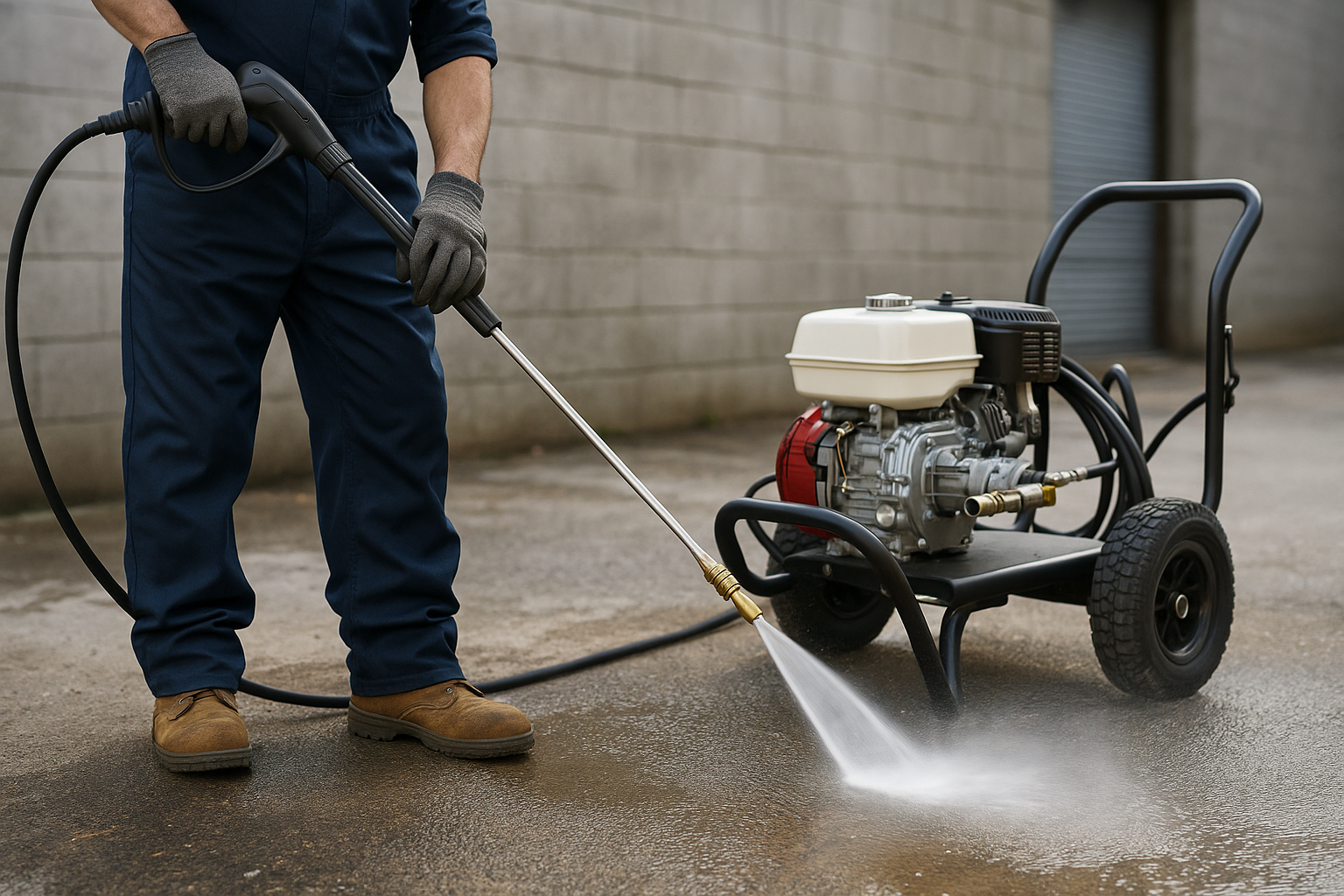
When it comes to serious cleaning power, few tools compare to a gas pressure washer. These machines are the workhorses of the pressure washing industry, delivering higher PSI (pounds per square inch) and GPM (gallons per minute) than most electric models can ever achieve.
For professional contractors, choosing a gas-powered unit isn’t just about raw performance — it’s about reliability, mobility, and profitability. Every minute of downtime eats into revenue, and a gas pressure washer ensures you can tackle even the toughest jobs without compromise.
Whether you’re cleaning heavy equipment, restoring concrete, washing fleets, or handling demanding residential jobs, the gas pressure washer is often the best strategic investment.
What is a Gas Pressure Washer?
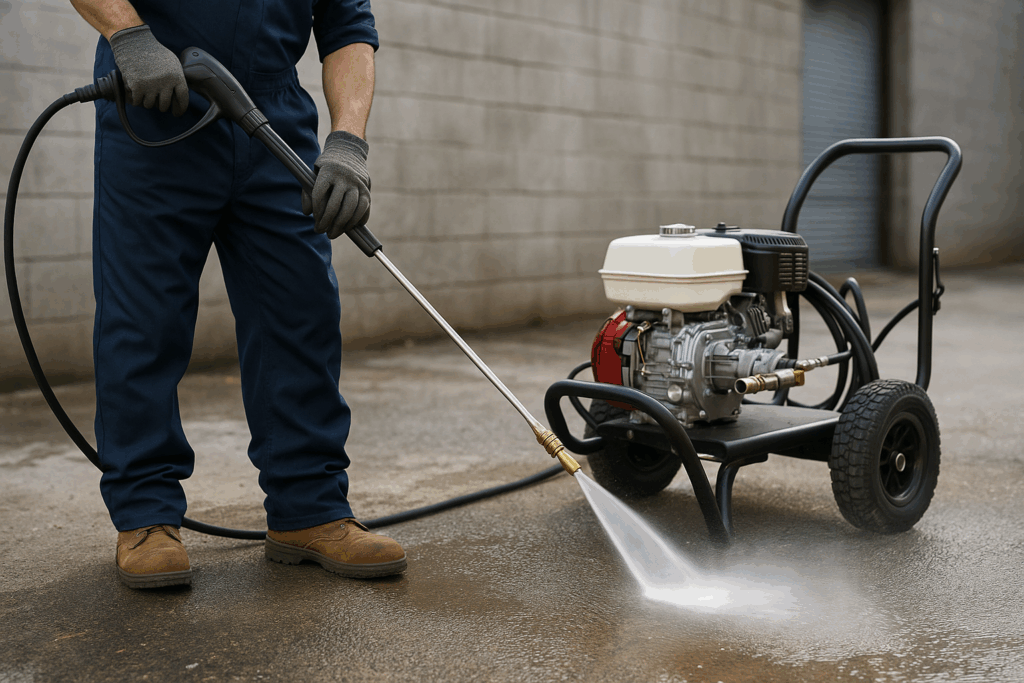
A gas pressure washer is a high-powered cleaning machine that uses a gasoline engine to drive a pump, producing a high-pressure stream of water capable of blasting away dirt, grease, oil, mold, and other contaminants.
Unlike electric units, which are limited by power cord length and lower PSI, gas models are self-contained, portable, and capable of delivering industrial-grade cleaning power.
Key Components:
- Engine: Gasoline engine (Honda, Kohler, Vanguard, etc.) provides raw power.
- Pump: Typically a triplex plunger pump for professional models.
- Frame: Heavy-duty steel or aluminum for durability.
- Hose & Nozzles: Designed for high PSI and extended use.
- Fuel Tank: Provides runtime flexibility for mobile operations.
Why Choose a Gas Pressure Washer?
1. Unmatched Cleaning Power
Gas models can reach 3,000–5,000+ PSI and 3–10 GPM, far beyond the capacity of electric machines. This means faster cleaning and the ability to remove stubborn stains, grease, and grime.
2. True Mobility
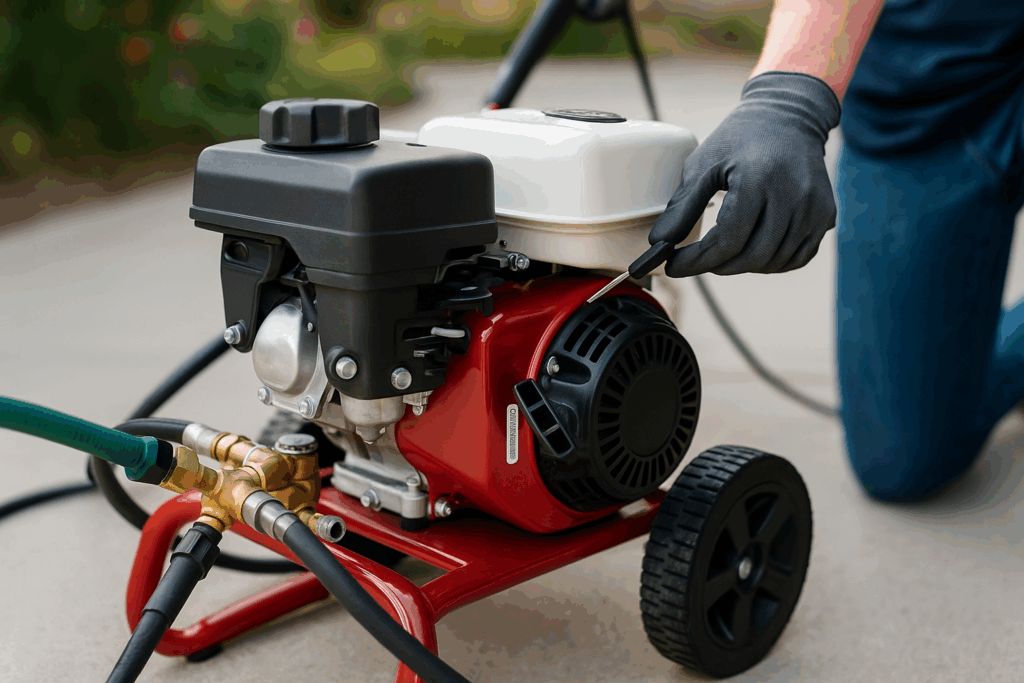
No power cords. No dependence on outlets. You can take your gas washer anywhere — farms, construction sites, warehouses, remote areas. This makes it the preferred choice for mobile contractors.
3. Durability for Professionals
Commercial gas units are designed to withstand daily, continuous use. Industrial engines and triplex pumps are built for longevity, minimizing downtime and repair costs.
4. Versatility Across Applications
From delicate surfaces (with proper nozzles) to heavy-duty degreasing, gas pressure washers can handle residential, commercial, and industrial jobs alike.
5. Independence from Power Supply
Gas units allow you to operate without relying on electricity — a crucial advantage for contractors working at new builds, construction sites, or rural areas.
Common Applications of Gas Pressure Washers
Gas-powered units dominate the professional cleaning industry because they deliver where electric machines fall short.
- Construction: Remove mud, paint, and concrete splatter from heavy equipment and surfaces.
- Fleet Washing: Clean trucks, buses, and trailers quickly with higher GPM.
- Industrial Facilities: Strip away oil, grease, and debris from machinery and floors.
- Residential Work: Driveways, sidewalks, siding, decks, and roofs.
- Agriculture: Sanitize tractors, barns, and milking equipment to prevent contamination.
- Marine Applications: Wash boat hulls, docks, and equipment in saltwater environments.
Gas Pressure Washer vs. Electric Pressure Washer
| Feature | Gas Pressure Washer | Electric Pressure Washer |
|---|---|---|
| Power (PSI/GPM) | 3,000–5,000+ PSI, 3–10 GPM | 1,500–2,000 PSI, 1–2 GPM |
| Applications | Commercial & industrial jobs | Light residential tasks |
| Portability | Fully mobile, no cords needed | Limited by outlet access |
| Durability | Heavy-duty, industrial build | Consumer-grade components |
| Maintenance | Requires fuel, oil, and servicing | Minimal maintenance |
| Noise | Louder operation | Quiet |
Verdict: For professional use, gas pressure washers are unmatched. Electric is fine for homeowners with light cleaning needs, but gas is the standard for serious jobs.
Key Features to Look For in a Gas Pressure Washer
When investing in a gas pressure washer, evaluate these essentials:
- Engine Quality – Look for Honda GX, Kohler Command Pro, or Vanguard.
- Pump Type – Triplex pumps (not axial) for durability and rebuildability.
- Frame & Construction – Powder-coated steel or stainless steel frames.
- PSI & GPM Balance – Higher PSI for stubborn stains, higher GPM for speed.
- Portability Options – Wheel size, skid mounts, or trailer mounts.
- Fuel Efficiency – Some models are more fuel-efficient for long shifts.
- Hot vs Cold Water – Hot water models are better for grease and sanitization.
Maintenance Tips for Gas Pressure Washers
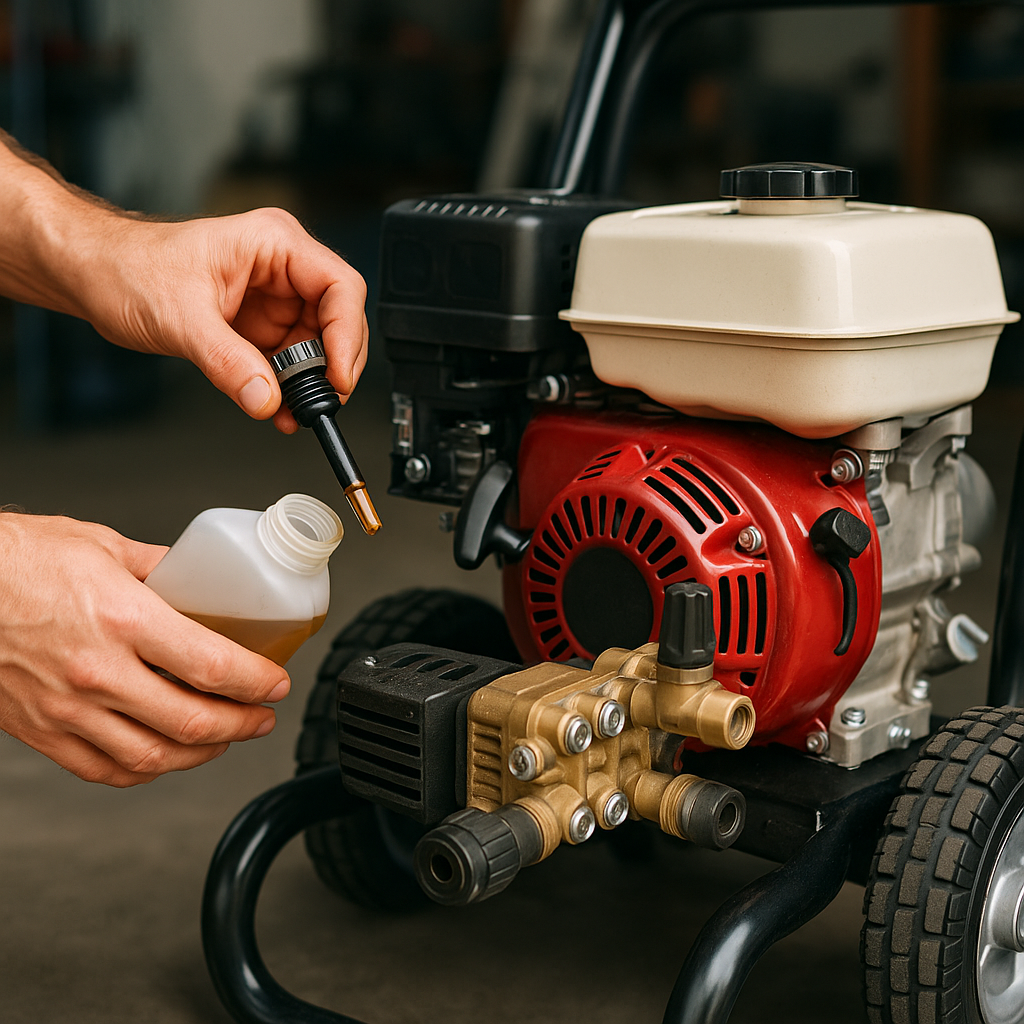
Owning a gas washer comes with ongoing maintenance responsibilities. A disciplined routine keeps your equipment reliable.
- Oil Changes: Regularly change both engine and pump oil.
- Air Filters: Replace or clean frequently in dusty environments.
- Fuel Care: Use fresh gasoline and stabilizers for long storage.
- Winterization: Flush water and add antifreeze before freezing conditions.
- Nozzle Care: Replace worn or clogged nozzles for consistent spray.
- Hose Inspection: Look for cracks, leaks, or bulges.
Pro Tip: Keep a maintenance logbook — it boosts resale value and ensures timely servicing.
Gas vs. Diesel Pressure Washers
Gas and diesel units both dominate professional markets, but they serve different needs:
- Gas Pressure Washer:
- More common and widely available.
- Balanced power and portability.
- Ideal for most contractors.
- Diesel Pressure Washer:
- Superior torque and fuel efficiency.
- Better for continuous industrial use.
- Typically larger, heavier, and pricier.
Cost vs. Value: The ROI of Gas Pressure Washers
At first glance, gas pressure washers cost more than electric units. But their long-term ROI is undeniable:
- Fewer repairs & downtime → more billable hours.
- Faster job completion → reduced labor costs.
- Ability to secure larger contracts → higher profitability.
- Resale value retention → equipment holds its worth.
Think of your gas pressure washer as a strategic investment, not an expense.
Safety Considerations
While powerful, gas pressure washers must be used with caution:
- Protective Gear: Always wear safety goggles and gloves.
- Carbon Monoxide Risk: Never use gas units indoors without proper ventilation.
- High-Pressure Risks: Use the correct nozzle; never point the spray at people or pets.
- Hot Surfaces: Engines and pumps heat up quickly — allow cooldown before maintenance.
Final Thoughts
For professionals, a gas pressure washer is more than just a tool — it’s the backbone of your operation. With unmatched power, portability, and durability, it delivers consistent uptime, efficiency, and profitability.
Whether you’re expanding into industrial work, scaling a residential business, or upgrading your fleet, investing in a gas-powered washer gives you the edge needed to stand out in a competitive market.
5 Useful Blogs
- Gas vs Diesel Power Washer
Compare gas and diesel units to see which best fits your workload, fuel efficiency needs, and budget. - Heated Pressure Washer Advantages
Learn why hot water washers excel at cutting grease, oil, and sanitizing tough industrial surfaces. - Pressure Washer Trailer Checklist
A practical checklist covering must-have components for a reliable and efficient trailer setup. - Advantages of Skid Pressure Washer
Discover why skid-mounted units are popular for mobility, durability, and long-term value. - Commercial Power Washer: Expert Guide
An in-depth guide on selecting the right commercial unit to maximize uptime and profitability. - Pressure Washer Comparison: Gas vs Electric vs Diesel
Side-by-side comparison of different power types to help you choose the right washer for your business.