Introduction
When it comes to choosing the right pressure washer, there is no one-size-fits-all solution. The type of equipment you select directly affects your cleaning power, mobility, maintenance requirements, and overall profitability. For professional contractors, fleet operators, and industrial cleaners, this decision is not just about buying a tool — it’s about securing the efficiency and reliability of your entire operation.
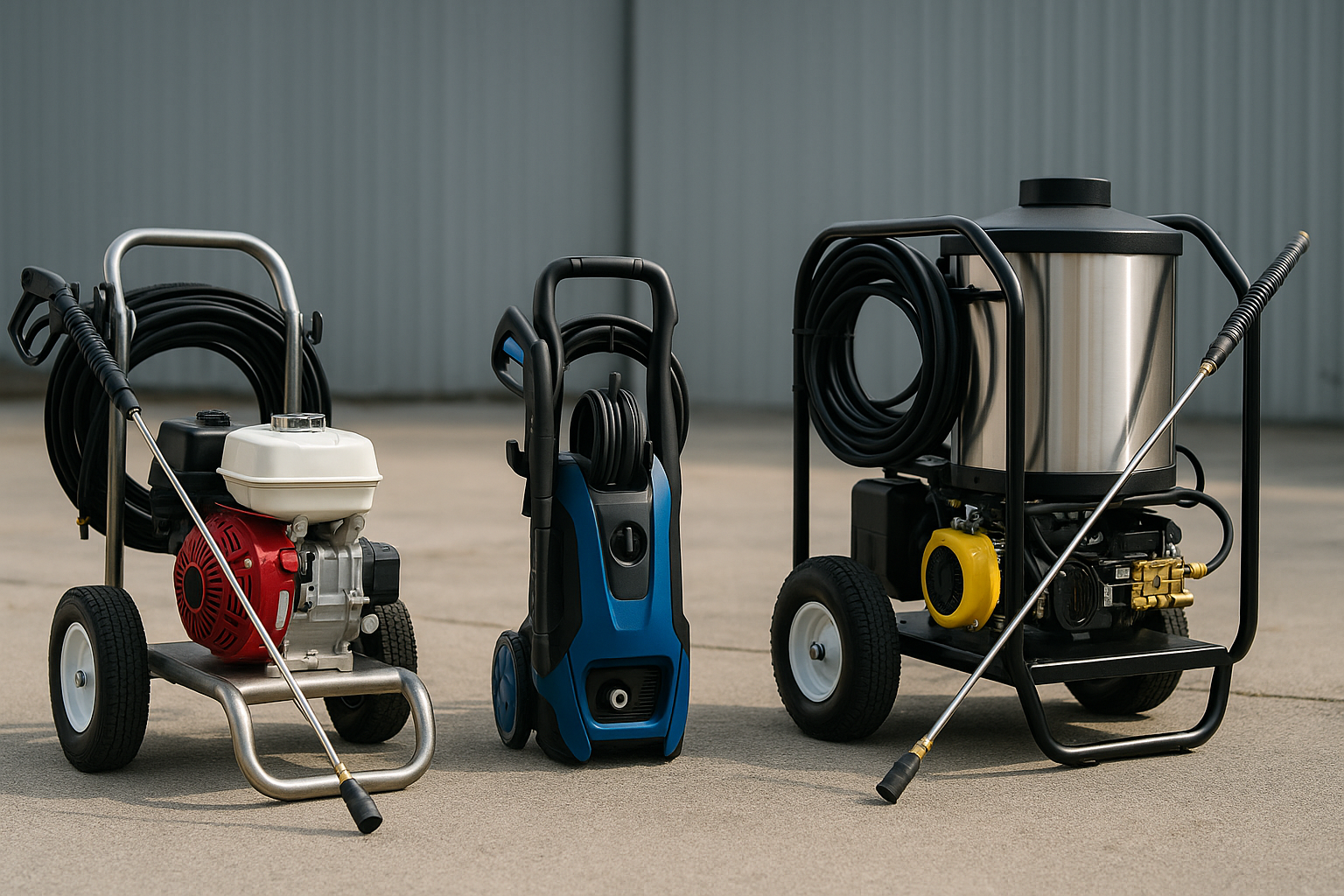
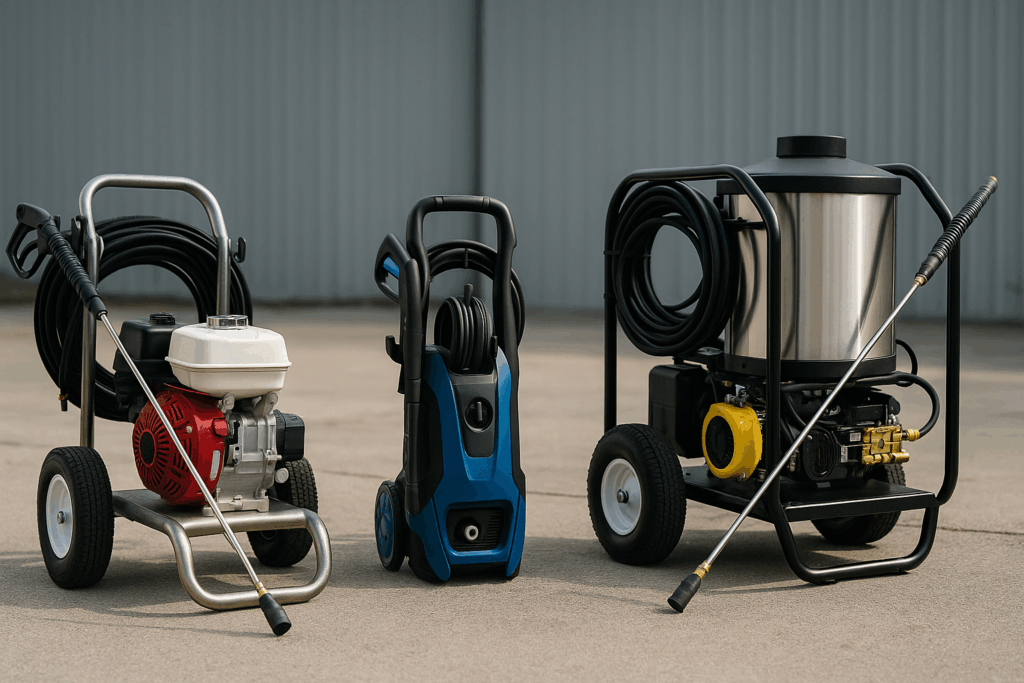
In this pressure washer comparison, we’ll take a closer look at the three main categories of machines: gas, electric, and diesel pressure washers. Each option comes with unique advantages and trade-offs that make it better suited for specific applications. Understanding the distinctions is key to making a strategic investment that matches your workload and long-term goals.
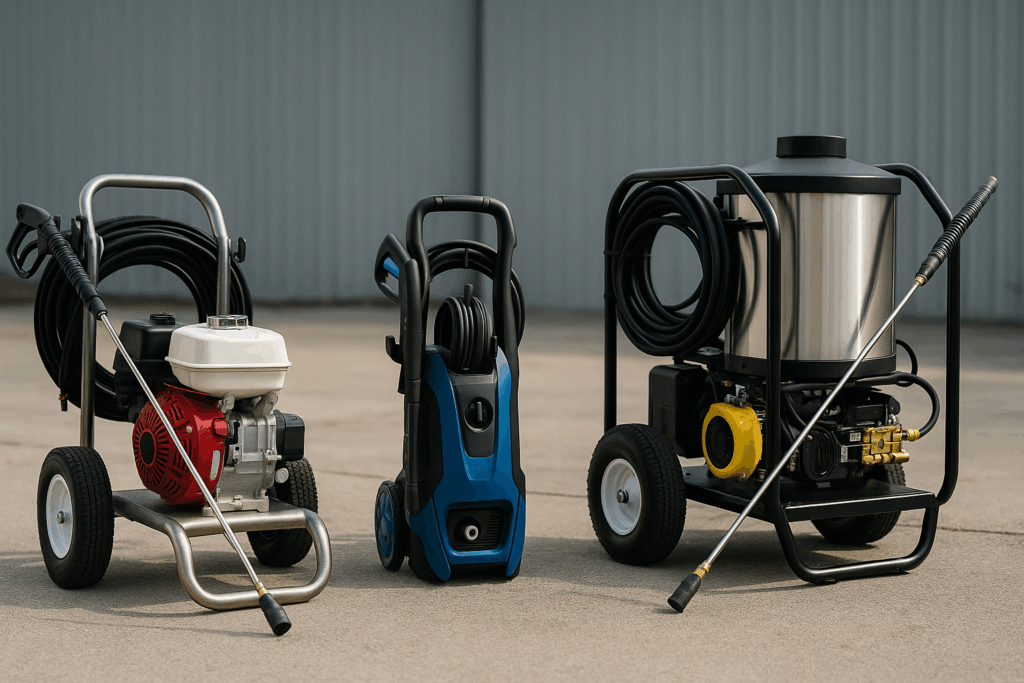
Gas Pressure Washers: Mobility & Power
Gas pressure washers are widely regarded as the backbone of the professional cleaning industry. They combine portability with serious cleaning force, making them the most popular option for contractors working across varied environments.
The true strength of gas-powered models lies in their independence from electrical outlets. You can transport them to remote job sites, construction projects, or agricultural fields without worrying about extension cords or generator hookups. With power ratings often between 3,000 and 5,000+ PSI and 3–10 GPM, they deliver the muscle required to cut through grease, paint, heavy mud, and oil stains quickly and effectively.
However, mobility and power come with responsibilities. Gas units require consistent maintenance, including oil changes, spark plug replacements, and proper fuel care. They are also louder than electric models and must be used outdoors due to carbon monoxide emissions. Despite these drawbacks, their versatility, speed, and durability make them an essential investment for professionals aiming to maximize uptime and revenue.
Best For: Contractors handling residential driveways, siding, decks, vehicle fleets, heavy machinery, and large surface jobs.
Electric Pressure Washers: Clean & Convenient
Electric pressure washers are often overlooked by professionals, but they hold a strong place in certain markets. While not as powerful as gas or diesel machines, they offer a unique combination of quiet operation, zero emissions, and minimal maintenance.
Electric units are ideal for environments where noise levels and air quality are critical concerns — such as food processing facilities, indoor warehouses, or residential neighborhoods with strict noise regulations. Their lighter weight and compact design also make them easy to maneuver, which appeals to small business owners and homeowners who want a reliable yet low-maintenance cleaning solution.
On the downside, electric pressure washers are limited to 1,500–2,000 PSI and 1–2 GPM, which makes them less effective for heavy-duty work. They also require access to outlets or generators, which restricts mobility compared to gas and diesel models. For professionals who need continuous uptime and high PSI/GPM for industrial applications, electric washers are not sufficient.
Best For: Light residential cleaning, small commercial properties, indoor sanitation, and situations where portability is not the main priority.
Diesel Pressure Washers: Heavy-Duty Workhorses
Diesel-powered pressure washers sit at the top of the power spectrum. These machines are designed for contractors and companies that require continuous, heavy-duty cleaning across demanding industrial environments.
Diesel engines are well known for their torque, endurance, and fuel efficiency under load. This allows them to run for longer shifts with fewer refueling stops, a critical advantage when tackling large-scale jobs such as mining equipment cleaning, oil rig sanitation, or municipal infrastructure projects. Their ability to integrate with hot water systems also makes them indispensable for jobs involving grease, oil, and industrial contaminants.
The trade-off for this power is higher upfront cost and weight. Diesel machines are heavier and less mobile than gas units, and they require more frequent servicing due to the complexity of their engines. Additionally, noise levels are significant, making them less suitable for residential or indoor work. Still, for businesses that prioritize uptime and long-term ROI, diesel pressure washers are unmatched in reliability.
Best For: Industrial facilities, oil & gas operations, fleet yards, mining equipment, and continuous-use environments where downtime is unacceptable.
Pressure Washer Comparison Table
| Feature | Gas | Electric | Diesel |
|---|---|---|---|
| Power (PSI/GPM) | 3,000–5,000+ / 3–10 | 1,500–2,000 / 1–2 | 4,000–7,000 / 4–12 |
| Portability | Fully mobile | Limited by cords | Mobile but heavy |
| Noise | Moderate to loud | Quiet | Loud |
| Maintenance | Medium | Low | High |
| Cost | Moderate | Low | High |
| Best For | Contractors & pros | Home & light tasks | Industrial use |
This table highlights the essential differences at a glance, but the right choice depends on your workload, client expectations, and long-term growth strategy.
ROI: Which One Delivers the Most Value?
When evaluating return on investment (ROI), it’s important to look beyond the initial price tag. A cheaper unit that breaks down frequently costs more in lost hours, client dissatisfaction, and emergency repairs than a premium unit that performs reliably.
- Gas models: strike the best balance between power, cost, and mobility, making them ideal for contractors seeking versatility and value.
- Electric models: are low-cost and easy to maintain, but their limited capabilities restrict them to lighter applications.
- Diesel models: demand a higher upfront investment but provide unmatched endurance for continuous industrial operations, delivering long-term savings through reduced downtime and higher efficiency.
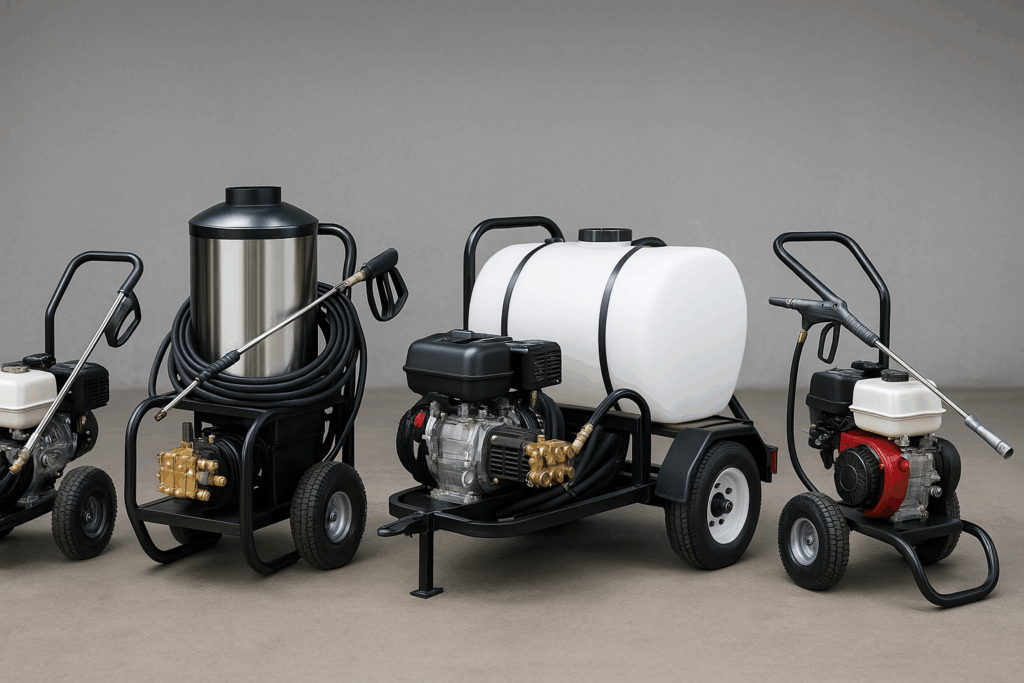
Ultimately, your ROI depends on aligning your equipment with your most common jobs and growth plans. Contractors who anticipate scaling into larger industrial projects will benefit from diesel, while small operators may see the best return with gas-powered units.
Final Thoughts
Choosing the right pressure washer is about more than PSI and GPM — it’s about aligning equipment with your business strategy. Gas washers provide the flexibility and power that most contractors need, electric washers excel in niche environments requiring quiet operation, and diesel washers deliver industrial-grade performance for the toughest jobs.
By understanding the strengths and limitations of each, you can make a pressure washer comparison that secures your profitability, enhances your reputation, and future-proofs your business.
5 Useful Blogs:
- Commercial Power Washer: Expert Guide to Maximize Uptime & Profitability
Learn how the right commercial power washer boosts efficiency, reduces downtime, and drives long-term profitability. - Gas vs Diesel Power Washer
A side-by-side comparison of gas and diesel units to help you choose the right one for your business needs. - Heated Pressure Washer Advantages
Discover why hot water models are essential for cutting through grease, oil, and stubborn contaminants. - Custom Pressure Washer: Engineered for Your Unique Business Needs
Explore how tailored pressure washer builds deliver unmatched durability, efficiency, and competitive advantage. - Gas Pressure Washer: Complete Guide
A detailed guide to gas-powered washers, covering performance, mobility, and maintenance tips for pros.