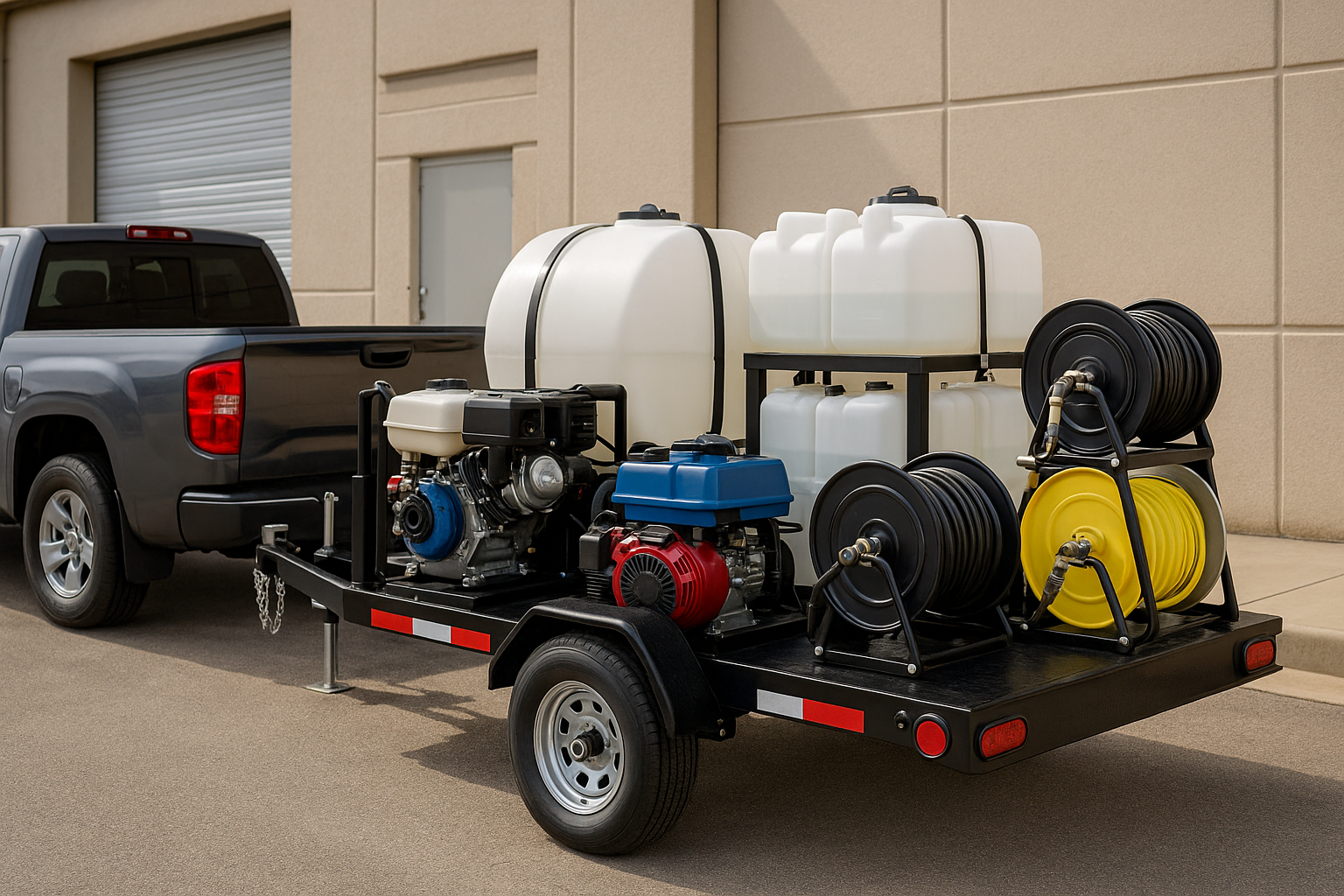
Are you looking for the best Commercial Pressure Washing Trailer blogs to help you run a more efficient and profitable business? If you’re a hands-on pressure washing professional constantly wrestling with an inefficient setup—cumbersome equipment, endless searches for water hookups, or turning down lucrative jobs because you lack a self-contained rig—then you already know how costly inefficiency can be. Every minute spent on setup, utility sourcing, or managing a clunky arrangement directly erodes your profit margins and sabotages your growth.
As a Practical Operations Consultant for mobile service businesses, I routinely see ambitious entrepreneurs hit a ceiling because their equipment limits their reach and efficiency. The challenge lies in balancing crucial mobility with the absolute necessity of reliable, self-contained power and water, all while ensuring quick setup and tear-down times. This isn’t just about getting the job done. It’s about maximizing your billable hours, projecting an uncompromisingly professional image, and building a reputation for reliability that attracts the most profitable clients.
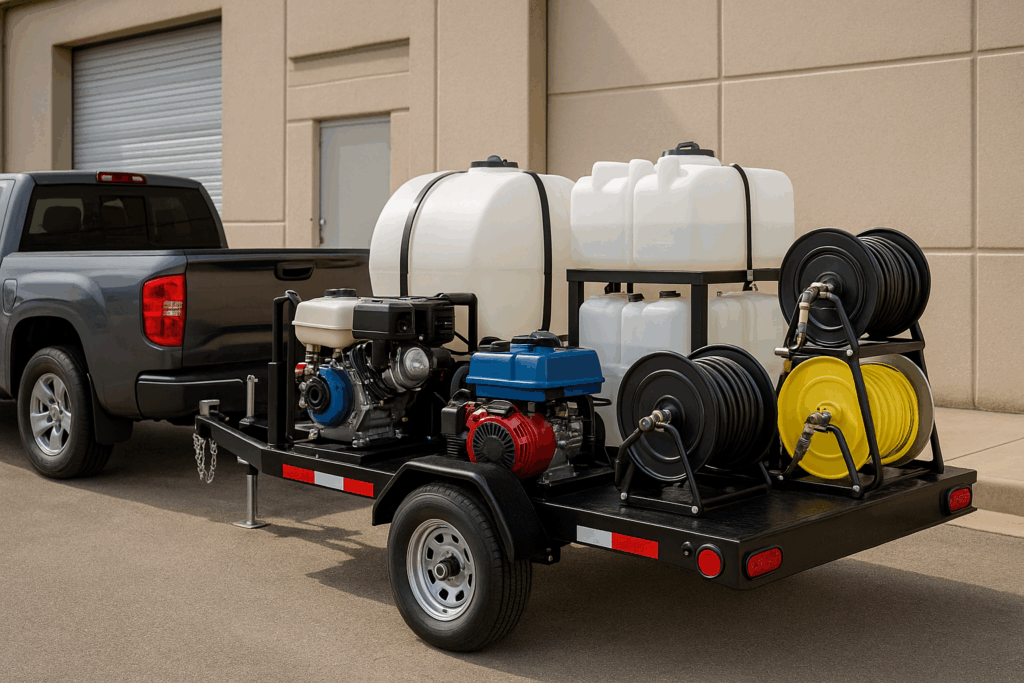
This comprehensive guide educates you on the strategic advantages and practical considerations of investing in a dedicated mobile pressure washer trailer. It’s an asset that promises to transform your operational efficiency, expand your service reach, and ultimately, be the catalyst for your business’s professional growth.
The Strategic Imperative: Why a Mobile Pressure Washer Trailer is Your Ultimate Business Asset
For the pragmatic pressure washing professional, equipment isn’t just a collection of tools. It’s the engine of your enterprise. When that engine sputters due to inefficiencies or outright failure, the consequences reverberate far beyond a single missed job.
Addressing the “Downtime is the Enemy” Mindset
In the mobile service world, time truly is money. Downtime isn’t a minor inconvenience. It’s a direct assault on your bottom line and your professional reputation.
Lost Revenue from Equipment Failure
Imagine a significant commercial fleet washing contract, a multi-vehicle job promising substantial revenue. You arrive on site, eager to start, but your makeshift setup involves hauling multiple water tanks, wrestling with tangled hoses, and endlessly searching for reliable power outlets. An hour slips by in setup alone. Now, consider a pump failure mid-job. That isn’t just the cost of a repair. It’s lost billable hours, the potential for a reschedule, and the immediate impact on your cash flow. Every delay and inefficient step directly translates to less money in your pocket.
Building Trust Through Reliability
Your reputation is your most valuable asset. Showing up to a job with a cobbled-together setup, struggling with unreliable equipment, or facing delays due to operational inefficiencies sends a clear, negative message to your clients. This erodes trust. On the other hand, arriving with a clean, organized pressure washing rig setup that deploys swiftly and performs flawlessly cultivates confidence. Reliability isn’t just about avoiding problems; it’s about consistently delivering high-quality service on schedule, which builds client loyalty and generates invaluable referrals.
Defining the Strategic Advantage for Mobile Service Businesses
A dedicated mobile pressure washer trailer isn’t just an upgrade. It’s a strategic pivot that unlocks new levels of operational capability and market reach.
Unmatched Flexibility for Diverse Job Sites
One of the greatest limitations for a growing pressure washing business is reliance on client-provided utilities. A mobile pressure washer trailer fundamentally changes this. With its self-contained water and power sources, you are no longer dependent on a client having an accessible spigot or a high-amp electrical outlet. This freedom means you can take on jobs in remote locations, new construction sites, large industrial complexes, or even areas where water pressure is notoriously low. This unmatched flexibility significantly expands your service area and the types of contracts you can pursue.
Operating Independently of External Utilities
The true power of a self-contained power wash unit lies in its complete independence. Your onboard water tank provides a consistent supply, eliminating worries about low water pressure or contamination from a client’s hose. Your integrated generator ensures a steady stream of electricity for your high-performance pump, regardless of grid access. This self-sufficiency not only boosts your efficiency by eliminating external variables but also drastically cuts down on setup and tear-down times, allowing you to move from one job to the next with minimal delay.
Projecting Professional Competence
From the moment you pull onto a client’s property, your mobile pressure washer trailer makes a statement. A professionally built and maintained rig, with neatly organized hoses, well-mounted equipment, and clear branding, speaks volumes about your commitment to quality and your expertise. It signals that you are a serious, competent professional, justifying premium pricing and instantly building a strong first impression that leads to repeat business and positive word-of-mouth.
Connecting Investment to Independence and Growth
Your investment in a quality mobile pressure washer trailer is an investment in your business’s future, directly translating to greater autonomy and accelerated growth.
Empowering Business Ownership
For many pressure washing professionals, this career path began as a way to escape the traditional 9-to-5 grind and forge their own path. Investing in a mobile pressure washer trailer is a quintessential entrepreneurial move. It’s about taking control of your operational capabilities, removing dependencies, and building a scalable asset that can generate consistent income. It empowers you to be truly independent, setting your own hours, choosing your own jobs, and dictating your own growth trajectory.
Maximizing Billable Hours
This is perhaps the most tangible benefit for the pragmatic professional. Think about the cumulative time you spend on a typical day just getting ready for the job and packing up afterward. If your portable pressure washer system allows you to cut 30 minutes off each setup and tear-down, and you complete two jobs a day, that’s an hour saved daily. Over a five-day work week, you gain five hours, enough time for an extra job or two. This direct reduction in non-billable time, coupled with the ability to take on more diverse and larger projects, directly translates to a significant increase in your overall job capacity and, crucially, your profit margins.
Understanding the Self-Contained Power Wash Unit: Core Components of Your Mobile Pressure Washer Trailer
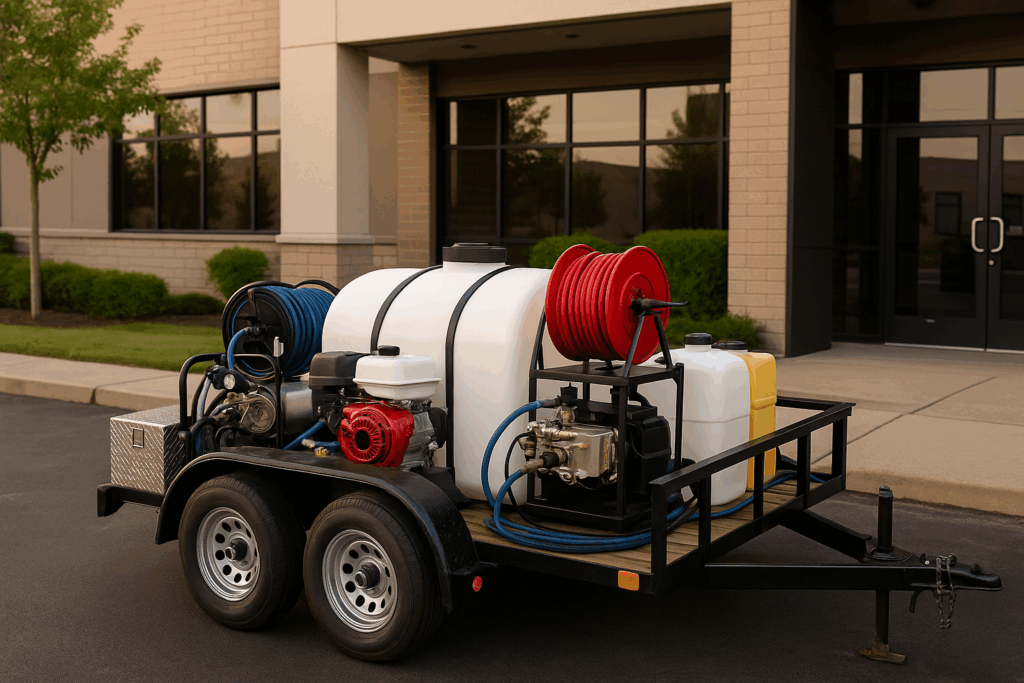
To truly leverage the strategic advantages of a self-contained power wash unit, you need to understand the inner workings that make it so effective. This is far more than just a random collection of parts bolted together—it’s a carefully engineered, fully integrated system where every component is chosen and positioned for a specific purpose. From the engine and pump to the heating system, water storage, hose reels, and chemical delivery, each element plays a critical role in delivering consistent power, reliability, and efficiency in the field. The design is about creating harmony between all moving parts so that the unit can withstand daily use, endure harsh working conditions, and maintain peak performance over the long term. When you recognize that your power wash trailer is not simply equipment but a unified business tool, you can better maintain it, operate it more efficiently, and ultimately get the most out of your investment.
The Powerhouse: Pressure Washer Engines and Pumps
The engine and pump are the heart of your pressure washing rig setup, dictating its power, efficiency, and durability.
Selecting Engine Types
Your choice of engine significantly impacts fuel efficiency, maintenance, and longevity. Gasoline engines are generally more affordable upfront and easier to start in cold weather, common for smaller to mid-sized commercial rigs. However, gasoline engines typically have a shorter lifespan compared to diesel, and their fuel efficiency is lower, which can add up over years of heavy use. Maintenance might be more frequent for sustained commercial operation.
Diesel engines are known for their exceptional durability, longer lifespan, and superior fuel economy, especially under heavy loads. They also produce more torque, beneficial for driving larger pumps. While the initial investment is higher, their lower operating costs and extended service life often provide a better return on investment for high-volume commercial applications. They might require more specialized maintenance, but less frequently.
Professional Pump Technologies
The pump is where the magic happens, converting power into high-pressure water flow. Axial pumps are typically found in consumer-grade or entry-level commercial units. They are simpler in design and more compact, but the crankshaft is in line with the motor, meaning the pump components get hot faster. They are not designed for continuous, heavy-duty use and have a shorter lifespan. For a pragmatic professional aiming for growth and reliability, axial pumps are usually insufficient.
Triplex pumps are the gold standard for commercial pressure washing. These pumps feature three plungers (pistons) arranged in a triangular configuration. This design allows for smoother operation, less pulsation, and, crucially, much greater longevity under continuous heavy use. They are designed to be rebuildable, meaning individual components can be replaced, extending the life of the pump significantly. While more expensive, a triplex pump is a non-negotiable investment for a professional mobile pressure washer trailer.
Matching GPM and PSI to Job Requirements
Understanding Gallons Per Minute (GPM) and Pounds per Square Inch (PSI) is fundamental to selecting the right power. PSI represents the force of the water coming out of the nozzle. Higher PSI is effective for breaking down tough grime, stripping paint, or cleaning hard surfaces. GPM represents the volume of water flowing through the system. Higher GPM is essential for efficient rinsing, covering larger areas quickly, and for tasks like surface cleaning or fleet washing. More water equals faster cleaning and more effective rinsing. For commercial applications, a common sweet spot is around 3.5-5 GPM and 3000-4000 PSI, offering a versatile balance for everything from concrete cleaning to house washing.
Water Management: Tanks, Supply, and Filtration
Your water system is the lifeblood of your portable pressure washer system, ensuring a consistent and clean supply.
Capacity Considerations for Water Tanks
The size of your onboard water tank is a critical decision. It needs to provide sufficient water for your typical job duration without constant refilling, while also being manageable for your towing vehicle. Common capacities range from 100 to 500 gallons or more. A 200-300 gallon tank is often a good starting point for a mobile rig, offering a balance between adequate supply for several hours of operation and manageable weight. Consider the GPM of your pump when calculating; a 4 GPM pump will empty a 200-gallon tank in 50 minutes of continuous use.
Protecting Equipment with Filtration Systems
Don’t overlook the importance of clean water and proper hose management. Your main supply hose from the tank to the pump should be durable and kink-resistant. Integrating a robust filtration system, often a Y-strainer or larger sediment filter, is essential. This protects your expensive pump from grit, sediment, and debris that can prematurely wear down seals and internal components, preventing costly downtime and repairs.
Environmental Compliance with Water Reclamation
While not always a day-one requirement, as your business grows and tackles larger commercial jobs, water reclamation becomes increasingly relevant. Some self-contained systems can integrate filtration and recovery units to meet environmental regulations, especially in sensitive areas or for specific industrial cleaning tasks. Even without full reclamation, simply being self-contained means you’re not relying on potentially contaminated external sources, giving you more control over your wastewater.
Essential Accessories for a Complete Pressure Washing Rig Setup
A well-equipped pressure washing rig setup goes beyond just the washer. It includes accessories that enhance efficiency, expand capabilities, and ensure safety.
Optimizing Efficiency with Hose Reels
Hose management is crucial for efficiency and safety. Manual hose reels are a cost-effective starting point, requiring manual cranking to wind and unwind hoses. They are robust and reliable but can be time-consuming and fatiguing over a long day or multiple jobs.
Electric hose reels are a significant upgrade in efficiency. With the push of a button, hoses deploy and retract quickly and smoothly. This saves considerable time and physical effort, directly contributing to maximizing billable hours and reducing operator fatigue, especially on larger properties or multi-story jobs. For a pragmatic pro, this is often one of the first upgrades to consider.
Controlled Application with Chemical Injectors
Precise chemical application is vital for effective cleaning and protecting surfaces. Downstream injectors are simple and common. They inject chemicals after the pump, often requiring a specific type of pressure washer nozzle to draw the chemical. They are cost-effective but offer less precise control over the mixing ratio.
Proportioners allow for much more accurate and consistent mixing of chemicals directly into your water stream before the pump. This ensures optimal cleaning power, reduces chemical waste, and prevents damage to surfaces from improper concentrations. For specialized cleaning, a proportioner is an invaluable tool.
Expanding Services with Specialized Nozzles
These tools allow you to tackle a wider range of jobs more efficiently. Surface cleaners are rotary tools that dramatically speed up the cleaning of flat surfaces like concrete driveways, sidewalks, and patios, ensuring an even, streak-free finish. They typically use two or more rotating nozzles within a shroud.
Beyond the standard 0, 15, 25, and 40-degree nozzles, consider turbo nozzles for aggressive cleaning, soap nozzles for chemical application, or even specific gutter cleaning attachments to expand your service offerings and improve quality.
Secure Storage Solutions
Efficient organization within your mobile pressure washer trailer is key to operational flow and preventing damage or loss. This includes securely mounted racks for wands and guns, dedicated bins or shelves for various nozzles and small tools, and compartmentalized areas for chemical bottles to prevent spills and cross-contamination. Investing in good storage solutions protects your assets and makes every aspect of the job more streamlined.
Crafting Your Ideal Pressure Washing Rig Setup: Design and Customization for Peak Efficiency
The success of your mobile pressure washer trailer depends not only on the quality and durability of its individual components, but also on the way those components are strategically integrated into a single, highly efficient system. It’s the thoughtful arrangement and smart customization that transform a basic setup into a high-performance, revenue-generating machine. Every detail—from the placement of water tanks and hose reels to the routing of power lines and chemical delivery systems—affects ease of use, safety, and productivity on the job site. When each element is positioned for maximum accessibility, balance, and workflow efficiency, your crew can work faster, minimize downtime, and reduce unnecessary strain on both operators and equipment. This is where strategic design truly shines—turning a collection of quality parts into a cohesive unit that operates seamlessly, delivers consistent results, and stands out as a professional, dependable asset for your business.
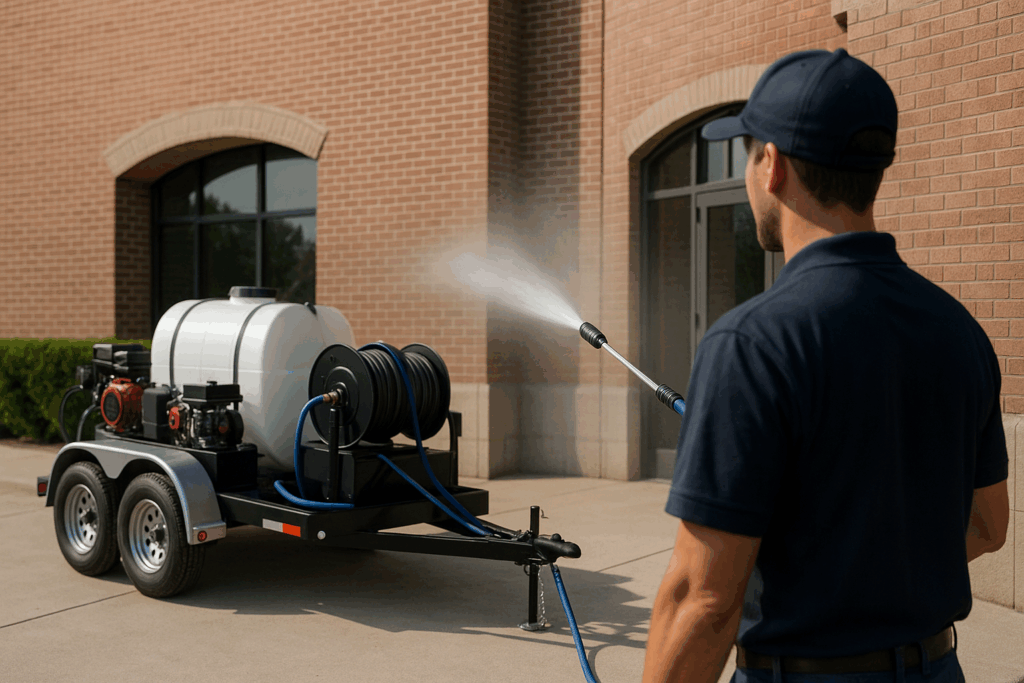
Trailer Selection: Foundations of Your Portable Pressure Washer System
The trailer itself is the bedrock of your portable pressure washer system. Its selection dictates stability, security, and long-term utility.
Open Versus Enclosed Trailers
Open trailers are more affordable, lighter, and easier to maneuver, offering quick access to equipment. However, your gear is exposed to the elements, theft, and road grime. Branding opportunities are limited to decals on the trailer frame itself.
Enclosed trailers provide superior security, protecting your valuable equipment from theft and harsh weather conditions. They also offer ample space for prominent branding and serve as a mobile workshop, allowing you to work in adverse weather. The trade-off is higher cost, increased weight, and potentially reduced fuel efficiency for your towing vehicle. For a professional building a long-term business, the benefits of an enclosed trailer often outweigh the initial investment.
Axle Configuration and Towing Capacity
This is a non-negotiable safety and compliance consideration. A single axle is suitable for lighter loads and smaller portable pressure washer system setups. They are easier to maneuver but have lower weight capacities and can be less stable at highway speeds, especially if the load is not perfectly balanced.
A tandem axle (dual axle) is essential for heavier loads typical of a fully equipped mobile pressure washer trailer with a large water tank. They offer superior stability, better weight distribution, and a higher Gross Vehicle Weight Rating (GVWR). In the event of a tire blowout, a tandem axle trailer is also safer to control. Always ensure your towing vehicle’s towing capacity safely exceeds the fully loaded weight of your trailer. Overloading is a serious safety hazard and can lead to costly fines or accidents.
Investing in Frame Durability
The trailer’s frame is its skeleton. Look for heavy-duty, welded steel construction. C-channel or tube steel frames are generally preferred for strength and resistance to twisting. Galvanized steel or trailers with a high-quality powder coat finish offer superior corrosion resistance, which is vital given the constant exposure to water and chemicals in pressure washing. Investing in a robust frame means your trailer will withstand years of heavy use on diverse job sites, avoiding costly structural repairs down the line.
Optimizing Layout for On-Site Operations
An intuitive, ergonomic layout is paramount for maximizing efficiency and minimizing setup and tear-down times. This directly addresses your core audience’s needs.
Designing for Ergonomics and Workflow
Every component should be strategically placed for ease of access and logical workflow. Pressure washers, hose reels, and chemical tanks should be readily accessible without excessive bending or reaching. Think about how you move around the trailer during setup, operation, and pack-up. For instance, placing the primary pressure washer and hose reels near the rear door of an enclosed trailer allows for rapid deployment. This thoughtful design drastically cuts down on non-billable time.
Ensuring Safe Weight Distribution
Improper weight distribution can lead to dangerous trailer sway or excessive tongue weight, stressing your towing vehicle. Heavy components like water tanks, generators, and the pressure washer unit should be mounted as close to the trailer axles as possible to maintain balance. The goal is to achieve about 10-15% of the trailer’s total loaded weight on the tongue for optimal towing stability. This requires careful planning during the design phase.
Choosing Mounting Options
Many pressure washer units, and even entire self-contained power wash unit setups, come on pre-built skids. These can be bolted down to the trailer floor or, in some cases, are designed to be removable, offering flexibility for different applications or for maintenance. They simplify installation and ensure components are factory-aligned.
For individual components like water tanks, hose reels, or custom storage, bolting directly to the trailer frame provides a secure and permanent solution. Ensure proper backing plates and hardware are used to prevent loosening or damage during transit.
Creating Dedicated Zones
Organizing your trailer into distinct zones streamlines operations. This includes a water zone where your water tank, filtration, and primary inlet or outlet hoses are located. An equipment zone provides dedicated space for your pressure washer, generator, and main hose reels. A chemical zone is a separate, secure, and spill-proof area for detergents, acids, and other cleaning solutions. This is crucial for safety and preventing corrosion. Finally, a storage zone is for wands, nozzles, surface cleaners, brushes, and other ancillary tools, kept neatly organized to prevent damage and facilitate quick retrieval.
Customization and Future-Proofing Your Mobile Pressure Washer Trailer
Your mobile pressure washer trailer isn’t just equipment. It’s a mobile command center and a statement of your professionalism.
The Trailer as a Mobile Billboard
Your trailer is a rolling advertisement. High-quality vinyl wraps or prominent decals with your company name, logo, services, and contact information turn your rig into a powerful marketing tool. A clean, well-maintained, and branded trailer communicates reliability and professionalism, attracting new clients even when you’re just driving to a job.
Enhancing Safety and Night Work Capability
An integrated electrical system, usually powered by your generator or a dedicated battery, is invaluable. It can power auxiliary lights for working early mornings or late evenings, charge batteries for cordless tools, and operate electric hose reels. Good internal and external lighting enhances safety on the job site and extends your operational hours, giving you a competitive edge.
Planning for Business Expansion
Think long-term when designing your rig. Allocate space and consider plumbing or wiring pre-runs for potential future additions like a soft washing system, a hot water unit, a larger water tank, or a dedicated water reclamation system. Planning for these upgrades during the initial build or purchase can save significant time and money down the road when your business is ready to expand into new, higher-value services.
Strategic Procurement: Choosing and Acquiring Your Mobile Pressure Washer Trailer
Acquiring a mobile pressure washer trailer is a significant investment. For the pragmatic professional, this isn’t a purchase to rush into, but a strategic decision requiring due diligence to ensure long-term value.
Navigating Supplier Options: Finding a Trusted Partner
Your supplier choice is as critical as the equipment itself. Avoid the pitfalls of short-term savings that lead to long-term headaches.
Identifying Unreliable Suppliers
The market is flooded with “deals” that promise high power for low prices. A pragmatic pro knows that quality comes at a cost, and deeply discounted equipment often signals compromises in components, construction, or after-sales support. Red flags include vague specifications, lack of detailed component information, short or non-existent warranties, poor online reviews, or a sales process that pressures you without offering genuine consultation. Remember, the true cost of “cheap” equipment is the lost revenue from downtime and endless repair bills.
Prioritizing Value Over Price
Focus on the overall value proposition. A slightly higher upfront cost for a well-built pressure washing rig setup with commercial-grade components, a strong warranty, and a reputable manufacturer will pay dividends in reliability and longevity. A robust warranty is your insurance against manufacturing defects, while a supplier known for durability means fewer breakdowns and consistent uptime.
The Importance of Expert Support
This is where a supplier truly becomes a partner. When a part fails, or you encounter a technical issue on a job site, rapid access to genuine replacement parts and knowledgeable technical support is invaluable. A supplier who understands the nuances of a self-contained power wash unit and can provide quick, accurate troubleshooting advice minimizes your downtime, protecting your reputation and your revenue. Choose a vendor who offers more than just a sale. Look for a commitment to your long-term operational success.
Pre-Built vs. Custom-Built Trailer Systems
Deciding whether to buy a ready-made unit or design your own system is a key consideration.
Advantages of Turnkey Solutions
A pre-built portable pressure washer system, often referred to as a turnkey solution, is designed by experienced manufacturers, tested, and ready to roll. Its advantages include immediate deployment, proven designs, and often comprehensive warranties for the entire system. There is also no need for specialized engineering knowledge. These solutions are ideal for those just starting out or established businesses looking to quickly add another reliable rig without the overhead of custom design and assembly. The downsides include less customization and potentially a higher initial cost than a do-it-yourself approach, limiting you to the manufacturer’s choices for components.
Considerations for Building Your Own Rig
For the experienced professional with mechanical aptitude, building your own pressure washing rig setup offers maximum customization and potential cost savings on components. It allows you to tailor the system exactly to your specific needs and preferences, choosing every component. You can also save on labor costs if you do the assembly yourself. However, it requires significant time, specialized engineering knowledge, especially for plumbing, electrical, and weight distribution. There’s also the potential for compatibility issues between components, and the warranty might only apply to individual parts, not the entire system. This path can quickly become more expensive and time-consuming if you lack the expertise.
Essential Pre-Purchase Checklist
Whether pre-built or custom, a thorough inspection is crucial.
- Trailer Frame: Check for rust, cracks in welds, and bent sections.
- Axles and Tires: Inspect tire tread, pressure, and look for uneven wear. Check axle alignment and suspension components.
- Lighting and Wiring: Ensure all trailer lights (brake, turn, running) are functional. Check wiring for exposed or damaged sections.
- Water Tank: Inspect for leaks, cracks, and proper baffling. Ensure secure mounting.
- Engine: Check oil levels, signs of leaks, and ensure it starts smoothly.
- Pump: Inspect for leaks around seals, check oil levels (if applicable), and listen for unusual noises.
- Hose Reels: Test smooth operation of manual or electric reels. Check for kinks or damage to hoses.
- Mounting: Verify all components are securely bolted or mounted to the trailer frame.
- Documentation: Ensure all titles, registrations, and component manuals are provided.
Financing Your Investment
A quality mobile pressure washer trailer is a substantial investment, but it’s one that rapidly pays for itself.
Understanding Return on Investment
Calculate the Return on Investment (ROI) in terms of increased hourly rates you can charge due to professional appearance, the extra jobs you can complete daily or weekly due to reduced setup times, and the ability to take on higher-value contracts. A self-contained power wash unit often pays for itself within a year or two through these gains, making it an excellent financial decision for growth.
Loan and Lease Options
Traditional business loans or SBA loans can provide capital for equipment purchases. These often offer competitive interest rates and longer repayment terms, spreading the cost. Equipment leasing, similar to renting with an option to buy, can offer lower monthly payments and preserve capital. It can also provide tax advantages as lease payments might be deductible as operating expenses. Explore options with financial institutions that understand the unique needs of small businesses and equipment financing.
Mastering On-Site Operations with Your Mobile Pressure Washer Trailer
Having a top-tier mobile pressure washer trailer is only half the battle. Mastering its on-site operation, from deployment to cleanup, is where the pragmatic professional truly excels, maximizing every billable hour.
Maximizing Uptime: Setup, Operation, and Tear-Down Protocols
Every minute saved on non-billable tasks directly contributes to your bottom line. Optimized protocols are key.
Efficient Site Assessment
Before you even unhitch, perform a quick visual assessment. What are the water access points? Are there obstacles? What’s the best way to park for quick setup and minimal hose run? Identifying potential hazards, like sloped surfaces, delicate landscaping, or public foot traffic, allows you to position your pressure washing rig setup strategically and pre-plan your workflow, preventing delays and safety issues.
Rapid Deployment Strategies
Your goal is to become a finely tuned machine. Imagine arriving at a client’s property, and within 15 minutes, your portable pressure washer system is fully operational. This is achievable with a well-designed trailer and rehearsed processes. Keep your high-pressure and garden hoses connected to their reels, ready to deploy. Have your most frequently used nozzles easily accessible. Mentally assign specific areas for equipment deployment, such as pump activation switch or chemical injection controls. If working with a crew, assign specific setup tasks to each member. Practice your setup routine until it’s second nature.
Professional Cleanup and Pack-Up
The job isn’t over until the site is clean and your equipment is neatly stowed. This means ensuring no puddles are left behind, hoses are reeled up neatly, and any debris generated during cleaning is removed. A swift, organized pack-up demonstrates efficiency and respect for the client’s property, reinforcing their positive experience and encouraging repeat business. Leaving the site cleaner than you found it, with your professional mobile pressure washer trailer shining, builds lasting trust.
Addressing the Self-Contained Nuance: Water and Power Independence
The defining characteristic of a mobile pressure washer trailer is its ability to operate autonomously. This independence requires smart management of your resources.
Managing Water Consumption
Even with a large water tank, water is a finite resource. Start with a pre-soak by applying chemicals and letting them dwell, reducing the amount of high-pressure rinsing needed. Use proper nozzle selection that offers good coverage for rinsing without excessive water waste. Focus your rinse on areas where chemicals were applied or where dirt needs to be flushed. Regularly monitor tank levels and plan for refills if jobs are extended or multiple large projects are scheduled.
Generator Sizing and Fuel Management
Your generator must be correctly sized to power your pressure washer’s electric motor and any accessories like electric reels or lights, plus have a comfortable buffer. Check the starting (surge) watts and running watts of all your electrical components. Your generator’s rated running watts must exceed the sum of your equipment’s running watts, and its surge watts must handle the initial startup load. Always carry extra fuel, safely stored in approved containers, for extended operations. Monitor fuel levels constantly. Plan your route to include fuel stops if working far from your base. Consistent fuel supply ensures consistent power for your self-contained power wash unit.
Strategies for Remote Locations
The true test of your mobile rig. Always start with a full tank and have ample generator fuel. If possible, do a quick drive-by or use satellite imagery to assess access roads and potential obstacles. Carry extra hose, common fittings, and a basic tool kit for minor on-site repairs, allowing you to be truly self-reliant.
Advanced Cleaning Techniques and Expanding Service Offerings
A versatile pressure washing rig setup allows you to go beyond basic cleaning, tackling more complex and profitable jobs.
Soft Washing Applications
Soft washing uses low-pressure, often garden hose pressure, and specialized cleaning solutions to gently remove algae, mold, mildew, and dirt from delicate surfaces like siding, stucco, roofs, and painted surfaces without causing damage. Your mobile rig, particularly with a chemical proportioner, is perfectly suited for this, allowing you to offer a safer, more effective clean for a broader range of residential and commercial properties.
Comprehensive Surface Preparation
Your rig needs to be adaptable. For concrete, use a surface cleaner for large, flat areas to ensure uniform cleaning and prevent “zebra stripes.” Post-treatment for stain prevention can also be offered. Wood requires lower pressure and specific wood cleaning detergents to avoid damaging fibers. Siding often requires soft washing techniques. Fleet vehicles may require specialized degreasers and specific nozzles for different vehicle types and hard-to-reach areas. Having the right accessories and understanding the appropriate techniques for each material allows you to bid confidently on diverse projects.
Specialized High-Value Services
These jobs command higher prices due to their difficulty and specialized nature. Graffiti removal requires specific solvents and often higher pressure or hot water units if your rig supports it. Rust stain removal requires specialty acids or rust removers, carefully applied to avoid damaging the underlying surface. Oil stain removal uses strong degreasers and hot water for highly effective results. Your mobile pressure washer trailer provides the power and flexibility to carry and deploy the necessary chemicals and tools for these lucrative, niche services.
Ensuring Longevity and Compliance: Maintenance, Safety, and Regulations
For the pragmatic professional, safeguarding your investment and operating within legal boundaries are non-negotiable aspects of long-term success.
Proactive Maintenance for Your Portable Pressure Washer System
Downtime due to neglected maintenance is entirely preventable. A proactive approach ensures your portable pressure washer system is always job-ready.
Daily Checks
Before and after each job, dedicate 5-10 minutes to quick inspections. Check fluid levels, including engine oil, pump oil, and fuel. Inspect hoses for kinks, cuts, or leaks and ensure connections are tight. Check nozzles for blockages or wear that could affect the spray pattern. Inspect tire pressure and condition. Look for any general leaks from the pump, engine, or plumbing. These simple checks can catch minor issues before they escalate into costly failures.
Routine Servicing
Adhering to the manufacturer’s maintenance schedule is essential for keeping your commercial pressure washing trailer operating at peak performance. For the engine, perform regular oil changes, replace air filters, inspect spark plugs (gasoline units), and check fuel filters (diesel units). Maintain your pump with routine oil changes, valve inspections, and seal checks to prevent costly breakdowns. Keep the electrical system reliable by cleaning battery terminals, verifying wiring integrity, and ensuring all connections are secure. For the trailer itself, lubricate axles, inspect and grease wheel bearings, check brake functionality, and confirm that all lights and signals are working properly. Recording each service in a maintenance log not only ensures you stay on schedule but can also boost your trailer’s resale value by proving consistent upkeep.
Winterization and Storage
If you operate in climates with freezing temperatures, proper winterization is crucial to prevent costly damage. This involves flushing out all water from the pump, hoses, and lines, and running an RV antifreeze solution through the system to prevent freezing. During extended storage, ensure the trailer is in a secure, dry location, and consider fuel stabilizers for engines.
Troubleshooting Common Issues
You don’t need to be an engineer to keep your commercial pressure washing trailer running smoothly. A basic grasp of troubleshooting can save you time, money, and downtime. If there’s no pressure, inspect the water supply, inlet filter, nozzle, and unloader valve for blockages or faults. If the engine won’t start, check the fuel level, oil, spark plug (for gas units), or battery (for diesel units). For pulsating pressure, look for air in the hose, restricted inlets, worn seals, or clogged nozzles. Keep a quick-reference troubleshooting guide on hand and handle minor fixes yourself whenever it’s safe—reserving professional service for more complex issues.
Safety Protocols for Mobile Pressure Washing Operations
Safety isn’t just a compliance issue. It’s a moral imperative and a smart business practice that protects you, your team, and your clients.
Essential Personal Protective Equipment (PPE)
High-pressure water can cause serious injury. Always wear:
- Safety glasses or a face shield to protect eyes from debris and chemicals.
- Chemical-resistant gloves for handling detergents.
- Steel-toe boots to protect feet from falling objects and water.
- Long pants and sleeves to protect skin from high-pressure spray and chemical splashes.
- Hearing protection if operating loud equipment for extended periods.
On-Site Safety Best Practices
Implement best practices for barricades, signage, public awareness, and hazard identification.
- Zone off work areas: Use cones, caution tape, or barricades to create a clear perimeter.
- Display warning signs: Such as “Wet Floor” or “Caution: High Pressure Washing in Progress.”
- Communicate: Inform clients and any bystanders about the work being done.
- Identify hazards: Look for uneven surfaces, electrical outlets, open windows, plants, or pets that could be affected.
Safe Chemical Handling and Storage
Follow safe procedures for hazardous materials on a mobile rig.
- Labeling: All chemical containers must be clearly labeled.
- MSDS Sheets: Have Material Safety Data Sheets readily accessible for all chemicals.
- Ventilation: Store chemicals in a well-ventilated, secure area on the trailer.
- Spill Kits: Carry appropriate spill kits to contain and clean up chemical spills quickly.
- Dilution: Always follow manufacturer guidelines for chemical dilution ratios to ensure effectiveness and safety.
Towing Safety
Practice proper hitching, load balancing, brake checks, and safe driving.
- Hitching: Ensure the coupler is securely latched to the hitch ball, safety chains are crossed, and the electrical connection is firmly in place.
- Load Balancing: Ensure proper tongue weight. Distribute heavy items evenly over the axles.
- Brake Checks: Confirm trailer brakes (if equipped) are functioning before departure.
- Driving: Drive slower, allow for longer braking distances, and be extra cautious when turning or changing lanes. Your mobile pressure washer trailer significantly increases your vehicle’s overall length and weight.
Navigating Regulations and Compliance
Operating a mobile service business means adhering to local, state, and federal regulations. Being compliant protects your business from fines and legal issues.
Understanding Local Permits and Licensing
Check with your city and county for any specific business licenses, mobile vendor permits, or operational permits required for pressure washing services, especially if you use chemicals or operate in specific zones. Requirements vary widely by jurisdiction.
Environmental Regulations
In many areas, uncontrolled runoff into storm drains is illegal due to pollutants. Be aware of local wastewater regulations. Some jobs may require diverting water to green spaces or containing it for proper disposal. Dispose of used cleaning solutions and contaminated water according to local hazardous waste regulations. Never dump chemicals illegally. Be mindful of local noise ordinances, especially when operating powerful pressure washers and generators in residential areas during early morning or late evening hours.
OSHA Guidelines
If you have employees or even use subcontractors, familiarizing yourself with OSHA (Occupational Safety and Health Administration) guidelines for pressure washing and chemical handling is crucial. This covers everything from fall protection to proper use of ladders, eye wash stations, and confined space entry if applicable to your services. Compliance ensures a safe workplace and avoids costly penalties.
The Mobile Pressure Washer Trailer as a Catalyst for Business Growth
Your mobile pressure washer trailer isn’t just an expense. It’s a powerful tool for scaling your operations, enhancing your competitive edge, and ultimately, achieving true financial independence and a better lifestyle.
Scaling Your Operations with Strategic Investments
A well-equipped rig isn’t just about doing the same work faster. It’s about enabling a new level of business capability.
Expanding Service Reach
With your self-contained power wash unit, you’re no longer limited by the infrastructure of a job site. This means you can confidently bid on and execute large commercial contracts, multi-unit residential projects, or jobs in rural or remote areas that were previously out of reach. Your geographical service area instantly expands, opening up new revenue streams.
Increasing Job Capacity
The cumulative effect of faster setup, efficient operation, and rapid tear-down means you can complete more jobs in a day or week without sacrificing quality. This directly translates to higher revenue per day and a more consistent workflow, allowing you to maximize the potential of your working hours.
Building a Reputation for Excellence
Your professional appearance, efficient workflow, and ability to handle any job site will set you apart. Clients are willing to pay a premium for reliability, consistent high quality, and a hassle-free experience. As your reputation for excellence grows, you’ll attract more discerning, higher-paying clients, moving away from price-sensitive bids.
Operational Efficiency as a Competitive Advantage
In a competitive market, efficiency isn’t just a buzzword. It’s a strategic weapon.
Streamlined Workflow
A well-designed pressure washing rig setup contributes to an overall streamlined workflow. When you’re not constantly troubleshooting or re-organizing, you can focus on executing the job, communicating with the client, and managing your business processes more effectively. This creates a smoother, more professional experience for both you and your customers.
Reduced Operating Costs
Every minute you shave off your setup time is fuel saved instead of wasted idling. Each precise, efficient cleaning pass conserves water. Every well-organized tool cuts down on time spent searching. These small, repeated efficiencies add up—reducing operating costs, increasing productivity, and boosting your net profit on every single job.
Higher Profit Margins
By combining increased job capacity, the ability to command higher rates, and reduced operating costs, a strategic investment in a mobile pressure washer trailer directly results in significantly higher profit margins. This isn’t just about making more money. It’s about building a more financially robust and sustainable business.
Long-Term Vision: Achieving Financial Independence and a Better Lifestyle
Your investment is a stepping stone towards the ultimate goal: a successful, independent life built on your own terms.
Reinvesting in Your Business
As profits increase, you’ll have the capital to reinvest. This might mean adding another mobile pressure washer trailer to build a fleet, hiring and training employees, diversifying into complementary services like window cleaning or gutter cleaning, or investing in advanced equipment like hot water units. This reinvestment fuels sustainable, compounding growth.
Leveraging Client Testimonials and Referrals
Satisfied clients who appreciate your professionalism, efficiency, and the quality of your work become your best marketing asset. Encourage testimonials and ask for referrals. A strong reputation, built on the back of reliable service delivered by a top-notch mobile pressure washer trailer, will generate a steady stream of new business.
Inspiring Success Stories
Across the country, countless pragmatic pressure washing pros have transformed their fledgling operations into thriving enterprises by making the strategic leap to a dedicated mobile rig. They were once where you might be now, struggling with inefficiency. Their success underscores a fundamental truth: a quality mobile pressure washer trailer is not just equipment; it’s the foundation for professional growth, operational independence, and ultimately, the lifestyle you’re working hard to achieve.
A well-equipped mobile pressure washer trailer is not merely an upgrade; it is an indispensable asset for any pressure washing professional committed to growth. It offers the unparalleled flexibility to reach diverse job sites, the self-sufficiency to operate independently, and the efficiency required to deliver consistent, high-quality service, maximizing your billable hours and strengthening your professional reputation. This strategic investment is essential for professional growth, delivering the autonomy and scalability necessary to truly thrive in the mobile service industry.
Don’t let inefficient setups hold your business back. It’s time to invest in your future. Build your ideal pressure washing rig setup with our expert guidance, and unlock your full operational potential.
More Useful Blogs
- Pressure Washer Trailer for Sale – Learn what to look for when buying a trailer and how to choose the right setup for your business needs.
- Pressure Washer Trailer Checklist – A comprehensive pre-purchase and setup checklist to ensure your trailer is ready for the job.
- Heated Pressure Washer Advantages – Discover the benefits of hot water cleaning and when it’s worth the investment.
- Advantages of Skid Pressure Washer – Explore the pros of skid-mounted systems for mobility and efficiency.
- What is a Skid Pressure Washer? – Understand how skid systems work and why they’re popular among professionals.
- Commercial Pressure Washing Trailer Maintenance Tips – Maintain your commercial pressure washing trailer to extend life and maximize profits.
- Custom Pressure Washer Cart: Agile Solutions for Tough Job Sites – Custom pressure washer carts provide agility, durability, and efficiency, helping you tackle tough cleaning jobs with ease.
- Commercial Power Washer: Expert Guide to Maximize Uptime & Profitability – Maximize uptime and profits with expert tips for choosing a durable, efficient commercial power washer.
- Precision & Comfort: The Strategic Advantage of a Custom Pressure Washer Gun – Boost comfort, control, and efficiency with a custom pressure washer gun built for professional-grade performance and durability.
- Unlocking Profitability with a Heated Power Washer – Maximize revenue and efficiency with faster cleaning and high-value services powered by hot water.