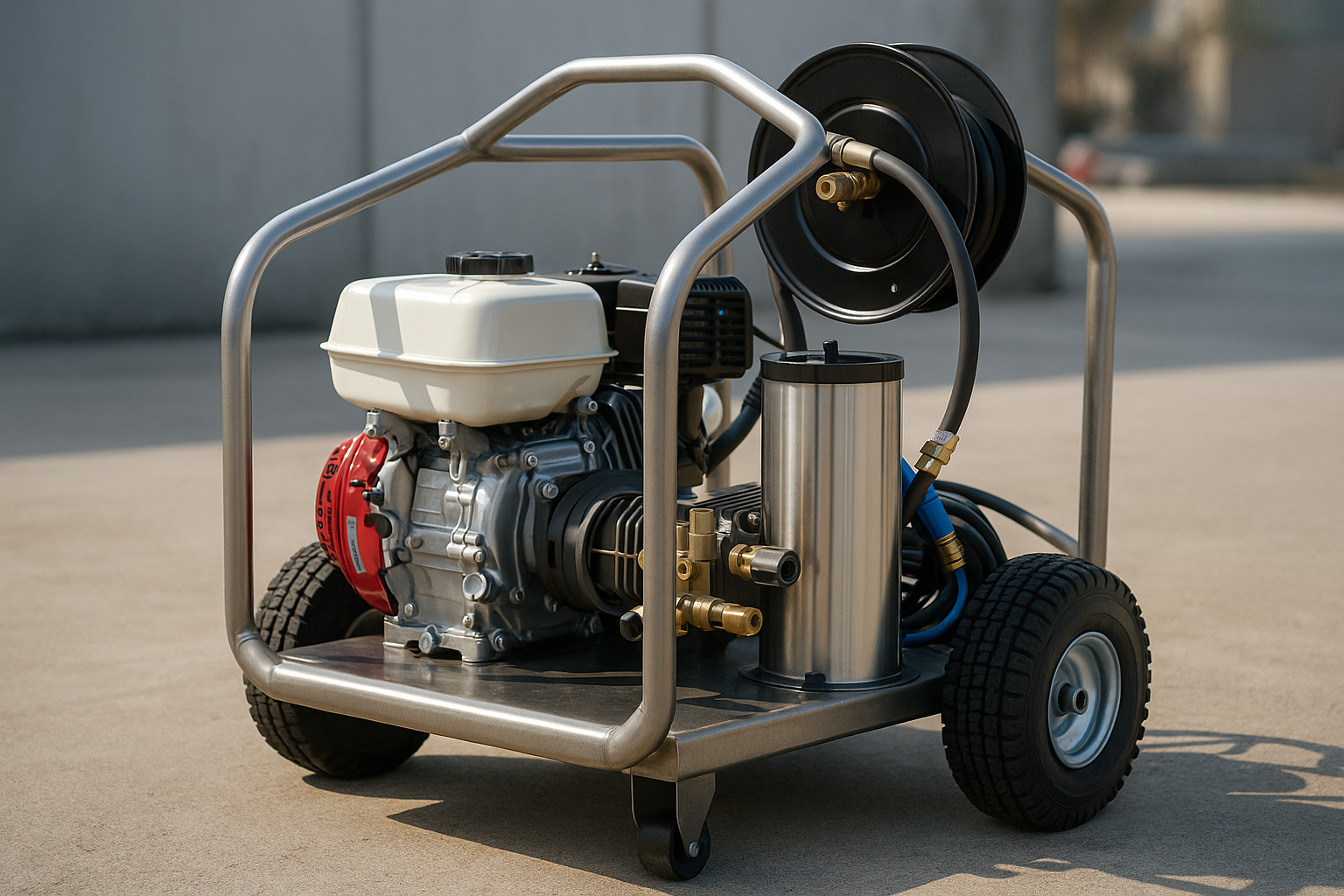
Is your pressure washing business truly mobile, or are you simply “portable”? Many ambitious entrepreneurs mistakenly believe that moving equipment from job to job constitutes a mobile operation. As an operational efficiency expert and mobile business solutions architect, I can confirm that true mobility, the kind that drives profitability and professionalism, hinges on one critical asset: a strategically designed commercial pressure washer trailer. This guide focuses on building an efficient mobile power washing business with a commercial pressure washer trailer.
This article explores how a meticulously planned mobile power washing rig transforms your workflow, enhances your professional image, and, most importantly, minimizes the “downtime enemy” that plagues so many in this industry. Our goal is to guide you through the strategic considerations for selecting or designing a setup that optimizes operations, enhances professionalism, and ensures maximum uptime. Ultimately, a well-designed commercial pressure washer trailer is the bedrock of an efficient, professional, and profitable mobile pressure washing operation, minimizing downtime and maximizing job capacity.
The Strategic Advantage of a Commercial Pressure Washer Trailer: Your Mobile Efficiency Hub
Beyond Just Equipment: A Foundation for Your Business
For the pragmatic pressure washing professional, a commercial pressure washer trailer is far more than a collection of equipment mounted on wheels. It represents a fundamental shift from a chaotic, time-consuming setup to a streamlined, professional mobile operation. Imagine rolling onto a job site with everything you need, perfectly organized, calibrated, and ready for action. This is the distinction between merely owning equipment and truly leveraging a dedicated system designed for peak performance.
Why a Dedicated Commercial Pressure Washer Trailer Transcends a Basic Setup
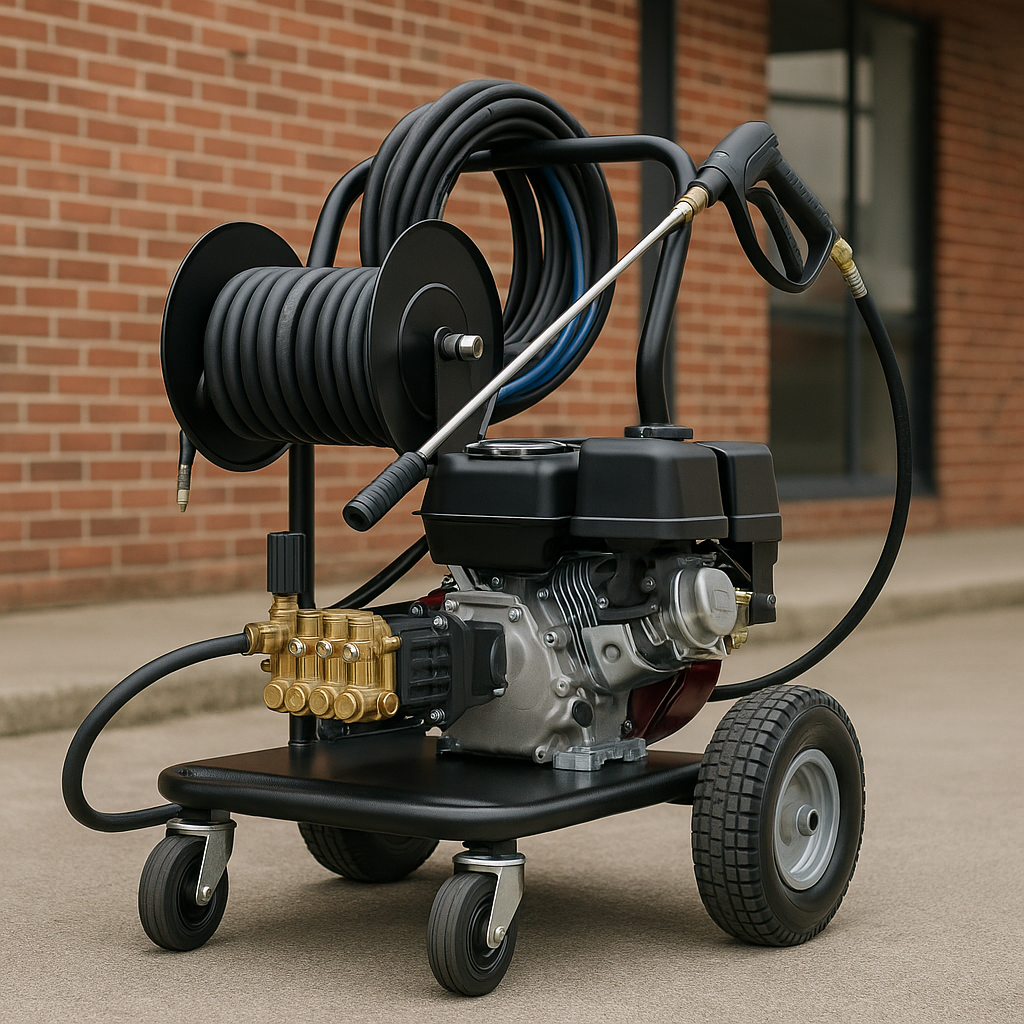
A basic setup, often cobbled together in the back of a pickup truck or requiring multiple trips to a client’s property, introduces friction at every turn. Hoses tangled, chemicals unsecured, equipment scattered—it is not just messy; it is a monumental drain on your most precious resource: time. A purpose-built commercial pressure washer trailer, however, centralizes your entire operation. It is a cohesive unit where every component has its place, ensuring rapid deployment and efficient use. This level of organization speaks volumes about your commitment to quality and professionalism, setting you apart immediately.
Establishing a Professional Image from Day One
Your trailer is often the first visual representation of your business that a client encounters. A well-designed, clean, and organized mobile power washing rig instantly conveys competence and reliability. Consider the impression: a haphazard collection of gear versus a sleek, branded trailer that looks like a custom-engineered solution. The latter instills confidence, signals a serious business, and justifies premium pricing. This is not just about aesthetics; it is a strategic marketing tool that contributes directly to your reputation.
The Foundational Role of a Well-Designed Mobile Rig in Achieving Financial Independence
For entrepreneurs focused on financial independence through hard work, every minute counts. A professional mobile power washing rig is not just convenient; it is an accelerator. It reduces non-billable setup and teardown time, allowing you to complete more jobs per day. It minimizes the risk of equipment damage during transport, preventing costly repairs and replacements. By systemizing your operations, it frees you to focus on the quality of your work and scaling your business, rather than wrestling with logistical challenges. This direct link to operational efficiency is a cornerstone of building a sustainable, profitable venture.
Solving the “Downtime Enemy”: Maximizing Uptime and Profitability
For any pressure washing professional, downtime is the ultimate nemesis. It is not just an inconvenience; it is lost revenue, damaged reputation, and a direct threat to your business viability. The fear of equipment failure, of showing up to a job unprepared, is a constant source of frustration. This is precisely where a strategically designed commercial pressure washer trailer becomes your most potent weapon.
The Critical Impact of Equipment Failure and Setup Delays on Revenue and Reputation
Imagine arriving at a commercial property, ready to tackle a major cleaning project, only to discover a tangled hose, a dead generator, or a missing nozzle. Each minute spent troubleshooting, retrieving forgotten items, or dealing with an unreliable setup is a minute you are not earning. More critically, it erodes client trust. A missed deadline, a delayed start, or a need to reschedule due to equipment issues can lead to negative reviews, lost referrals, and a severely tarnished reputation—all directly impacting your bottom line.
How an Integrated Mobile Power Washing Rig Minimizes Operational Interruptions
An integrated mobile power washing rig is engineered to prevent these scenarios. By securely mounting all components like the pressure washer skid, water tanks, and hose reels, you eliminate the risk of damage during transport. Built-in storage solutions ensure every tool and chemical has its place, preventing frantic searches. Pre-plumbed systems mean you simply connect to the water source, start the generator, and you are operational. This systematic approach drastically cuts down setup time, allowing you to move quickly from one job to the next. For example, a professional who previously spent 45 minutes unpacking and connecting their equipment at each site could cut that time to 10-15 minutes with a custom-built trailer, allowing them to fit an extra job or two into their day, directly boosting revenue.
Strategic Design as a Shield Against Lost Revenue
The very act of designing a custom pressure washer trailer build forces you to think through every operational step. This foresight translates into resilience. If a hose blows, a spare is readily accessible. If a specific chemical is needed, its designated, leak-proof storage ensures it is there. The ability to quickly identify and resolve minor issues, facilitated by an organized setup, prevents them from escalating into major operational interruptions. This proactive approach to design serves as a robust shield, protecting your revenue streams and ensuring consistent, uninterrupted service delivery.
Defining Your Needs: Who Benefits Most from a Custom Trailer?
While the advantages of a dedicated trailer are broad, certain professional profiles stand to gain the most from this strategic investment.
Scaling Established Businesses Looking for Operational Leverage
For a business that has moved beyond its initial growth phase and is now seeking to scale, a commercial pressure washer trailer is not just an upgrade; it is a critical piece of operational infrastructure. These businesses have likely felt the pains of inefficient setups and understand that increased job volume demands optimized workflows. A custom trailer allows them to take on more complex, higher-paying jobs, standardize their operations across multiple crews, and truly leverage their existing client base for expansion.
New Entrepreneurs Focused on a Professional Launch and Immediate Efficiency
New entrepreneurs, especially those escaping dead-end jobs to build something sustainable, recognize the importance of a strong first impression and efficient operations from day one. Investing in a professional mobile power washing rig allows them to immediately present themselves as a serious contender in the market. This enables them to attract better clients, build a solid reputation quickly, and avoid the common pitfalls of amateur setups that can lead to early burnout or failure. It is about setting a high bar for themselves from the outset.
Differentiation from Hobbyist Setups
The distinction between a hobbyist and a professional is stark, and a well-designed commercial pressure washer trailer embodies this difference. Hobbyists might use residential-grade equipment, transport it haphazardly, and lack the comprehensive support systems needed for commercial work. Professionals, on the other hand, invest in commercial-grade components, integrate water recovery systems for environmental compliance, and ensure their entire operation is optimized for safety, efficiency, and consistent high-quality output. This visual and operational difference immediately sets the professional apart, justifying higher service fees and attracting clients who value reliability and expertise.
Deconstructing the Ideal Mobile Power Washing Rig: Core Components for Peak Performance
Building the best pressure washing trailer setup requires careful planning and a clear understanding of how each component contributes to overall performance. Success isn’t about buying the most expensive equipment, but selecting the right parts that work together seamlessly. A durable trailer frame, properly sized water tank, and a pump that matches your workload are the foundation of efficiency. Hose reels, nozzles, and wands should be chosen for both reliability and versatility, ensuring you can adapt to different cleaning challenges without wasted time.
Equally important is equipment layout and integration — secure mounting, balanced weight distribution, and easy access to controls all improve workflow and reduce operator fatigue. Adding elements like hot water modules or upgraded chemical injection systems can further expand capabilities and cut job times. When everything is strategically designed to fit together, your trailer setup becomes more than just a mobile rig — it becomes a reliable system that maximizes uptime, efficiency, and profitability.
The Heart of the System: Commercial Pressure Washer and Pump
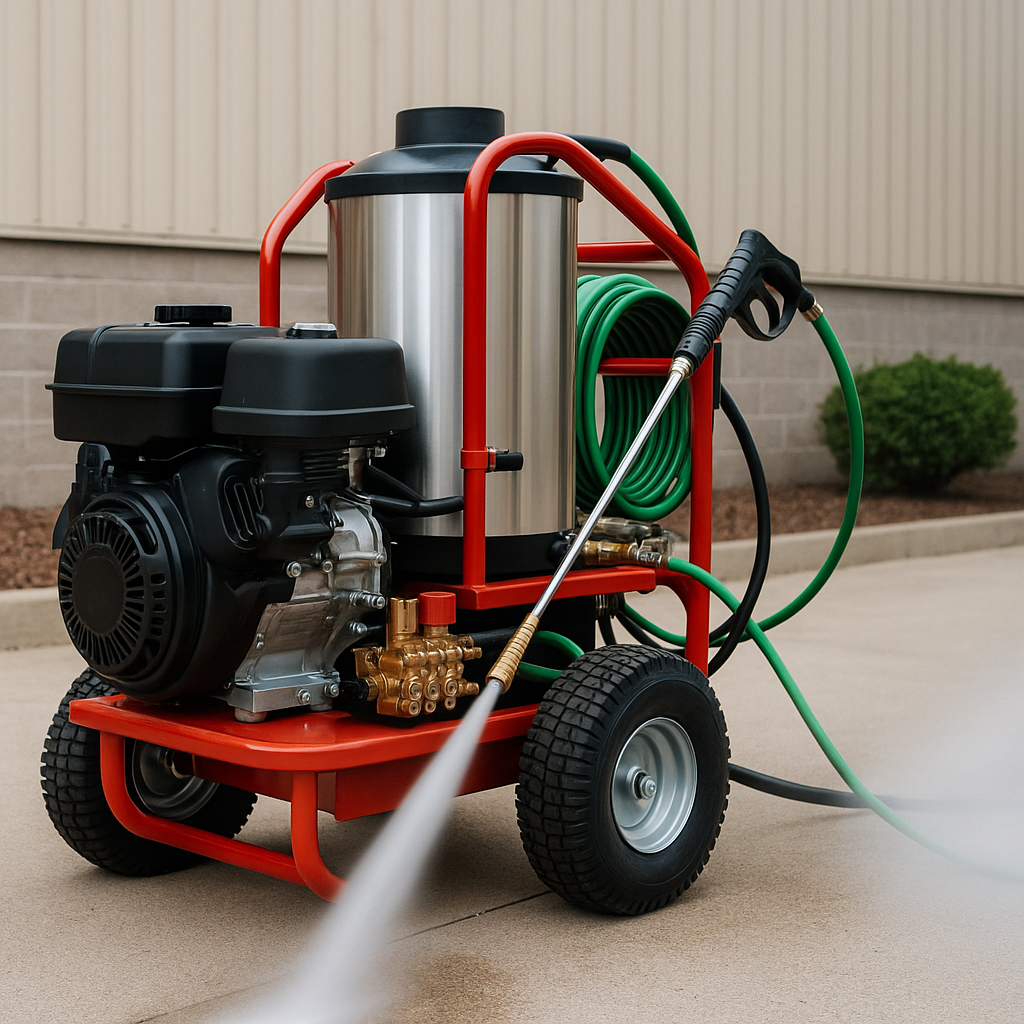
The pressure washer itself is undoubtedly the core of your operation. Its power and reliability dictate your capacity and the quality of your work.
Selecting the Right GPM and PSI for Diverse Applications
Choosing between different GPM (gallons per minute) and PSI (pounds per square inch) ratings is fundamental. PSI dictates the force of the water, crucial for removing tough grime or stains. GPM, however, is often overlooked but arguably more critical for efficiency, as it determines how quickly you can clean a surface. Higher GPM allows you to cover larger areas faster, directly increasing your productivity. For instance, a 5 GPM machine will clean a surface roughly twice as fast as a 2.5 GPM machine at the same PSI. A versatile setup might aim for a balance, perhaps a 5.5 GPM at 2500-3000 PSI, which is effective for a wide range of tasks without being overly aggressive.
Hot Water Heater Integration: Advantages for Specific Cleaning Tasks
While cold water pressure washing is sufficient for many jobs, the integration of a hot water heater system into your commercial pressure washer trailer unlocks significant capabilities. Hot water is indispensable for dissolving grease, oil, chewing gum, graffiti, and sanitation work. It cleans more effectively, often faster, and can eliminate the need for harsh chemicals in some scenarios. For a mobile detailing trailer, hot water is critical for engine degreasing or removing stubborn road grime. This feature immediately expands your service offerings and allows you to tackle higher-value contracts.
Durability and Commercial-Grade Reliability as Key Investment Factors
Never compromise on the quality of your pressure washer and pump. Commercial-grade equipment is built to withstand the rigorous demands of daily, heavy use, unlike residential units. Look for models with reputable pumps (e.g., General Pump, AR, Cat Pumps), durable engines (e.g., Honda, Kohler), and robust frames. While the initial investment is higher, the long-term savings from reduced breakdowns, maintenance, and lost job time far outweigh the upfront cost. This is a critical investment in your business’s uptime and reputation.
Water Management: Supply, Storage and Recovery Systems
Effective water management is paramount for consistency, compliance, and professionalism.
Onboard Water Tanks: Sizing Considerations, Baffling, and Material Choices
An onboard water tank is essential for jobs where on-demand water supply is limited or inconsistent. Sizing depends on your typical job duration, GPM of your machine, and refilling accessibility. Common sizes range from 100 to 500 gallons. Crucially, these tanks should be baffled internally. Baffling prevents water from sloshing violently during transit, which can dangerously destabilize your trailer and towing vehicle. Polyethylene is a common, durable material choice.
Water Recovery System: Compliance, Environmental Responsibility, and Showcasing Professionalism
For many commercial jobs, particularly those involving chemicals or entering storm drains, a water recovery system is not just an option; it is a regulatory requirement. Implementing a system not only ensures compliance with environmental regulations but also demonstrates your commitment to responsible business practices. This dedication to environmental stewardship resonates with clients and can differentiate you, attracting higher-value contracts that prioritize eco-friendly solutions. It is a clear signal of your professionalism and long-term vision.
Filtration and Pre-treatment for Consistent Water Quality
Poor water quality can damage your pump and leave unsightly spots on cleaned surfaces. Integrating a filtration system can protect your equipment from sediment and particulate matter. For specialized applications like window cleaning or mobile detailing, where spotless finishes are critical, a deionization or reverse osmosis pre-treatment system might be considered to prevent hard water spots.
Chemical Application and Control: Precision and Safety
Managing cleaning chemicals efficiently and safely is vital for both results and regulatory compliance.
Chemical Injector Systems: Downstream vs. Upstream, Multi-Solution Setups
A chemical injector system is crucial for applying cleaning solutions. Downstream injectors draw chemicals after the pump, operating at lower pressure and are common for general cleaning. Upstream injectors, or “soap pumps,” draw chemicals before the pump and are often used for stronger, direct applications. For versatility, a multi-solution setup with dedicated lines and pumps allows you to switch between different cleaning agents (e.g., degreasers, rust removers, sanitizers) quickly without cross-contamination.
Dedicated Pumps and Tanks for Soft Washing Trailer Applications
For delicate surfaces like roofs, stucco, or painted exteriors, a soft washing trailer setup is ideal. This involves applying a cleaning solution (often a bleach-based mixture) at very low pressure, allowing the chemicals to do the work, followed by a gentle rinse. A dedicated 12V or air-driven pump and separate tanks for your soft washing solutions are essential for these applications, preventing damage to sensitive surfaces and protecting your primary high-pressure pump from corrosive chemicals.
Safe Storage and Dispensing of Cleaning Agents
Chemicals must be stored securely to prevent spills, leaks, and unauthorized access. Utilize robust, clearly labeled containers, and ensure they are properly secured within your custom pressure washer trailer build. Implementing a spill containment system (e.g., secondary containment trays) is a wise safety measure. Proper dispensing mechanisms, such as metering valves, allow for precise application, minimizing waste and ensuring optimal cleaning results.
Powering Your Operations: Generators and Electrical Systems
Reliable power is the lifeblood of your mobile operation, especially when working off-grid.
Generator Sizing and Fuel Type Considerations for Continuous Operation
Your generator must be sized appropriately for your equipment’s power demands. Calculate the total wattage of your pressure washer, hot water heater (if electric), hose reels, and any other electrical components. It is always wise to err on the side of slightly oversized capacity to prevent strain. Fuel type (gasoline, diesel, propane) impacts running costs, fuel storage, and maintenance. Diesel generators are often preferred for their durability, fuel efficiency, and longer lifespan in commercial applications.
Robust Wiring, Outlets, and Electrical Safety Protocols
The electrical system on your commercial pressure washer trailer must be robust and professionally installed. Use heavy-gauge wiring, weather-resistant outlets, and ensure all connections are secure. Critical safety protocols include proper grounding, circuit breakers, and an emergency shut-off switch for the generator. These measures protect your equipment, your team, and your clients’ property from electrical hazards.
Lighting Solutions for Early Morning or Late Evening Jobs
Extending your operational hours can significantly boost your earning potential. Integrating powerful LED work lights on your trailer, both exterior and interior, provides visibility for early morning starts, late evening finishes, or work in dimly lit areas. This small addition enhances safety and expands your scheduling flexibility, enabling you to take on more jobs.
Hose Management and Ergonomics: Efficiency in Every Connection
Tangled hoses are a productivity killer. Efficient hose management is a hallmark of the best pressure washing trailer setup.
High-Pressure Hose Reels: Manual, Electric, and Spring-Loaded Options
High-pressure hose reels are non-negotiable for quick deployment and retraction of your main pressure washing lines. Manual reels are cost-effective but require effort. Electric reels offer push-button convenience, saving time and physical strain. Spring-loaded reels provide automatic retraction but require careful tensioning. Choose based on your budget, frequency of use, and preference for automation. A typical setup might include 200-300 feet of high-pressure hose to reach most areas from the trailer.
Low-Pressure Hose Reels for Water Supply and Garden Hoses
Dedicated low-pressure hose reels for your water supply hose (connecting to the spigot or tank) and any garden hoses are equally important. These keep lines neat, prevent kinks, and speed up connection and disconnection. Organization here contributes directly to your setup and teardown efficiency.
Strategic Placement for Quick Deployment and Retraction
The placement of your hose reels is critical for ergonomic efficiency. They should be easily accessible, at a comfortable working height, and oriented to allow for a smooth, unobstructed pull. This minimizes bending, lifting, and wrestling with hoses, reducing fatigue and preventing injuries. Consider a setup where the reels are near the back or side of the trailer, allowing direct access to the work area.
Dedicated Air Hose Reels for Specific Applications
If your services include mobile detailing trailer operations or require pneumatic tools, an air compressor and dedicated air hose reels are invaluable. This ensures that compressed air is always on hand for tire inflation, operating air tools, or blowing out crevices during detailing work, further enhancing your versatility.
Beyond the Basics: Essential Tools and Accessories
While the core components form the backbone, several essential tools and accessories elevate your efficiency and capability.
Surface Cleaners: Storage and Accessibility
Surface cleaners are indispensable for efficiently cleaning flat surfaces like driveways, patios, and sidewalks. They should have a designated, secure storage spot on your trailer that allows for easy access and prevents damage during transit. Vertical mounting is often a space-saving solution.
Wands, Nozzles, and Specialized Attachments
Organize your collection of wands, nozzles, and specialized attachments (e.g., turbo nozzles, gutter cleaning attachments, extension wands) in a dedicated, easy-to-reach location. A labeled tray or pegboard system within an enclosed trailer ensures you can quickly grab the right tool for the job, minimizing lost time searching.
Toolboxes and Organized Storage Solutions for Small Parts and Consumables
Small parts like o-rings, quick connects, spare spark plugs, and consumables (e.g., zip ties, tape, cleaning cloths) can quickly disappear. Incorporate robust, weather-sealed toolboxes or dedicated compartments within your custom pressure washer trailer build to keep these items organized and readily available. This preparedness prevents frustrating delays and ensures you can handle minor issues on-site.
Choosing Your Foundation: Types and Sizes of Commercial Pressure Washer Trailers
The choice of trailer itself forms the critical platform for your mobile pressure washing operation. This decision affects far more than just the ability to haul equipment from one job site to another — it directly influences security, branding, maneuverability, and safety. A well-constructed trailer provides a stable, durable base that can handle the combined weight of your water tanks, pressure washer system, and accessories without risk of strain or imbalance.
Enclosed trailers offer added security for expensive equipment and also provide a rolling billboard for your business through custom graphics and branding. Open utility trailers, on the other hand, provide easier access and lighter towing weight but may leave equipment exposed to weather and theft if not properly secured. Beyond design, key considerations such as axle strength, braking systems, and weight distribution play a huge role in safe handling and long-term reliability.
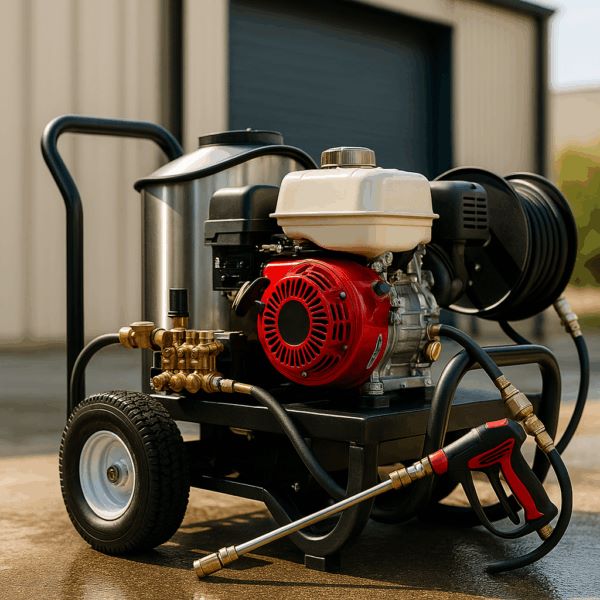
Ultimately, the trailer you choose sets the tone for your entire operation. A thoughtful decision here ensures smoother transport, professional presentation, and a safer, more efficient workflow at every job site.
Open vs. Enclosed Trailers: Weighing the Pros and Cons
This is one of the most significant decisions for your commercial pressure washer trailer. Each type offers distinct advantages.
Security, Weather Protection, and Branding Opportunities with Enclosed Units
An enclosed trailer offers superior security for your valuable equipment, protecting it from theft and vandalism. It also provides complete weather protection, shielding your pressure washer, generator, and chemicals from rain, snow, and extreme temperatures, extending their lifespan. Critically, an enclosed trailer presents a vast canvas for professional branding, allowing for full wraps or prominent signage that turn your mobile power washing rig into a highly effective mobile billboard. This enhances your professional image and generates leads as you travel between job sites.
Accessibility, Ventilation, and Cost-Effectiveness of Open Trailers
Open trailers are generally more affordable, lighter, and offer easier accessibility to equipment. They also provide natural ventilation, which is beneficial for equipment that generates heat or fumes, like a hot water heater or generator. However, they offer no protection from the elements or theft, requiring you to secure your equipment more diligently and potentially adding to wear and tear. For those just starting or operating in mild climates with secure overnight storage, an open trailer might be a more cost-effective entry point.
Balancing Investment with Operational Needs
The choice ultimately balances your initial investment with your long-term operational needs. If security, professional image, all-weather operation, and robust branding are paramount, an enclosed trailer is the strategic choice. If budget is tighter, and you prioritize accessibility and natural ventilation, an open trailer could work, provided you implement strong security measures and have adequate storage facilities. Many scaling businesses start with an open trailer and upgrade to an enclosed unit as their operations expand and profitability grows.
Sizing Your Trailer for Capacity and Maneuverability
The physical dimensions and weight capacity of your trailer are crucial for both functionality and safety.
GVWR (Gross Vehicle Weight Rating) and Payload Capacity: Crucial for Safety and DOT Regulations
The GVWR of a trailer is the maximum loaded weight it can safely handle. This is non-negotiable. You must calculate the weight of your empty trailer, your pressure washer skid, water tanks (full), generator, hose reels, chemicals, and all accessories. Overloading a trailer is extremely dangerous, leading to tire blowouts, brake failure, and loss of control. It also violates DOT regulations, potentially resulting in hefty fines and liability issues. Always ensure your chosen trailer’s payload capacity comfortably exceeds your estimated total equipment weight.
Axle Configurations: Single vs. Tandem Axles and Their Impact on Stability and Weight Distribution
Single-axle trailers are lighter and more maneuverable, suitable for smaller setups. However, tandem-axle trailers offer superior stability, better weight distribution, and a higher payload capacity. If one tire blows on a tandem axle, you still have another to get you to safety. For any significant commercial pressure washer trailer setup carrying substantial water tanks or heavy equipment, a tandem-axle configuration is strongly recommended for safety and reliability.
Footprint Considerations for Urban, Suburban, or Rural Job Sites
The overall length and width of your trailer impact maneuverability. A longer trailer, while offering more space, can be challenging to navigate in tight urban areas, crowded parking lots, or residential cul-de-sacs. Consider your primary service area. For a mobile detailing trailer operating in dense city environments, a more compact footprint might be prioritized, even if it means slightly less storage. For large commercial properties or rural jobs, a longer trailer might be more practical.
Trailer Construction and Material Quality: A Long-Term Investment
The quality of the trailer’s construction directly correlates with its lifespan and your long-term return on investment.
Frame Materials: Steel vs. Aluminum
Trailer frames are typically made from steel or aluminum. Steel frames are robust, more affordable, and durable, but are heavier and susceptible to rust if not properly coated. Aluminum frames are significantly lighter, rust-resistant, and offer better fuel economy for your tow vehicle, but come at a higher price point. Your budget and long-term durability goals will guide this choice.
Decking Options: Durability and Slip Resistance
The decking material is crucial for safety and longevity. Treated plywood, composite materials, and aluminum diamond plate are common. Look for materials that offer excellent durability, resist rot and corrosion, and provide good slip resistance, especially when wet from washing operations.
Secure Mounting Points and Internal Bracing for Heavy Equipment
A critical aspect often overlooked in a custom pressure washer trailer build is the provision for secure mounting. Heavy equipment like a pressure washer skid, generator, and full water tanks must be bolted directly to the frame, not just the floor. Ensure the trailer has sufficient structural bracing and cross-members to support these loads without flexing or cracking over time. This prevents equipment from shifting or breaking loose during transit, a major safety concern.
Rust Prevention and Coating Considerations
Even steel trailers can last decades with proper rust prevention. Look for trailers with galvanized, powder-coated, or epoxy-coated frames. Regular inspection and touch-ups of any chipped paint or rust spots are essential maintenance to protect your investment, particularly if you operate in areas with road salt or coastal environments.
Mastering the Custom Pressure Washer Trailer Build: Design and Integration Strategies
Designing your custom pressure washer trailer build is where operational efficiency truly comes to life. This is where your expertise, combined with smart design principles, creates the ultimate best pressure washing trailer setup.
Strategic Layout and Workflow Optimization: The Blueprint for Efficiency
The internal layout of your trailer is not arbitrary; it is a carefully considered blueprint for streamlined operations.
Ergonomic Design for Minimized Bending, Lifting, and Reaching
Every component should be placed with ergonomics in mind. Heavy items like the pressure washer and generator should be securely mounted low to the ground. Hose reels should be at waist height for easy deployment. Avoid designs that require excessive bending, squatting, or reaching, which can lead to fatigue and injury over a long workday. A well-designed setup reduces physical strain, making your team more productive and less prone to accidents.
Logical Grouping of Components for Intuitive Operation and Maintenance
Think about your workflow. Group related components together. For instance, the main pressure washer, its associated hose reels, and primary chemical injection system should be within easy reach of each other. The water tank fill point and water supply connections should be easily accessible. This intuitive layout means less time searching, less confusion, and faster troubleshooting. Maintenance points, such as oil change access for the generator or pressure washer, should also be unhindered.
Weight Distribution Strategies for Safe Towing and Optimal Vehicle Handling
Proper weight distribution is paramount for safe towing. Roughly 60-65% of your trailer’s total weight should be in front of the axle(s). Placing too much weight at the rear can lead to dangerous trailer sway, while too much at the front can overload your tow vehicle’s hitch and rear axle. Heavy components like the pressure washer skid and filled water tanks should be positioned strategically over or just slightly forward of the axles to maintain balance. This ensures optimal vehicle handling, reduces tire wear, and enhances overall trailer safety.
Consideration of Access for Refills, Maintenance, and Emergency Shut-Offs
Ensure all fill points for water and chemicals are easily accessible. Similarly, routine maintenance points (e.g., oil checks, filter changes) on your equipment should not require extensive disassembly of other components. Critically, emergency shut-off switches for your pressure washer and generator must be clearly marked and instantly reachable, enhancing trailer safety.
Essential Integrations for Seamless Operation
The true power of a custom pressure washer trailer build lies in how its components are integrated into a single, cohesive system.
Secure Mounting of Pressure Washer Skid and Generator
This cannot be overstressed. Both the pressure washer skid and generator must be bolted directly to the trailer frame, not just to the floor. Use robust bolts, washers, and locking nuts. Consider anti-vibration mounts to extend the life of your equipment and reduce noise during operation. This prevents movement during transit, protecting your significant investment.
Water Tank Baffling and Overflow Management
As mentioned, proper baffling within your water tanks is crucial for preventing dangerous sloshing. Additionally, a well-designed overflow system ensures that if your tank is overfilled, the excess water drains away safely without causing damage or creating slippery conditions. This small detail is a mark of a truly professional and safe best pressure washing trailer setup.
Hose Reel Orientation for Optimal Pull and Rewind
The orientation of your hose reels affects their usability. They should be mounted so the hose unwinds and rewinds smoothly, without kinking or rubbing against other components. Consider the angle of pull relative to your typical work area. Many professionals find reels mounted perpendicular to the trailer’s length, near the back or side, to be most efficient.
Integrating Chemical Injection Systems and Their Supply Tanks
Your chemical injector system should be seamlessly integrated with dedicated supply tanks. This means secure mounting of the chemical tanks (with secondary containment), robust plumbing to the injector, and clear labeling of each line. This prevents spills, cross-contamination, and makes switching between chemicals quick and effortless, critical for diverse cleaning tasks.
Specialized Setups: Tailoring Your Rig for Niche Services
A great custom pressure washer trailer build can be tailored to excel in specific niches, optimizing for particular types of work.
Considerations for a Dedicated Mobile Detailing Trailer
A mobile detailing trailer requires unique considerations beyond standard pressure washing. This might include smaller, more specialized water tanks (e.g., 50-100 gallons of deionized water for spot-free rinses), powerful wet/dry vacuum systems, air compressors for blowing out crevices, and extensive storage for detailing chemicals, polishes, and microfiber towels. The focus shifts to meticulous organization and delicate application.
Optimizing a Soft Washing Trailer for Roof and Delicate Surface Cleaning
For a dedicated soft washing trailer, the emphasis moves away from high PSI. Instead, you will need larger dedicated tanks for your soft washing solutions (e.g., sodium hypochlorite, surfactants), specialized 12V or air-driven pumps that can handle corrosive chemicals, and low-pressure application nozzles. Protection for your main pressure washing equipment from these chemicals is also vital. This setup is optimized for safe, effective cleaning of roofs, stucco, and painted surfaces without causing damage.
Multi-Service Configurations: Designing for Versatility Without Compromising Efficiency
For the entrepreneur offering a broad range of services, a multi-service configuration is key. This might mean integrating a high-pressure setup, a dedicated soft wash system, and perhaps even light mobile detailing trailer capabilities into a single unit. The challenge lies in designing for versatility without creating clutter or compromising the efficiency of each individual service. This requires careful planning of space, shared power sources where possible, and clear demarcation of systems.
Branding and Professional Presentation: Your Trailer as a Mobile Billboard
Your mobile power washing rig is a rolling advertisement for your business. Leverage it.
Trailer Wraps and Signage: Maximizing Visibility and Reinforcing Your Brand
A professional trailer wrap or high-quality vinyl signage transforms your plain trailer into a powerful marketing tool. Include your company logo, services offered, phone number, and website. A clean, eye-catching design makes your presence known at every job site and during every drive, generating countless impressions and potential leads.
Maintaining a Clean, Organized, and Professional Appearance
Beyond the graphics, the ongoing appearance of your mobile power washing rig is crucial. A dirty, disorganized, or dilapidated trailer negates any professional branding. Regular cleaning, organizing, and immediate repairs of minor damage (e.g., dents, peeling paint) are essential. This reflects directly on your attention to detail and professionalism, instilling client confidence.
Impact on Client Perception and Establishing Trust
Clients are more likely to trust and hire a business that looks professional and organized. A sharp-looking trailer signals that you are serious, reliable, and invest in your business. This perception is invaluable for attracting higher-paying clients, securing repeat business, and generating positive word-of-mouth referrals.
Operational Excellence: Maximizing Uptime and Safety on the Go
A well-designed commercial pressure washer trailer is only as effective as the operational protocols that govern its use. Maximizing uptime and ensuring safety are continuous processes.
Pre-Job Setup and Post-Job Breakdown Efficiency
Systematic routines are the secret to rapid transitions between jobs.
Developing Systematic Checklists for Daily Operations and Equipment Checks
Before leaving for the first job, and upon arrival at each site, a concise checklist can save immense time and prevent oversights. This includes checking fuel levels for your pressure washer and generator, inspecting hose reels for kinks or damage, verifying chemical levels, and ensuring all tools are present. A post-job checklist ensures proper shutdown, equipment stowage, and securing the trailer for transport, minimizing the risk of leaving essential items behind.
Streamlining the Connection Process to Minimize On-Site Time
Design your trailer with quick-connect fittings for water supply, high-pressure lines, and chemical lines. Position electrical outlets for easy generator connection. Every second saved in connecting to on-site resources translates into more billable time. This efficiency is a direct result of a thoughtfully planned best pressure washing trailer setup.
Efficient Equipment Stowage and Securing for Transport
Every piece of equipment, from your surface cleaner to your smallest nozzles, should have a designated, secure spot. Use straps, clamps, and custom compartments to prevent shifting during transit. This not only protects your gear from damage but also ensures nothing goes missing and you are ready to hit the ground running at the next job.
Trailer Safety and Regulatory Compliance
Operating a commercial trailer comes with significant safety and legal responsibilities.
Understanding and Adhering to DOT Regulations
The Department of Transportation (DOT) has strict regulations governing commercial trailers. This includes proper lighting (brake lights, turn signals, running lights), functional brakes (especially for heavier trailers), and secure loadment to prevent shifting. Familiarize yourself with these DOT regulations for your state and federal requirements. Non-compliance can lead to hefty fines, roadside inspections, and legal liability.
Towing Best Practices and Vehicle Compatibility
Ensure your tow vehicle’s towing capacity (including tongue weight) exceeds the fully loaded GVWR of your commercial pressure washer trailer. Practice safe towing habits, including proper hitching, adequate following distance, and understanding how the added weight affects braking and turning. Regular inspection of your hitch, safety chains, and electrical connections is critical for trailer safety.
Fire Suppression and Emergency Kits
Given the presence of fuel (for generator and pressure washer), chemicals, and hot components (hot water heater), a fire extinguisher should be a mandatory item on your trailer. Additionally, a comprehensive emergency kit including a first-aid kit, spill containment supplies, warning triangles, and basic tools for roadside emergencies is essential.
On-Site Safety Protocols: Protecting Your Team and Property
Safety extends beyond the trailer itself to the job site.
Chemical Handling and Personal Protective Equipment (PPE)
Train your team on proper chemical handling procedures, including mixing ratios, application methods, and spill response. Always enforce the use of appropriate PPE, such as gloves, eye protection, respirators (when necessary), and sturdy footwear. This protects your team and reflects your commitment to safety.
Electrical Safety When Operating the Generator and Equipment
Ensure all electrical cords are rated for outdoor use and heavy loads, and are free of damage. Never operate a generator in an enclosed space due to carbon monoxide risk. Always inspect outlets and connections. Proper grounding of your electrical system prevents shocks and equipment damage.
Site Assessment for Hazards and Safe Work Practices
Before starting any job, conduct a quick site assessment. Identify potential hazards like uneven terrain, fragile surfaces, unsecure items, or nearby pedestrians. Set up clear work zones using cones or caution tape to protect bystanders. Emphasize communication with clients about sensitive areas or specific safety concerns.
Training for Optimal Performance and Longevity
Your investment in a custom pressure washer trailer build is only fully realized when your team is properly trained.
Standard Operating Procedures (SOPs) for All Tasks
Develop clear, step-by-step SOPs for every major task: setting up the trailer, operating the pressure washer, mixing chemicals, soft washing, and performing daily maintenance checks. This ensures consistency, reduces errors, and allows new team members to quickly get up to speed.
Cross-Training Team Members on Equipment Operation and Basic Troubleshooting
Cross-training ensures that if one team member is unavailable, others can confidently operate all aspects of the mobile power washing rig. Equip your team with basic troubleshooting knowledge for common issues like pressure loss, engine problems, or minor leaks. This empowers them to resolve minor issues on-site, minimizing downtime without waiting for expert support.
Importance of Ongoing Education and Manufacturer Guidelines
The industry evolves, and so should your knowledge. Stay updated on new equipment, cleaning techniques, and safety best practices. Adhering to manufacturer guidelines for maintenance and operation of your pressure washer, generator, and other components is crucial for their longevity and performance.
Maintaining Your Mobile Power Washing Rig: Longevity and Reliability
Proactive maintenance is the unsung hero of operational efficiency, directly protecting your profitability.
Proactive Maintenance Schedules: Your Defense Against Downtime
Regular, scheduled maintenance is the most effective way to prevent costly breakdowns and extend the life of your equipment.
- Daily: Check fluid levels (oil, fuel), inspect hoses and fittings for leaks or damage, visually inspect tires.
- Weekly: Check tire pressure (including spare), lubricate fittings, clean air filters, inspect belts.
- Monthly: Check battery terminals, inspect trailer lights and brakes, lubricate wheel bearings, clean spark plugs (if applicable).
Engine and Pump Maintenance
Follow manufacturer recommendations for engine oil changes, air filter replacements, and spark plug inspections or replacements. These simple tasks are vital for keeping your pressure washer and generator running smoothly and efficiently. Using the correct type of oil and filters is crucial.
Hose and Fitting Inspection for Leaks and Wear
Regularly inspect all hoses (hose reels, high-pressure, low-pressure, chemical lines) for cuts, abrasions, bulging, or kinks. Check all fittings for leaks, corrosion, or signs of wear. Replace worn components immediately; a small leak can quickly become a major problem, causing pressure loss and wasting water or chemicals.
Trailer Maintenance: Tire Pressure, Bearing Lubrication, Brake Checks
Your trailer itself needs consistent attention. Correct tire pressure is essential for safe towing and tire longevity. Lubricate wheel bearings regularly to prevent overheating and failure. If your trailer has brakes, ensure they are functioning properly and adjust them as needed. These steps are crucial for trailer safety and preventing breakdowns on the road.
Troubleshooting Common Issues and Leveraging Expert Support
Even with proactive maintenance, issues can arise. Knowing how to troubleshoot and who to call makes all the difference.
Basic Diagnostics for Pressure Loss, Engine Issues, and Water Flow Problems
Train your team on basic diagnostics. For pressure loss, check for clogged nozzles, kinks in hoses, or dirty filters. For engine issues, check fuel, oil, and spark plugs. Water flow problems might point to clogged inlets or issues with your water tanks or supply line. Quick identification of problems minimizes repair time.
The Value of a Trusted Supplier for Rapid Access to Parts and Specialized Support
Your supplier should be more than just a vendor; they should be a partner. Choose a supplier who offers rapid access to replacement parts for your specific equipment, has knowledgeable technical support staff, and ideally, offers repair services. The ability to get a critical part quickly or troubleshoot with an expert can mean the difference between a few hours of downtime and days of lost revenue. This is a key need for the pragmatic pressure washing professional.
Minimizing Repair Time Through Preparedness and Reliable Partnerships
Maintain a small inventory of common wear parts (e.g., nozzles, o-rings, spare quick connects). This immediate access, combined with a reliable supplier relationship, drastically reduces repair time. It is the foresight that ensures your mobile power washing rig is back in action swiftly.
Winterization and Long-Term Storage Best Practices
Protecting your investment during colder months or periods of inactivity is crucial.
Protecting Pumps, Hoses, and Water Systems from Freezing Temperatures
If you operate in climates with freezing temperatures, proper winterization is non-negotiable. This involves draining all water from your pressure washer pump, hose reels, and water tanks, and then flushing the pump with an antifreeze solution. This prevents catastrophic damage caused by expanding ice.
Fuel Stabilization for Generator Longevity
Before long-term storage, add a fuel stabilizer to your generator and pressure washer fuel tanks, and run the engines briefly to circulate it. This prevents fuel degradation, which can clog carburetors and fuel lines over time, making starting difficult later.
Secure Storage Solutions for the Off-Season
Store your commercial pressure washer trailer in a secure, preferably enclosed location during the off-season. This protects it from theft, vandalism, and harsh weather conditions, ensuring it is ready for action when the warmer seasons return.
The ROI of a Well-Built Commercial Pressure Washer Trailer: Profitability and Professionalism
The investment in a high-quality commercial pressure washer trailer is not merely an expense; it is a strategic move that delivers significant returns, directly impacting your bottom line and market standing.
Quantifying the Investment: Costs vs. Benefits
The true cost of your trailer is not just the purchase price; it is also the operational efficiencies it unlocks.
How Reduced Setup and Teardown Time Directly Translates to More Jobs Per Day
Imagine a scenario: without an optimized trailer, each job takes an hour of setup and teardown. With a streamlined best pressure washing trailer setup, that time could be cut to 15-20 minutes. Over a five-job day, that is an extra 3-4 hours of productive time, potentially allowing you to fit in one or even two additional jobs. If each job generates $300, that is an extra $300-$600 revenue per day, directly attributable to the trailer’s efficiency. This quantifiable gain quickly offsets the initial investment.
The Financial Impact of Minimizing Downtime and Reliable Equipment
The “downtime enemy” has a steep financial cost. A single breakdown on a job can lead to lost revenue for that day, potential penalty fees for missed deadlines, and the intangible cost of a damaged reputation. A reliable, well-maintained commercial pressure washer trailer minimizes these risks, ensuring consistent cash flow. Consider a scenario where an unexpected breakdown costs a business $1,000 in lost revenue and a rescheduled client. Preventing just a few such incidents pays for a significant portion of a quality trailer.
Calculating the Long-Term Savings from Durable, High-Quality Components
While “cheap” equipment might offer a lower upfront cost, it often leads to frequent repairs, parts replacement, and premature equipment failure. Investing in commercial-grade components—from the pressure washer pump to the trailer frame—results in fewer breakdowns, lower maintenance costs over the long run, and a longer operational lifespan for your entire rig. This long-term perspective reveals that quality is not an expense, but an essential saving.
Client Confidence and Reputation Building
A professional setup is a powerful silent salesperson.
The Immediate Impression of a Professional, Organized Custom Pressure Washer Trailer Build
When your custom pressure washer trailer build rolls onto a client’s property, it speaks volumes. It conveys professionalism, organization, and a serious commitment to your craft. This immediate positive impression can be the deciding factor for clients choosing between you and a competitor who shows up with a less-than-professional setup.
Attracting Higher-Paying Clients Who Value Reliability and Expertise
Clients who prioritize quality and reliability are often willing to pay more. Your professional mobile power washing rig signals that you are an expert, not a hobbyist. This distinction helps you attract and retain higher-paying commercial and residential clients who value consistent, high-quality results delivered without complications.
Generating Referrals and Repeat Business Through Consistent, High-Quality Service
A business built on efficiency and professionalism naturally fosters client satisfaction. Happy clients are your best advocates, leading to valuable word-of-mouth referrals and repeat business. Your best pressure washing trailer setup enables you to deliver consistent, top-tier service, which forms the bedrock of a thriving, referral-driven operation.
Stories from the Field: Success Through Strategic Setups
The principles discussed here are not just theoretical; they are proven in the real world by successful pressure washing professionals.
Examples of How Strategic Choices Led to Significant Business Growth and Efficiency Gains
Consider Mark’s Mobile Washing in Arizona. Mark started with a pickup truck and struggled to fit in more than two jobs a day due to constant setup and breakdown. After investing in an enclosed commercial pressure washer trailer with integrated hose reels, a large water tank, and a hot water heater, his daily job capacity jumped to four or five. He could now offer hot water washing for grease stains, securing lucrative restaurant contracts he previously could not handle. His trailer, branded with a full wrap, became a lead-generation machine, leading to a 40% increase in inquiries in the first six months. This strategic shift was not just about owning a trailer; it was about designing a workflow that scaled his profitability.
Or Clean Sweep Services in the Pacific Northwest, specializing in delicate exterior soft washing. Their initial challenge was consistently mixing and applying their solutions, leading to inconsistent results and chemical waste. By designing a dedicated soft washing trailer with precise chemical injector pumps and dedicated solution tanks, they not only achieved perfect results every time but also reduced chemical consumption by 20%. Their new setup, complete with a water recovery system, helped them secure large HOA contracts by showcasing their environmental responsibility and specialized expertise, something their competitors could not match. These examples demonstrate the competitive advantage of a purpose-built mobile rig.
Highlighting the Competitive Advantage of a Purpose-Built Mobile Rig
These stories underscore a crucial point: a purpose-built mobile power washing rig is not just about doing the job; it is about doing the job better, faster, and more professionally than the competition. It provides a tangible, visible competitive advantage that justifies higher pricing, attracts premium clients, and ultimately allows you to achieve true financial independence.
Your Path to Financial Independence: A Strategic Partnership
The journey to building a profitable, sustainable mobile power washing business is a marathon, not a sprint.
Choosing a Supplier Who Acts as a Partner
As a pragmatic professional, you need a supplier who understands your business needs. Look for a partner who offers comprehensive support beyond just selling equipment. This includes expert advice during your custom pressure washer trailer build process, rapid access to parts for minimized downtime, ongoing training opportunities (e.g., on new techniques or maintenance), and even insights into business growth strategies. This partnership is invaluable, helping you navigate challenges and seize opportunities.
Emphasizing the Commercial Pressure Washer Trailer as the Cornerstone
Ultimately, the commercial pressure washer trailer is more than just a piece of equipment; it is the cornerstone of your operational efficiency, professional image, and financial success. It is the platform upon which you build reliability, maximize uptime, and deliver consistent, high-quality service. Investing in a thoughtfully designed and well-maintained rig is the most strategic decision you can make for building an efficient mobile power washing business with a commercial pressure washer trailer, paving your path to long-term profitability and true independence.
More Useful Blogs:
- Custom Pressure Washer Cart – A tailored cart designed for mobility, durability, and easy handling of professional pressure washer setups.
- Commercial Pressure Washing Trailer Maintenance – Essential care steps to keep your pressure washing trailer reliable, safe, and job-ready.
- Commercial Pressure Washing Trailer Maintenance Tips – Quick, practical tips to extend trailer life and reduce costly downtime.
- Commercial Pressure Washing Trailer: Useful Blogs – A resource hub with guides on setup, care, and performance for washing trailers.
- Hot Water Pressure Washer Advantages – Hot water units cut grease, grime, and oil faster, boosting cleaning efficiency.
- Custom Pressure Washer: Engineered for Your Unique Business Needs – Built for your workload, a custom washer delivers lasting power and precision.
- Precision & Comfort: The Strategic Advantage of a Custom Pressure Washer Gun – Custom guns improve control, comfort, and safety for professional use.
- Mastering Power Washer High Pressure for Professional Results – Maximize cleaning power, protect surfaces, and boost efficiency with expert pressure control.
- Gas Pressure Washer: Power, Performance & Practical Advantages
Gas pressure washers deliver unmatched power, durability, and mobility. Learn how they work, their advantages, maintenance tips, and why professionals prefer them. - Pressure Washer Comparison: Gas vs Electric vs Diesel
Compare gas, electric, and diesel pressure washers to find the right balance of power, mobility, cost, and ROI for your needs.