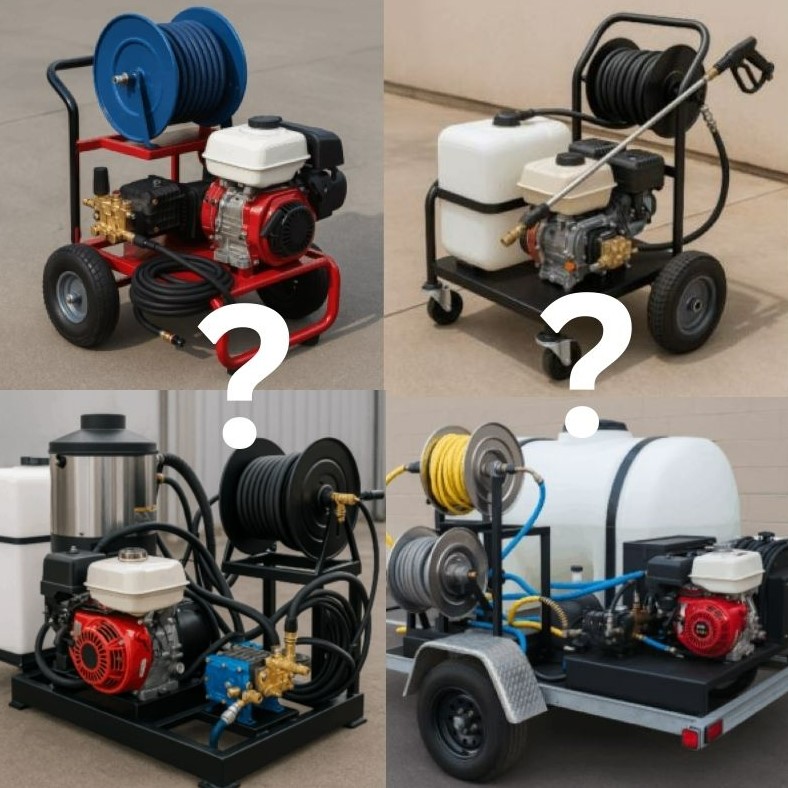
As a professional pressure washing entrepreneur, you understand the constant hum of inquiries, the promise of transforming grime into gleaming surfaces, and the relentless pursuit of peak operational efficiency. The foundation of your success—the very engine of your reputation and profitability—rests squarely on one crucial decision: how to choose a pressure washer. This guide will walk you through how to choose a pressure washer that fits your exact needs and goals.
Maybe you’ve experienced the frustration of sifting through endless options, each claiming to be the best but leaving you cautious about hidden issues and potential downtime. Many professionals struggle to identify truly reliable, high-quality equipment amidst tempting but problematic alternatives. Choosing a tool isn’t just a purchase; it’s a strategic business decision that affects your profits and reputation. That’s why knowing how to pick the right pressure washer is critical, not optional.
This comprehensive guide cuts through the noise. Its goal is to empower you with a systematic, informed decision-making process for how to choose a pressure washer that aligns perfectly with your business goals, minimizes costly interruptions, and ensures long-term profitability. Your pressure washer is not just a piece of equipment; it is an investment in your future. Let us make that investment a wise one.
Why Your Pressure Washer Choice is a Strategic Business Decision
Before diving into technical specifications, it is vital to understand the profound impact your pressure washer choice has on your business. This is not a casual purchase. It is a strategic allocation of capital that dictates your operational capabilities, client satisfaction, and ultimately, your financial success.
The True Cost of “Cheap”: Understanding the Pitfalls of Unreliable Equipment
It is tempting to chase the lowest price, especially when starting out or looking to expand on a budget. However, the lure of “cheap” equipment often hides a multitude of hidden costs. Understanding how to choose a pressure washer can help you avoid these traps and invest in equipment that supports long-term success. A poorly constructed or underpowered machine leads to frequent breakdowns, requiring constant repairs or, worse, complete replacement. This is not just about the cost of parts; it is about the cascade of negative consequences that follow.
Consider this scenario: You invest in a unit that saves you $500 upfront. But within three months, its pump fails. That means a day, two days, or even a week of lost work. You lose revenue from scheduled jobs, potentially face cancellation fees from clients, and must reschedule, damaging your reputation. The repair itself costs money, and the time spent on it is time not spent on revenue-generating activities. Suddenly, that initial $500 saving has morphed into thousands of dollars in lost income, repair costs, and irreparable damage to client trust. This is the true cost of “cheap.” Knowing how to choose a pressure washer that balances quality and budget prevents these costly mistakes.
Maximizing Uptime: The Direct Link Between Equipment Quality and Consistent Revenue
In the professional pressure washing world, uptime is king. It refers to the time your equipment is operational and earning you money. Every minute your pressure washer is down, your business is effectively closed. High-quality, reliable equipment ensures maximum uptime, allowing you to complete jobs efficiently, take on more clients, and maintain a steady, predictable revenue stream.
Your clients depend on you to show up and get the job done. If your equipment consistently fails, you will not only lose that specific job, but also future business from that client and potential referrals. Investing in robust, commercial-grade equipment is an investment in your ability to consistently deliver, which translates directly to consistent revenue.
Building Professional Reputation: How Your Tools Reflect on Your Business
Your equipment is a direct reflection of your professionalism. Showing up to a job site with a sputtering, unreliable machine that constantly needs fiddling or breaks down mid-task sends a clear message: perhaps this business is not as serious or dependable as it claims. Conversely, arriving with well-maintained, powerful, and efficient equipment instills confidence in your clients.
When your tools perform flawlessly, you can focus on delivering exceptional results safely and efficiently. This builds trust, encourages repeat business, and generates positive word-of-mouth—the most powerful marketing tool you have. This is yet another reason why knowing how to choose a pressure washer is crucial for protecting and enhancing your professional image. Your pressure washer is not just a tool; it is a statement about your commitment to quality and reliability.
Long-term Investment vs. Short-term Savings: A Pro’s Perspective on Value
The most successful pressure washing professionals understand that value is not measured by the initial price tag, but by the total cost of ownership over the equipment’s lifespan. A higher upfront investment in a durable, well-built commercial pressure washer often translates to lower maintenance costs, fewer repairs, minimal downtime, and a significantly longer operational life.
Think of it as the difference between buying cheap tires that need replacing every year versus investing in premium ones that last five years and offer better performance. The initial outlay is higher for the premium tires, but the long-term cost per mile, plus the added safety and performance, makes them the superior value. Your pressure washer is no different. Smart professionals prioritize return on investment (ROI) and total cost of ownership over short-term savings.
Your Pressure Washer as the Core of Your Business: Beyond Just a Tool
For a professional pressure washing business, the pressure washer is not merely an accessory; it is the central nervous system of your operation. It dictates your capacity, the types of jobs you can undertake, and the speed at which you can complete them. It is the primary asset that generates your income. Neglecting its importance or compromising on its quality is akin to a delivery company trying to grow with an unreliable fleet of vehicles. Your success hinges on its consistent, powerful performance.
Defining Your Professional Needs: The Foundation of a Smart Purchase
Before you even begin to look at specifications, you must clearly define your business needs. This foundational step is often overlooked but is critical for making an informed, strategic purchase that genuinely aligns with your operational goals.
Assessing Your Current and Future Operational Demands
Your pressure washer needs to be a workhorse, tailored to the specific demands you will place on it. Consider not just what you are doing now, but where you want your business to be in the next one to three years.
Types of Surfaces You Will Clean
Different surfaces require different approaches and, crucially, different pressure levels.
- Concrete, Brick, Masonry: These robust surfaces can typically handle higher PSI (Pounds Per Square Inch) without damage, making them ideal for heavy-duty cleaning.
- Wood Decks and Fences: These require careful pressure management to avoid splintering or etching. A lower PSI is essential.
- House Siding (Vinyl, Stucco, Aluminum): Delicate surfaces that need very low pressure, often relying more on GPM (Gallons Per Minute) and detergents.
- Vehicles (Cars, Trucks, Heavy Equipment): Again, lower, controlled pressure is key to avoid paint damage. Hot water can be a significant advantage for grease and oil.
- Specialized Materials: For instance, historical buildings or sensitive structures may require very specific low-pressure, high-flow techniques, often combined with soft washing.
Frequency of Use
Will this machine be a daily driver, racking up dozens of hours a week, or will it be used sporadically for specific commercial contracts?
- Daily, Full-time Commercial Use: This demands the most robust, heavy-duty commercial or industrial-grade equipment designed for continuous operation. Think belt-drive pumps and commercial engines.
- Weekly, Part-time Commercial Use: This can potentially get by with slightly less industrial-grade equipment, but still needs commercial-quality components.
- Sporadic Use/Backup Unit: Even for a backup, professional-grade reliability is paramount to ensure seamless operation when your primary unit is down.
Typical Job Sites
The environment in which you operate significantly impacts your equipment choice.
- Residential (Limited Power/Water Access): You might be dealing with standard garden hose water pressure and 15-amp electrical outlets. This impacts the GPM and PSI you can realistically achieve, especially with electric units.
- Commercial (Heavy-duty, Extended Hours): This often requires longer run times, potentially higher GPM, and sometimes access to industrial power (e.g., 220V or 3-phase for electric units). Portability for large areas might also be a factor.
- Industrial (Remote, Rugged, High Volume): This demands the most powerful, durable, and self-contained units, often gas-powered with large fuel tanks and excellent mobility options.
Water Source Considerations
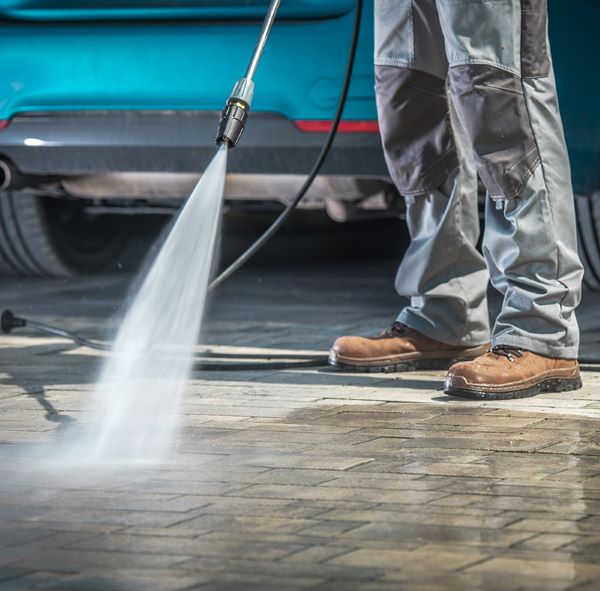
Your pressure washer relies on an adequate water supply. Most commercial pressure washers are designed to operate from a standard garden hose connection, which typically provides 5-7 GPM at 40-60 PSI. However, if you plan to run a high-GPM machine (e.g., 8+ GPM), you will need to ensure your water source can keep up. Some rural or industrial sites might require a water tank and a separate transfer pump to ensure adequate supply to the pressure washer.
Mobility Requirements
How will you transport and move your pressure washer on the job site?
- Stationary Setups: These are ideal for fixed operations like a fleet washing bay or an industrial cleaning station.
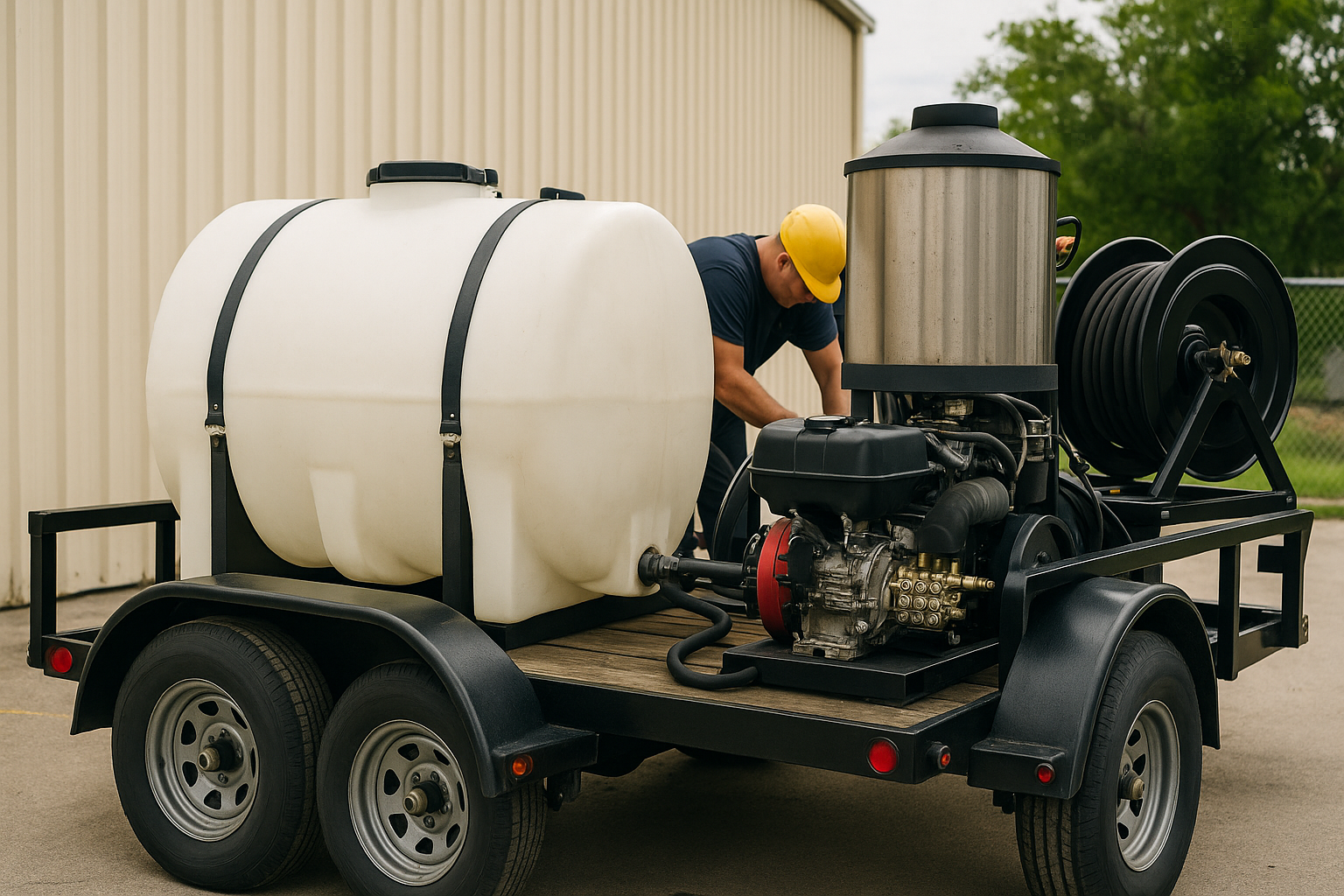
- Truck-Mounted or Trailer-Mounted Units: These are ideal for mobile services, offering self-contained power and water. They typically house larger, more powerful units.
- Portable Units: These are smaller, wheeled units for navigating tight spaces or multi-level jobs where a large rig is not feasible.
Expanding Services
A smart investment considers future growth. Do you anticipate offering hot water cleaning for degreasing? Will you expand into fleet washing, specialized industrial cleaning, or perhaps even surface preparation for painting? Your initial purchase should ideally have the capacity or upgradability to support these future endeavors. Do not buy a machine that limits your potential within a year or two. If you want to grow sustainably, understanding how to choose a pressure washer that scales with your services is critical.
Understanding Your Client Base and Niche
Who are your typical clients, and what are their expectations? This helps tailor your investment.
Residential, Commercial, or Industrial Projects
Residential clients often value quiet operation, careful work, and a visible commitment to safety and property care. A less aggressive setup might be sufficient, though high GPM is still great for efficiency. Commercial clients value speed, efficiency, and minimal disruption to their business. They expect professional results and reliability. Industrial projects demand extreme power, durability, and often specialized cleaning capabilities (e.g., very high PSI for surface preparation, hot water for heavy grease and grime).
Specific Industry Regulations or Client Demands
Some clients or regions might require chemical-free cleaning or specific water reclamation practices. This could influence your choice of detergents, accessories, or even necessitate a hot water unit for better cleaning without harsh chemicals. If you work in noise-sensitive areas, such as hospitals or residential neighborhoods early mornings, an electric pressure washer might be a niche consideration, though gas remains dominant for power.
Competitive Landscape: What Capabilities Do Your Competitors Offer?
Understanding what your successful competitors are using can provide valuable insights. Do they all offer hot water cleaning? Are they using high-GPM machines to finish jobs faster? This competitive analysis helps you ensure your equipment selection gives you an edge, or at least keeps you competitive, rather than leaving you behind.
Decoding the Power: Your Pressure Washer PSI GPM Guide
This is where the rubber meets the road. Understanding the core metrics of pressure washing — PSI and GPM — is paramount, as is knowing the types of pumps and engines that power these vital machines. This knowledge is your guide to making an informed choice for the best pressure washer for business.
The Pressure Washer PSI GPM Guide: Unraveling the Core Metrics
Many first-time buyers focus solely on PSI. While pressure is crucial, it is only half the equation. Gallons Per Minute (GPM) is equally, if not more, important for professional efficiency.
PSI (Pounds Per Square Inch): Understanding Pressure for Specific Tasks
PSI measures the force of the water stream. Too little, and you cannot clean effectively. Too much, and you risk damaging the surface. When it comes to defining specs like PSI and GPM, this guide explains how to choose a pressure washer that matches your workload and environment.
- Low PSI (1000-1500 PSI): Ideal for delicate surfaces where high pressure could cause damage. Applications include house siding (vinyl, aluminum, stucco), cars, trucks, outdoor furniture, and painted surfaces. It is often used with a wide-angle nozzle or a soft wash system where chemicals do most of the work, and the pressure washer is for rinsing.
- Medium PSI (1500-2500 PSI): Good for general cleaning tasks that require a bit more force but still demand care. Applications include decks (wood or composite), patios, fencing, and general concrete cleaning where deep stains are not present.
- High PSI (2500-4000+ PSI): Reserved for robust surfaces and heavy-duty applications. Applications include concrete driveways, sidewalks, removing loose paint, graffiti removal, heavy equipment, and rust removal. For professional concrete cleaning, 3000-4000 PSI is common.
Industry benchmarks and recommendations for pressure range:
- House Washing: Typically 1500-2000 PSI using a wide-angle (25-40 degree) nozzle or a J-rod for applying detergents, followed by rinsing with a low-pressure nozzle. The emphasis is on flow (GPM) for rinsing.
- Concrete Cleaning: For driveways and sidewalks, 3000-4000 PSI combined with high GPM (4.0+ GPM) and a surface cleaner is the professional standard.
- Wood Cleaning: 1200-1500 PSI is generally recommended, often with a fan tip, to avoid damaging the wood grain.
- Heavy Equipment/Fleet Washing: 3000-4000 PSI, often with hot water, and GPM of 4.0 or higher for efficient rinsing.
GPM (Gallons Per Minute): The Key to Cleaning Speed and Efficiency
GPM measures the volume of water flowing through the system. This is the unsung hero of efficient pressure washing. Higher GPM means faster cleaning and better rinsing. More water allows you to cover more surface area in less time. It also allows for more effective rinsing of dirt and chemicals, which is crucial for achieving a truly clean finish and preventing streaks. A higher GPM machine will simply get the job done faster than a high-PSI, low-GPM machine.
The combined effect of PSI and GPM determines your true cleaning power, often referred to as “Cleaning Units” (CU = PSI x GPM). For example, a 4000 PSI machine at 2.0 GPM has 8000 CUs. A 3000 PSI machine at 4.0 GPM has 12000 CUs. The second machine, though lower in peak pressure, is significantly more powerful in terms of cleaning efficiency due to the higher water volume. For professional use, prioritize GPM. A good professional entry point is often 4 GPM at 4000 PSI. Many top professionals operate 5.5 GPM, 8 GPM, or even higher.
When calculating your GPM needs, consider the type and volume of work. If you are doing large concrete driveways or commercial buildings regularly, a higher GPM (4.0-8.0 GPM) will drastically reduce your job times. For smaller, residential-only jobs, 2.5-4.0 GPM might suffice, but you will still feel the difference that higher GPM makes in speed.
Water Supply Impact: Ensuring Your GPM Choice Aligns with Your Available Water Source
It is critical that your water supply can meet the demands of your pressure washer’s GPM. If your machine is rated at 5.0 GPM but your garden hose can only supply 3.5 GPM, your pump will starve, leading to cavitation, wear, and potential damage. Always check your site’s water flow before purchasing a high-GPM machine. You can do this by timing how long it takes to fill a 5-gallon bucket. The calculation is (60 / seconds to fill bucket) * 5 = GPM.
The Heart of the Machine: Pump and Engine Types
The pump and engine are the core components that determine your pressure washer’s power, reliability, and longevity.
Pump Types: The Workhorse of Your Washer
The pump is arguably the most critical component, translating engine power into water pressure and flow.
- Axial Pumps: These are best for light-duty commercial use or entry-level professional applications where the machine is not run for extended periods daily. The plungers move parallel to the crankshaft, directly driven by the engine. Axial pumps are compact, lighter, and have a lower initial cost. However, the pump spins at engine speed (typically 3400-3600 RPM), leading to higher wear and heat buildup. They are less durable for continuous professional use and are often not repairable, meaning the entire pump needs replacement if it fails.
- Triplex Plunger Pumps: This is the industry standard and the professional choice for continuous, heavy-duty commercial and industrial applications. This design features three plungers moving in a straight line (triplex) that are lubricated by oil. They operate at lower RPMs (typically 1450-1750 RPM) than axial pumps, significantly reducing wear, heat, and vibration. This design allows them to run for hours on end without overheating or premature failure. Triplex pumps are designed to be rebuilt. If a seal wears out, you can replace the individual components, extending the life of the pump for many years, making them a true long-term investment. This directly combats the frustration of downtime and costly replacements.
Engine Types: Powering Your Performance
The engine drives the pump, providing the necessary power for cleaning.
- Gasoline Engines: These are dominant for commercial and industrial applications. Most professional pressure washers rely on gasoline engines due to their power, portability, and independence from electrical outlets. Advantages include unmatched portability, high power output (allowing for high PSI and GPM), and no electrical limitations, meaning you can work anywhere. Key considerations include horsepower, which directly correlates to the pressure and flow rate the pump can produce. Look for well-known, reputable engine brands like Honda, Kohler, or Vanguard (Briggs & Stratton commercial line). These brands are known for their reliability, durability, and widespread parts availability. While a secondary concern to power, better fuel efficiency means lower operational costs over time. Look for features like electric start (in addition to recoil start) for convenience and reliability, especially on larger units.
- Electric Motors: These are used in niche applications for specific professional needs. While typically associated with residential units, professional-grade electric pressure washers do exist and serve specific purposes. Advantages include quieter operation (ideal for noise-sensitive areas or indoor use), no emissions (crucial for indoor or confined spaces), lower maintenance (no oil changes, fuel filters, spark plugs), and generally lighter weight. Limitations include power cord dependence, which limits mobility. They typically offer lower PSI/GPM for commercial units compared to gas and require specific voltage (120V, 220V, or 3-phase), which may not always be available on job sites. An electric commercial unit makes sense if your business primarily focuses on indoor cleaning (e.g., warehouses, kitchens, breweries), or if you operate in areas with strict noise or emission regulations. Factoring in motor type is a key part of how to choose a pressure washer that aligns with your operational environment.
Navigating Pressure Washer Types: Cold, Hot, and Drive Systems
Beyond the core metrics, your operational needs will dictate whether you need hot water, and the drive system determines the longevity and maintenance profile of your machine. Understanding how to choose a pressure washer that matches both your cleaning applications and expected workload begins here.
Cold Water vs. Hot Water Pressure Washers: When to Heat Things Up
When it comes to defining specs like PSI and GPM, this guide explains how to choose a pressure washer that matches your workload and environment. The choice between cold and hot water units is a significant one, impacting both cost and capability.
Cold Water Pressure Washers
These are excellent for general dirt, grime, mold, mildew, surface cleaning, and tasks where adding heat provides no significant benefit. They are effective for most exterior cleaning, like driveways, house washing, and basic vehicle cleaning. Cold water units are significantly less expensive to purchase and maintain than hot water units. They have fewer components, such as no burner, fuel tank, or heating coil, making them simpler to operate and troubleshoot. This simplicity is a major factor when considering how to choose a pressure washer for everyday use. For many pressure washing businesses, a robust cold water unit forms the backbone of their operations.
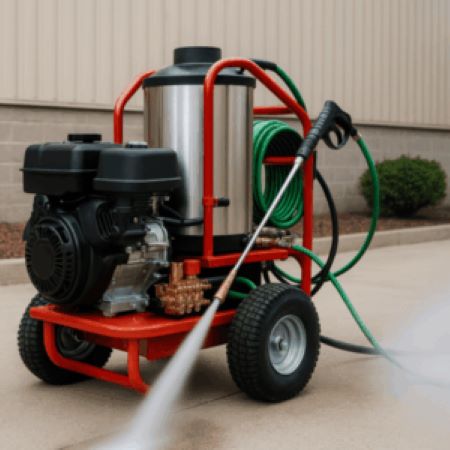
Hot Water Pressure Washers
These offer superior cleaning power, especially for grease, oil, and stubborn, baked-on stains. The heat breaks down molecular bonds, dissolves grease, and significantly reduces the need for harsh chemicals. Hot water also provides a sanitation benefit, making it ideal for certain industries.
Hot water units are ideal for automotive and fleet washing, effectively removing grease, oil, road grime, and caked-on mud from vehicles, heavy machinery, and truck fleets. They are excellent for restaurant and food service cleaning, degreasing kitchen exhaust hoods, concrete floors in kitchens, and cleaning food processing equipment to meet sanitation standards. They are also essential for heavy equipment cleaning, removing thick layers of dirt, mud, and grease from construction equipment before maintenance. Hot water units transform heavily stained concrete surfaces by dissolving oil and grease, delivering a far superior clean than cold water alone. Professionals in these industries must understand how to choose a pressure washer that delivers both heat and cleaning power to meet strict job demands.

Hot water units come with added complexities. They require a separate fuel source for the burner, typically diesel, kerosene, or propane, to heat the water. This adds to operational costs and logistical considerations. The burner, heating coil, and associated components require additional maintenance to ensure efficient and safe operation. Hot water pressure washers are considerably more expensive upfront due to the added heating system.
While more expensive, the ROI for a hot water unit can be substantial for businesses serving specific niches. The ability to clean more thoroughly and efficiently, especially with grease and oil, allows you to command higher prices, take on jobs competitors cannot, and deliver superior results that build reputation and repeat business. Knowing how to choose a pressure washer that fits your target market—whether it’s commercial kitchens, fleets, or industrial sites—is key to long-term success.
If you want to grow sustainably, understanding how to choose a pressure washer that scales with your services is critical.
Understanding Drive Systems: Direct vs. Belt Drive
The drive system connects the engine to the pump and is a critical factor in a professional unit’s longevity.
Direct Drive Systems
Direct drive systems are compact, as the pump is directly coupled to the engine, resulting in a smaller footprint. They are generally lighter in weight, making them easier to move, though still heavy for commercial units. Their simpler manufacturing means a lower initial purchase cost.
However, the pump typically spins at the same high RPM as the engine (e.g., 3400-3600 RPM). This high speed generates more heat and friction, leading to significantly faster wear and tear on pump components like seals and bearings. While they can handle professional tasks, they are not designed for continuous, all-day operation. Extended run times accelerate wear. The direct connection also means engine vibration is directly transferred to the pump, which can contribute to wear. This makes understanding how to choose a pressure washer based on drive system an essential step for professionals looking to minimize downtime. Direct drive systems are suitable for entry-level professionals, backup units, or those with less frequent or shorter commercial jobs. They are generally not recommended for full-time, daily operations where the machine will be run for many hours.
Belt Drive Systems
Belt drive systems use a system of pulleys and belts that reduces the pump’s RPM, typically to 1450-1750 RPM. This slower speed dramatically reduces heat, friction, and wear on the pump components, leading to a much longer lifespan. This is the primary advantage. A belt-drive pump can typically last three to five times longer than an axial pump under similar usage conditions. The belts absorb engine vibration, preventing it from transferring directly to the pump, further prolonging pump life. Belts are a wear item and are relatively easy and inexpensive to replace when they eventually stretch or fray.
Belt drive systems are larger and heavier due to additional components and often more robust frames to support them. Their more complex design and higher-quality components make them more expensive upfront. If your goal is long-term reliability, learning how to choose a pressure washer with the right drive system can result in fewer repairs and increased uptime. If you are serious about your pressure washing business and plan on using your machine for hours every day, a belt-drive system is almost always the smarter long-term investment.
The higher initial cost is offset many times over by reduced downtime, fewer pump replacements, and increased reliability over the lifespan of the equipment. This is a key example of how to choose a pressure washer not just for today’s jobs, but for sustained, profitable operation. It is an investment in uninterrupted service and peace of mind, directly supporting your core goal of maximizing uptime and profitability. This is a critical factor in any comprehensive commercial pressure washer buying guide.
Beyond the Numbers: Ensuring Durability, Serviceability, and Long-Term Value
A pressure washer is more than its PSI, GPM, and pump type. Its true value is revealed in its build quality, ease of maintenance, and the support you receive. These factors are paramount for preventing downtime and ensuring your choice of the best pressure washer for business truly pays off. Understanding how to choose a pressure washer that combines strong construction, reliable components, and accessible serviceability ensures you’re investing in a tool—not a liability.
The True Cost of Ownership: Quality over Price
As discussed, the purchase price is just one piece of the puzzle. The true cost of ownership includes maintenance, repairs, fuel, and, most critically, the cost of lost revenue due to equipment failure.
Avoiding “Cheap” Equipment Pitfalls: The Hidden Expenses of Downtime and Frequent Repairs
Remember, a “cheap” pressure washer often comes with hidden expenses. Premature component failure is common, as weak pumps, flimsy frames, and low-grade hoses fail quickly under professional use. Some cheaper brands use custom parts that are difficult or impossible to find, rendering the machine useless after a minor failure. These machines are often designed not to be repaired, but replaced. This means every breakdown leads to a full unit replacement rather than a simple part swap. Unreliable equipment also leads to missed deadlines and frustrated clients, damaging your reputation.
Component Quality: What to Look for in Frames, Hoses, Guns, and Nozzles
Do not overlook the supporting cast of components.
- Frames: Look for robust, powder-coated steel frames that can withstand daily abuse and protect vital components. Avoid flimsy, lightweight aluminum frames for heavy-duty commercial units.
- Hoses: Invest in high-quality, non-marking, steel-braided pressure hoses. They are more flexible, durable, and resistant to kinks and abrasions than standard rubber or plastic hoses. The length also matters, as longer hoses reduce the need to move the machine constantly.
- Guns (Wands) and Nozzles: Professional-grade guns should be comfortable, durable, and rated for your machine’s PSI and GPM. Nozzles should be made of hardened stainless steel for longevity. Quick-connect fittings should be robust and easy to use.
- Unloader Valves: This crucial component diverts water flow when the trigger is released. High-quality unloader valves are essential for pump longevity. Look for adjustable or external bypass unloaders on professional units.
Materials and Construction: Steel vs. Aluminum, Robust Welds, Professional-Grade Fittings
The overall construction speaks volumes about durability. While aluminum is lighter, steel, especially powder-coated steel, offers superior durability and vibration dampening for heavy-duty commercial units. Inspect the welds on the frame and components. They should be clean, strong, and complete, indicating quality craftsmanship. All connections, such as hose fittings and quick connects, should be brass or stainless steel, not plastic. These resist corrosion and provide secure, leak-free connections under high pressure.
Commercial Grade vs. Industrial Grade vs. Residential Grade: Decoding Marketing Claims
The terms “commercial” and “industrial” are often thrown around loosely. Residential grade units are designed for occasional home use, typically 20-30 hours per year. They usually have axial pumps, smaller engines, and plastic components. Do not consider these for professional use. Commercial-grade units are designed for regular, sustained use, typically 20-40 hours per month or more. They will generally feature triplex pumps, commercial-grade engines like Honda GX series, and robust frames. This is the minimum standard for a professional starting out. Industrial-grade units are built for continuous, heavy-duty daily use in harsh environments, typically 40+ hours per week. These are usually the largest, most powerful, and most expensive units, featuring oversized components, advanced cooling, and top-tier durability.
Always look beyond the label and scrutinize the actual components, such as pump type, engine brand, and frame construction, to truly gauge whether a unit meets professional demands.
Critical Considerations for Operational Efficiency and Longevity
Even the best equipment needs care and support. These factors dictate how smoothly your operation runs.
Ease of Serviceability and Maintenance
Can you easily access the oil dipsticks, filters, spark plugs, and pump components for routine checks and maintenance? Units with cramped designs make simple tasks a frustrating chore. Ensure that consumable parts like pump seals, valves, O-rings, and engine-specific items are readily available and affordable. A well-designed professional unit makes it easy to perform daily checks before and after use, which is critical for preventing major breakdowns.
Warranty and Support
Look for comprehensive warranties, especially on the pump, for example, five to seven years for a triplex pump, and the engine, typically three years for a Honda GX. Read the fine print: what voids the warranty? Is it limited by hours of use? A warranty is only as good as the company backing it. Research online reviews and speak to other professionals about their experiences with specific manufacturers’ warranty processes.
Availability of Repair Parts
When a part breaks, you need it yesterday. A supplier with a robust inventory of common and specialized repair parts means less waiting and more working. Beware of equipment that relies heavily on proprietary parts that can only be sourced from a single, potentially slow or expensive, manufacturer. Machines built with commonly available components, such as standard pump seals or widely used engine parts, offer far greater flexibility and faster repair times.
Supplier Relationship and Expert Support
Your supplier should be a partner who understands your business. When you encounter an issue, having access to knowledgeable technicians who can quickly diagnose problems and guide you through repairs is invaluable. They can also offer advice on upgrades, maintenance schedules, and best practices. Some exceptional suppliers go beyond equipment sales, offering training resources, such as how to use certain attachments or advanced cleaning techniques, and even business development advice, truly becoming a one-stop shop for your professional growth.
The Pro’s Systematic Approach: Making Your Informed Decision
Navigating the multitude of options requires a disciplined, step-by-step approach. This framework will help you cut through the marketing jargon and focus on what truly matters for your business.
A Decision-Making Framework for Pressure Washer Selection
Think of this as your personalized decision tree, guiding you from your overarching business goals down to the ideal equipment specifications.
Step 1: Define Your Core Needs
Start broad and narrow down. What surfaces will you primarily clean? This dictates your PSI range. How often will you use the machine, and for how long per session? This dictates pump type and overall durability—axial versus triplex, direct versus belt drive. What are your typical job site conditions, including water access and power? Do you need to remove grease or oil, or perform sanitization? This determines whether you need a hot or cold water unit. What are your growth plans for the next one to three years? Ensure your machine can scale with you.
Step 2: Prioritize Key Specifications
Once your needs are clear, translate them into numbers. Determine the required PSI based on your surfaces, for example, 1500-2000 for residential, 3000-4000 for concrete. Do not overbuy PSI unless specifically needed. Determine the required GPM, as this is critical for efficiency. Aim for 4.0 GPM as a strong professional starting point, and higher if you plan on significant concrete work or large commercial jobs. Decide on hot or cold water based on client’s needs and the types of stains you will tackle.
Step 3: Evaluate Pump and Engine Reliability
Longevity becomes a critical factor at this stage. When operating under professional, continuous use, always prioritize a triplex plunger pump. In cases of daily, heavy use, it’s wise to invest in a belt-drive system. For less frequent but still professional applications, a direct-drive triplex pump could be considered—just be aware of its limitations. Reputable engine brands known for durability and parts availability, such as Honda, Kohler, or Vanguard for gas—and robust industrial motors for electric—are essential choices.
Step 4: Assess Durability and Build Quality
Look beyond the core components. Is the frame construction robust, powder-coated steel? Are the hose, gun, and fittings professional-grade, durable, and easily replaceable? Avoid excessive plastic; look for brass, stainless steel, and heavy-gauge metals.
Step 5: Factor in Serviceability, Warranty, and Supplier Support
These are your safety nets. Can you easily perform routine maintenance tasks? What is covered by the warranty, for how long, and what are the limitations? Are common and critical spare parts readily available? Is the vendor known for excellent customer service, technical support, and partnership?
Step 6: Calculate Total Cost of Ownership
Do not just look at the sticker price. Calculate the initial cost plus projected maintenance, fuel costs, and potential downtime costs. A higher initial investment in quality often results in a significantly lower total cost over the machine’s lifespan.
Common Purchasing Mistakes to Avoid
In your journey to choose the right pressure washer, it is just as important to know what not to do. Avoid these pitfalls to ensure your investment pays off.
Underestimating GPM Needs: The Biggest Bottleneck for Efficiency
Many new professionals fixate on PSI, believing higher pressure equals faster cleaning. This is a critical misconception. While PSI breaks the bond between dirt and surface, GPM is what washes the dirt away and allows you to cover ground quickly. A 4000 PSI, 2.0 GPM machine cleans significantly slower than a 3000 PSI, 5.5 GPM machine. If you underestimate your GPM, your jobs will take longer, reducing your daily capacity and ultimately limiting your profitability. This is a common bottleneck that can severely impact your business’s growth.
Ignoring Pump Type: Investing in Commercial Grade for Professional Use
Using an axial pump for daily, professional commercial operations is a recipe for disaster and constant downtime. Axial pumps are not designed for the continuous, heavy use demanded by a pressure washing business. They will fail prematurely, leading to expensive pump replacements and lost revenue. Always choose a triplex plunger pump for professional longevity and serviceability. This is non-negotiable for anyone serious about a long-term pressure washing career.
Failing to Account for Serviceability: When Repairs Become a Nightmare
You will eventually need to perform maintenance or repairs. If the machine’s design makes simple tasks like oil changes or pump seal replacements incredibly difficult, you will either waste valuable time struggling or incur significant labor costs from a repair shop. Some “cheap” units are designed to be disposable, with sealed components that cannot be easily serviced. This leads to complete unit replacement, which is far more costly than a simple part swap. Prioritize machines where components are easily accessible and replaceable.
Choosing Solely Based on Initial Price: The Trap of “Cheap” Equipment
This is the most dangerous mistake a professional can make. The allure of a low upfront cost blinds many to the true expenses of unreliable equipment: constant repairs, wasted time, lost jobs, and damaged reputation. A pressure washer that frequently breaks down is not saving you money; it is actively costing you money and undermining your business. Think long-term value, not just initial outlay. A smart investment pays for itself many times over in efficiency, reliability, and sustained profitability.
Overlooking Supplier Reputation and Support
A common mistake is treating the equipment purchase as a one-off transaction. In reality, your supplier should be a long-term partner. If your supplier offers poor customer service, slow parts delivery, or lacks technical expertise, you are setting yourself up for frustration and extended downtime when issues inevitably arise. Research your supplier as thoroughly as you research the equipment. Look for a partner who understands your needs, stocks parts, and can offer expert advice and support.
Maximizing Your Investment: Longevity, ROI, and Business Growth
Choosing the right pressure washer is just the first step. To truly maximize your investment, you need to commit to proper care, strategic accessory use, and a forward-thinking mindset for growth.
Protecting Your Asset: Proper Storage, Winterization, and Routine Maintenance
Your pressure washer is a high-performance machine. Treat it like one. Store your unit in a clean, dry, protected area. Shield it from extreme temperatures and moisture. If you live in a cold climate, proper winterization, such as flushing water and adding pump saver/antifreeze, is non-negotiable to prevent costly freeze damage to the pump. Follow the manufacturer’s recommendations for oil changes for both engine and pump, filter replacements, spark plug checks, and belt tension adjustments for belt-drive units. A well-maintained machine runs more efficiently, lasts longer, and is less prone to unexpected breakdowns. This proactive approach directly contributes to uptime.
Enhancing Productivity with the Right Accessories
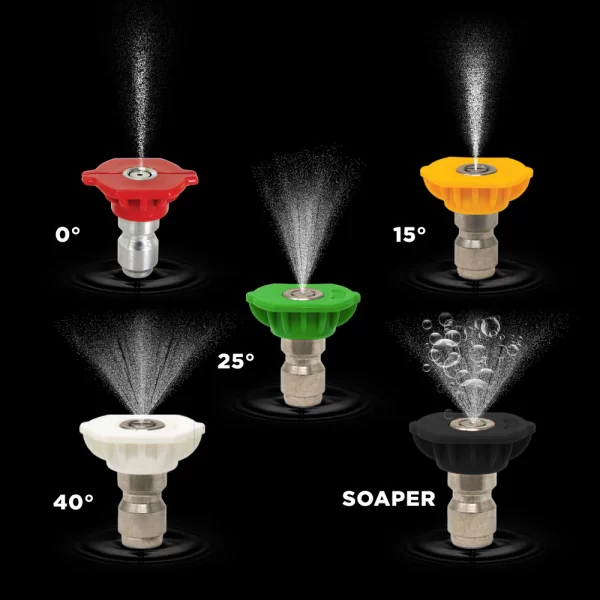
The right accessories transform your pressure washer into a versatile, highly efficient cleaning system. A full set of quick-connect nozzles (0°, 15°, 25°, 40°, soap) is essential. Specialty nozzles like rotating turbo nozzles can dramatically speed up concrete cleaning. Invest in longer, for example, 100 ft or 200 ft, high-quality, non-marking hoses and a good hose reel for efficiency and professionalism. For any significant concrete, driveway, or patio work, a surface cleaner is a must-have. It cleans flat surfaces evenly and much faster than a wand, delivering superior, streak-free results. Ensure your unit has a quality unloader valve, or consider an external bypass unloader for extended pump life if your internal one is not robust enough for continuous operation. The right detergents enhance cleaning power, and a reliable downstream injector or dedicated chemical pump ensures consistent application.
Calculating Return on Investment (ROI)
The initial cost of a high-quality commercial pressure washer might seem daunting, but its ROI is clear. A higher GPM machine means more jobs per day, leading to faster job completion. Reliable equipment means fewer cancellations and consistent revenue due to reduced downtime. Durable components break less often and are cheaper to service in the long run, leading to lower maintenance and repair costs. Hot water units or higher PSI/GPM machines open doors to specialized, higher-paying contracts, such as degreasing or fleet washing, increasing your ability to take on more lucrative jobs. A reputation for reliability leads to repeat business and referrals, reducing marketing costs. Over time, these factors translate directly into higher net profits for your business.
Scaling Your Business: When to Add Another Unit or Upgrade
As your business grows, your equipment needs will evolve. If you find yourself consistently turning down work, experiencing backlogs, or if your current machine is operating at its maximum capacity for extended periods, it might be time to add a second, identical, or slightly larger unit to increase your operational capacity. If your primary unit is nearing the end of its life, or if new services you want to offer require different capabilities, for example, going from cold to hot water, or upgrading to a higher GPM system, it is time for an upgrade. Always plan these upgrades in advance to minimize disruption.
Maintaining Your Edge: Staying Current with Technology and Best Practices
The pressure washing industry is constantly evolving. Staying informed about new equipment, accessories, cleaning techniques, and safety standards will help you maintain a competitive edge. Attend industry trade shows, join professional associations, and stay connected with your trusted supplier for the latest insights.
The Reputation Dividend: How Reliable Equipment Supports a Reliable Business
Ultimately, the right pressure washer choice contributes to the most valuable asset you have: your professional reputation. When your equipment is reliable, you are reliable. When you deliver consistent, high-quality results without excuses or delays, you build a brand synonymous with excellence. This “reputation dividend” leads to a steady stream of satisfied clients, glowing testimonials, and a thriving business built on a foundation of smart, long-term investments.
Choosing the right pressure washer is one of the most strategic business decisions you will make. It is not just about a purchase; it is about investing in your capacity, your reputation, and your long-term profitability. By following this systematic approach—defining your needs, understanding the core metrics, prioritizing durability, and securing strong supplier support—you will equip your business for lasting success.
More Useful Posts:
- Unlocking Profitability with a Heated Power Washer – Maximize revenue and efficiency with faster cleaning and high-value services powered by hot water.
- The Professional’s Edge: Why a Heated Pressure Washer is Your Ultimate Business Accelerator – Boost cleaning speed and profits with a heated pressure washer—your key to professional-grade performance.
- Hot Pressure Washer Trailer: Mobile Power for Pro Cleaners – Get unmatched cleaning performance and mobility with a professional-grade hot water trailer setup.
- The Strategic Advantage of a Custom Pressure Washer Trailer – Boost efficiency, profits, and growth with a tailored pressure washing trailer.
- Why an Integrated Hot Water Pressure Washer Trailer is Your Ultimate Mobile Solution – Boost efficiency and reliability with a turnkey system built for fast, powerful, professional cleaning anywhere.
- Diesel Power Washers: The Unrivaled Choice for Commercial Cleaning – Built for power, speed, and nonstop commercial performance.
- Mastering Power Washer High Pressure for Professional Results – Maximize cleaning power, protect surfaces, and boost efficiency with expert pressure control.